 View PDF
01 · Verifiable document
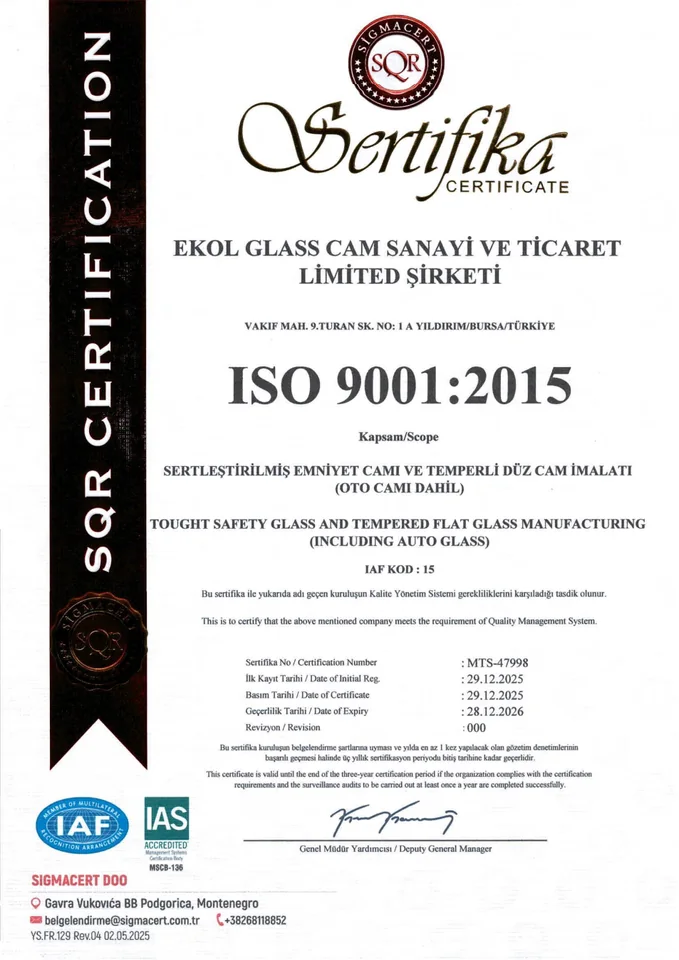
ISO 9001:2015
MTS-47998Toughened safety glass and tempered flat glass manufacturing, including auto glass
- File
We present our controls from technical input to dispatch, certificate scopes and current quality documents transparently in one place.
Review Ekol Glass ISO 9001:2015, ECE R-43/CoP and NHTSA DOT 1351 documents together with its process control and traceability approach.
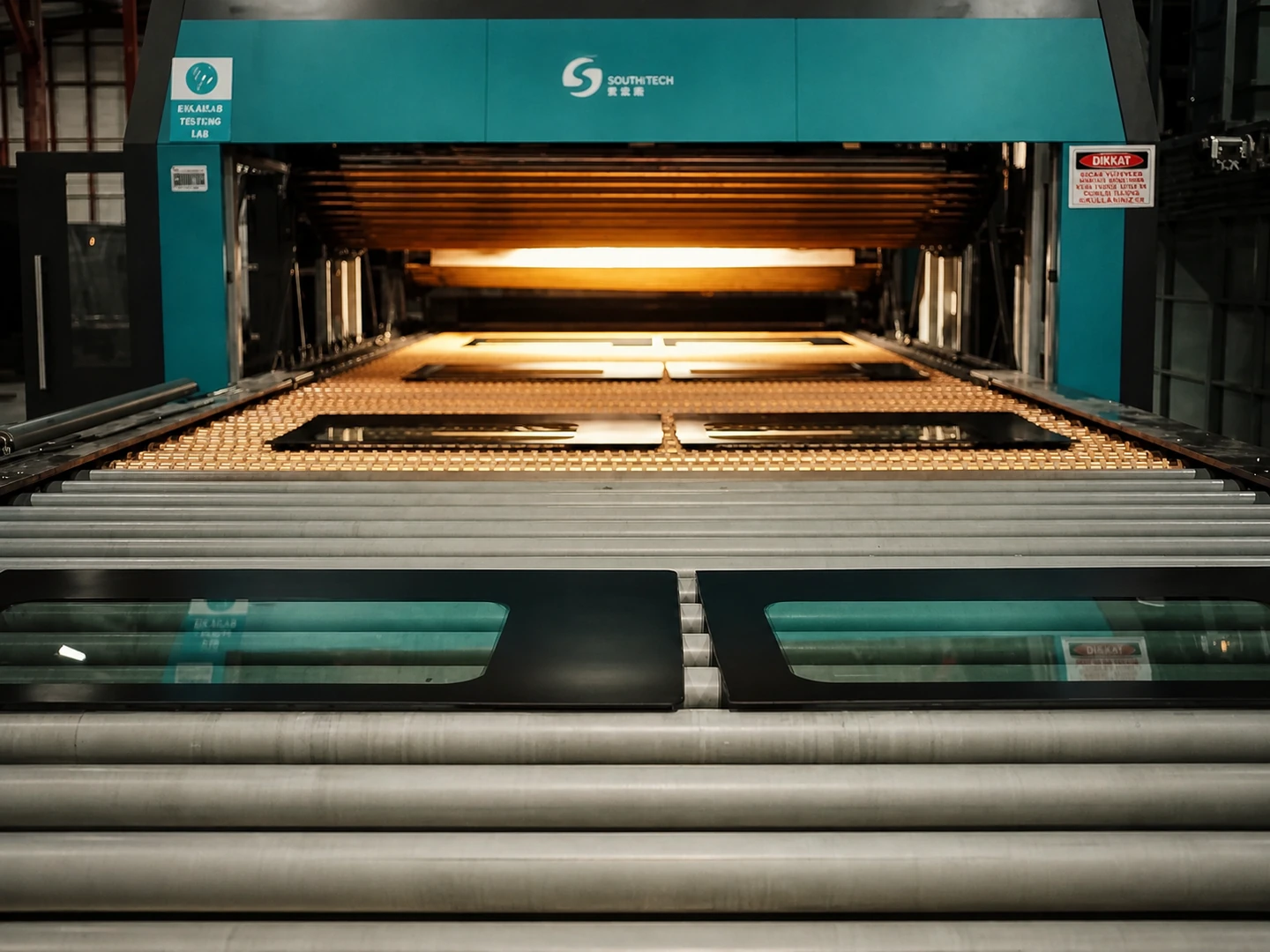
The Ekol Glass quality approach is built on reviewing requests and drawing data, controlling production parameters, verification between processes and preparing conforming products for dispatch with recorded checks. Every published document is presented with its own scope and validity information; no product or performance claim is made beyond that scope.
Review of technical data and revisions before production
Recorded execution of process steps from cutting to tempering
Visual, dimensional and process-focused intermediate controls
Segregation of nonconformities and final verification before dispatch
View PDF
Toughened safety glass and tempered flat glass manufacturing, including auto glass
 View PDF
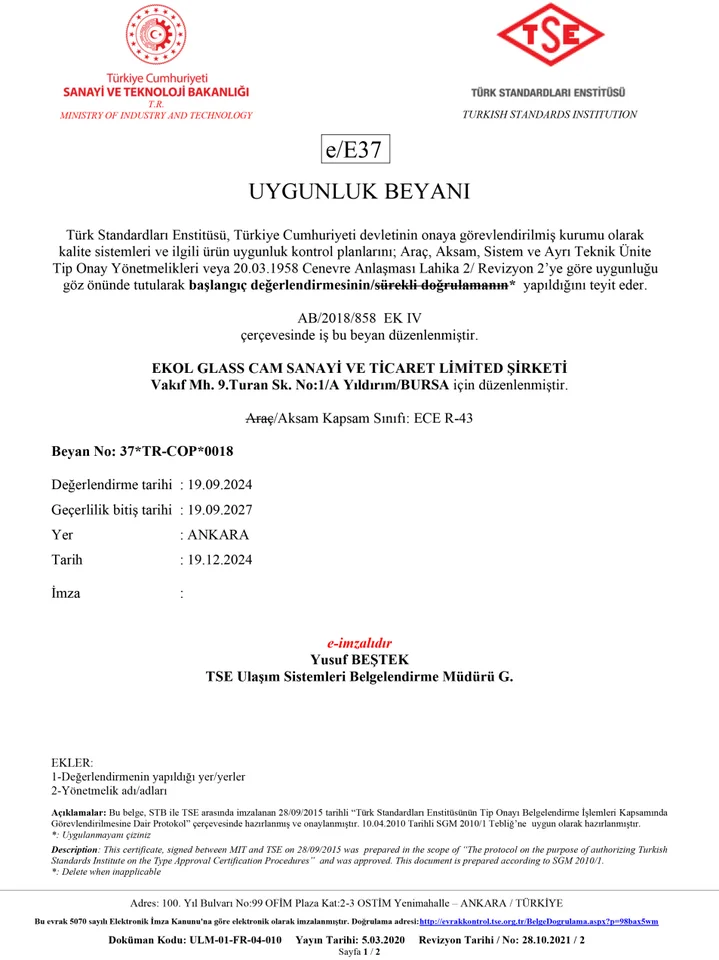
Relevant document scope for vehicle safety glazing
 View PDF
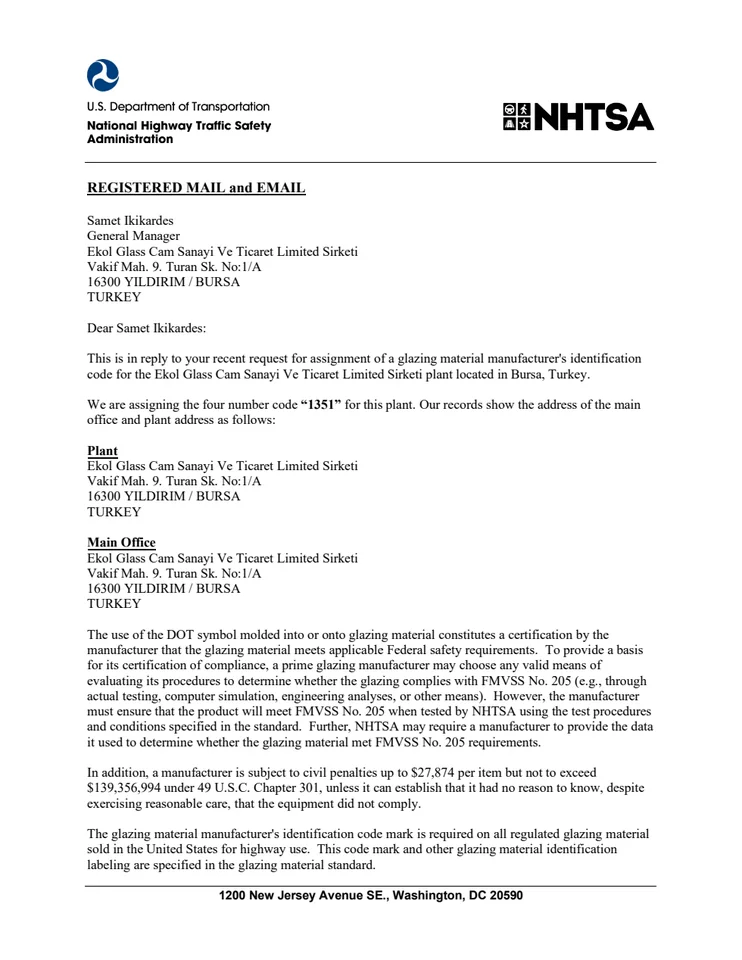
Manufacturer identification code assigned to the Bursa plant for regulated glazing sold for highway use in the United States
The control plan is detailed according to the product family, drawing and required processes.
Review the request, drawing, dimensions, quantity and operating conditions
Define the production route and processes against technical requirements
Apply intermediate checks during cutting, processing, screen printing and tempering
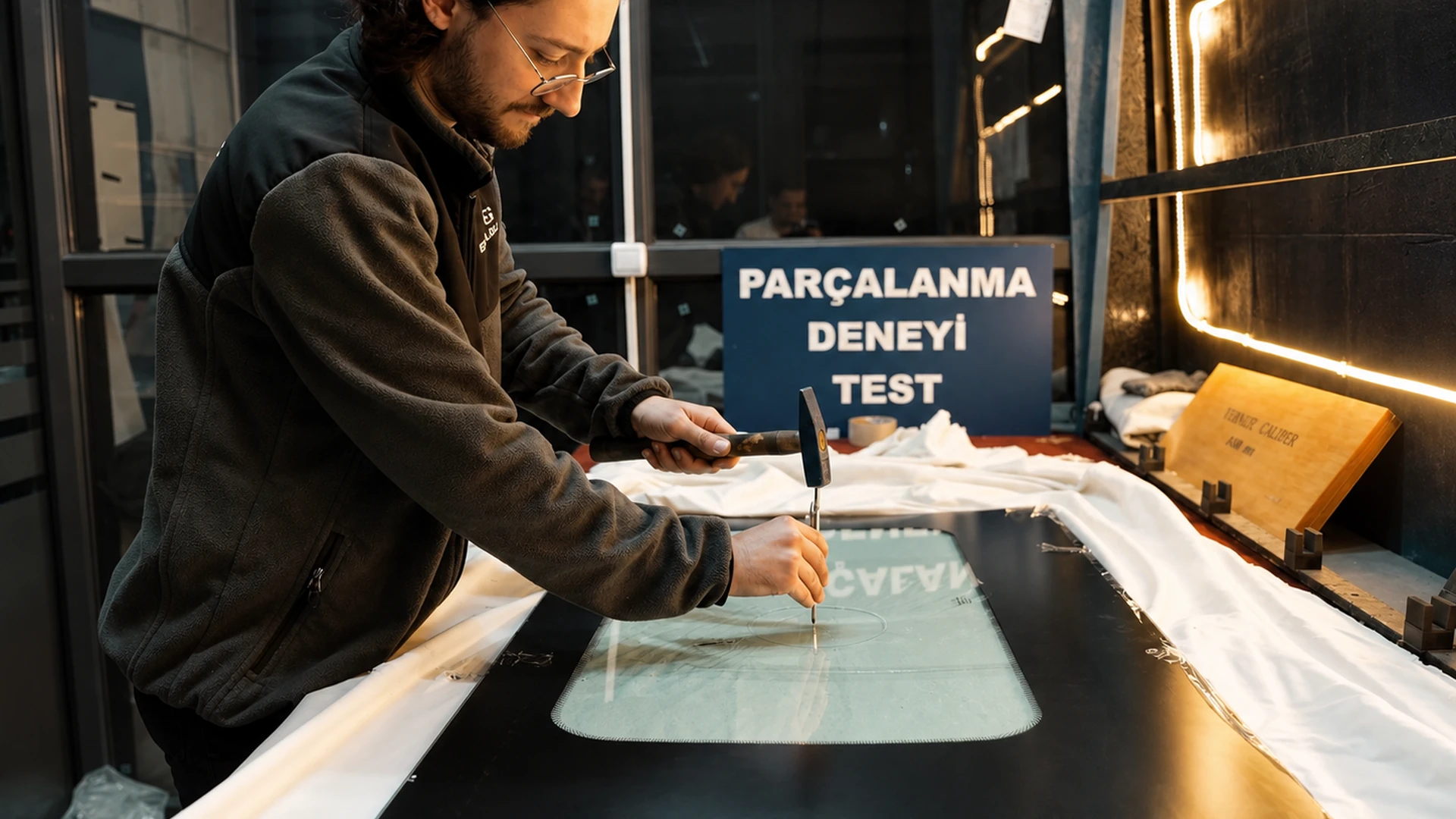
Perform fragmentation tests after tempering series and complete relevant process verifications
Complete final inspection, identification, packaging and dispatch preparation
The document centre publishes the ISO 9001:2015 quality-management certificate, the ECE R-43 CoP conformity declaration and the NHTSA letter assigning manufacturer identification code DOT 1351 to the Bursa plant. The full PDF, scope and stated validity information are available on the same page.
Certificate MTS-47998 states a scope of toughened safety glass and tempered flat glass manufacturing, including auto glass. The document published on this page is valid until 28 December 2026.
Declaration 37*TR-COP*0018 shows that production conformity for vehicle safety glazing is addressed within the relevant CoP assessment. It states an assessment date of 19 September 2024 and an expiry date of 19 September 2027.
DOT 1351 is the manufacturer identification code assigned by NHTSA to the Ekol Glass plant in Bursa. It identifies the manufacturer for regulated glazing intended for highway use in the United States.
No. A manufacturer identification code is not, by itself, a performance, test or compliance approval for a specific glass product. Product conformity must be assessed separately against the product, application, technical requirements and required verification.
No. Company documents describe the management-system or conformity scope stated in each document. Project details such as glass shape, dimensions, thickness, colour, holes and screen printing are reviewed separately before quotation and production approval.
The flow begins with a review of technical inputs and continues with intermediate checks during cutting, processing, screen printing and tempering. Fragmentation testing and relevant process verification follow tempering series; conforming products then proceed through final inspection, identification and dispatch preparation.
Provide the application or vehicle details, glass dimensions or a DXF/DWG/PDF drawing, quantity, thickness, colour, secondary processing and target schedule. Missing or conflicting inputs are clarified by the technical team before production.
Share dimensions, quantity and drawings through the secure quote workflow.