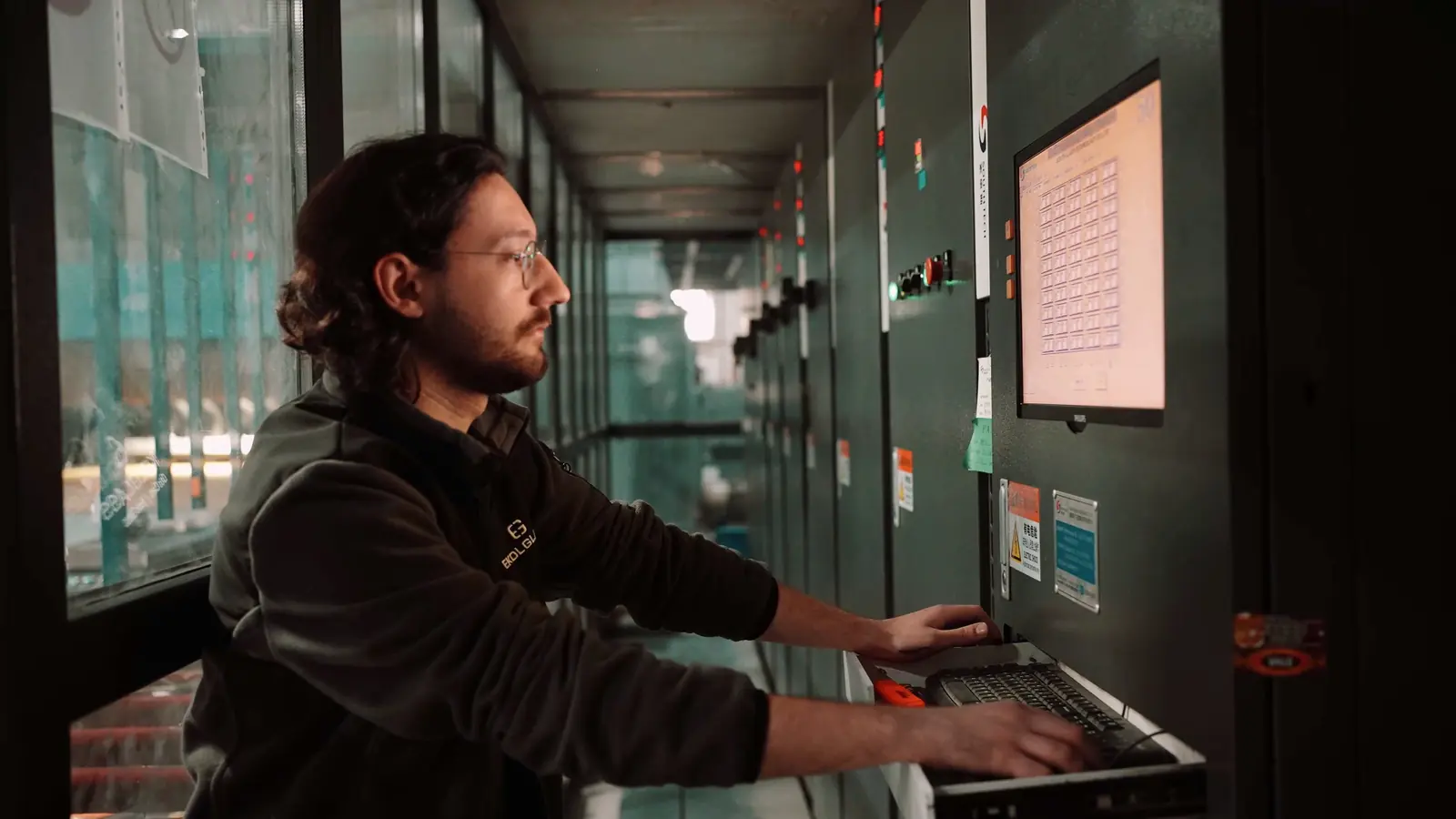
When people order tempered glass, “it goes through a furnace” is often considered enough of an explanation. In fact tempering is a heat treatment that permanently changes the stress distribution inside the glass, and the result affects ordering decisions directly. This article explains the steps of the process, what happens at the surface and in the core, what the published numbers mean, and why cutting, edge work and holes have to be completed before tempering, using open sources.
01 / 05
How is glass tempered?
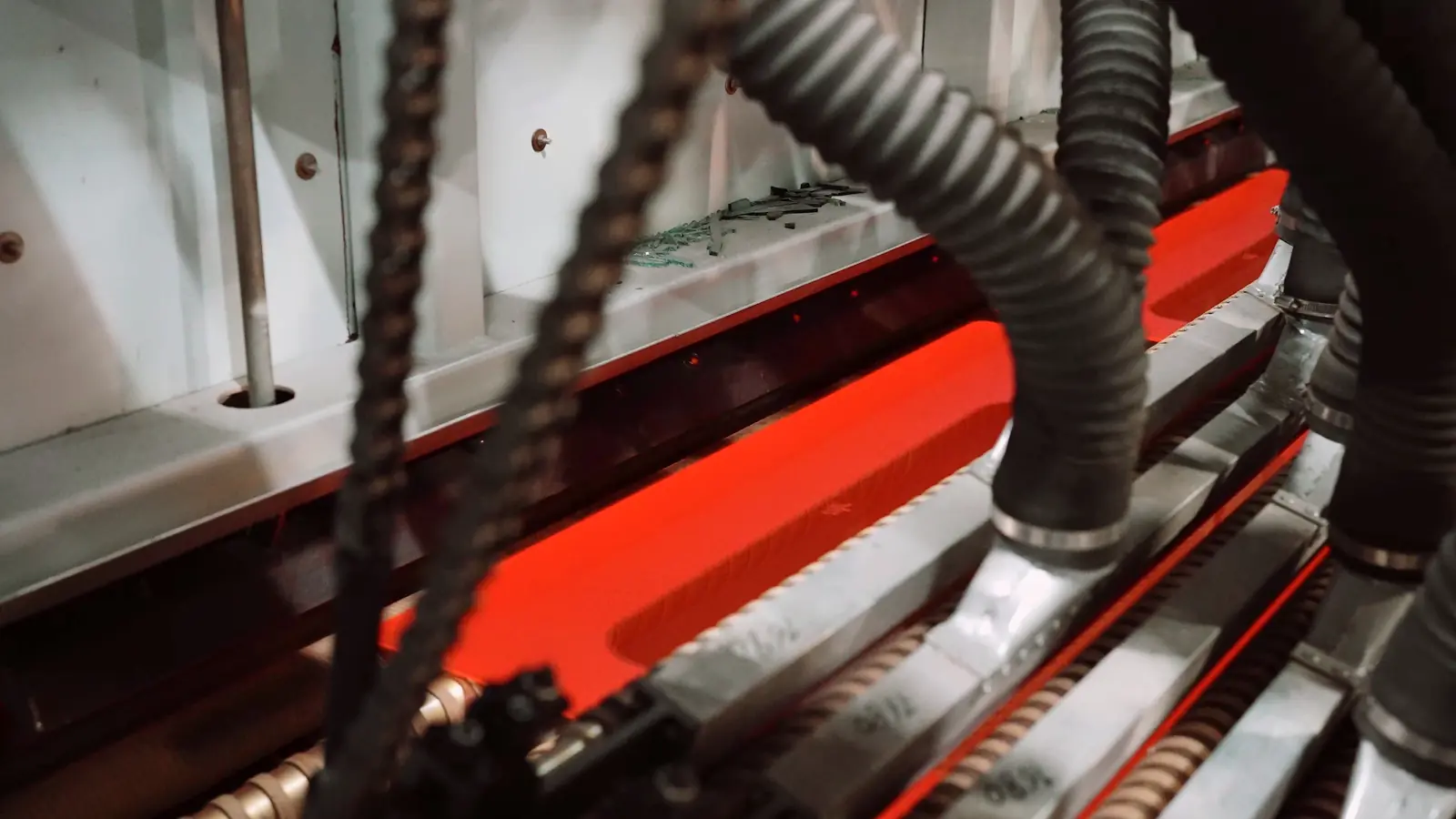
Tempering is a thermal treatment. Flat glass is heated in a furnace and then cooled quickly with blown air. Lecture notes from the Massachusetts Institute of Technology (MIT) describe glass being heated to about 600–650 °C and force-cooled to create compressive stress at the surface. Glass for Europe describes the same idea: the glass is heated above its transition temperature (Tg) and then cooled rapidly with forced air.
The sequence is roughly this:
- Cut and finished glass is loaded into the furnace.
- In the heating section the glass is taken above its transition temperature.
- Air is blown onto the hot glass and it is cooled rapidly.
- The cooled glass is inspected.
The third step creates the effect. Cooling glass slowly leaves it annealed, which is ordinary glass. Fast and uneven cooling leaves a permanent stress distribution inside it. So the balance between heating and cooling matters more than the furnace itself.
Not every glass is suitable. Glass for Europe notes that the thermal expansion coefficient of flat soda-lime silicate glass must be high enough to allow thermal toughening when high thermal and mechanical resistance is required. In other words, the glass composition also influences the result.
02 / 05
What does tempering change inside the glass?
The difference comes from the fact that rapid cooling does not cool every part of the glass at the same time. A Pennsylvania State University materials course explains it like this: the surface cools first and the interior cools later. When the glass finally reaches room temperature, the surface is under compressive stress and the middle is under tensile stress. The compression at the surface makes it harder for surface scratches and cracks to grow.
According to a Sandia National Laboratories report, the compressive stress at the surface is about twice the tensile stress in the interior. The same report says that in thermal tempering the surface compression is usually in the range of 60–200 MPa and the interior tension 30–100 MPa. These values describe the general scientific picture, not any specific product.
The report adds that tempered glass can carry much higher wind, impact and bending loads than annealed (ordinary) glass.
This picture matters for ordering. The strength of tempered glass rests on the compressive surface layer, which, according to the Penn State course, makes surface cracks harder to grow. So the condition of the surface and the edge should be taken into account in both ordering and use.
03 / 05
Is heat-strengthened glass the same as tempered glass?
No. The MIT lecture notes refer to the ASTM C1048 standard and distinguish the two classes by surface stress. In heat-strengthened glass the surface stress is about 24–52 MPa. Fully tempered glass is described as having a surface stress above 69 MPa. These figures come from the lecture notes, not from the standard itself.
The distinction matters: the two classes do not have the same strength level. So when ordering, it is better to state which class is wanted and which standard or vehicle regulation it will be assessed against, rather than just writing “heat treated”.
Glass for Europe states that the properties of thermally toughened soda-lime silicate safety glass are regulated by the European standard EN 12150-2.
A short checklist for anyone requesting a quote could look like this:
- the glass class wanted (fully tempered or heat-strengthened),
- the standard or vehicle regulation that applies,
- thickness and place of use,
- screen printing and other processing, if any.
04 / 05
Why are cutting, edge work and holes finished before tempering?
Because tempered glass cannot be worked afterwards. A Glass for Europe review paper states that re-cutting thermally toughened glass can lead to breakage. The stress balance inside the glass depends on its size and shape, and intervening at one point upsets that balance.
In practice these decisions are therefore settled before the tempering step:
- the glass size and outline,
- the edge finish,
- the position of holes and cut-outs,
- the printed area, if screen printing is needed.
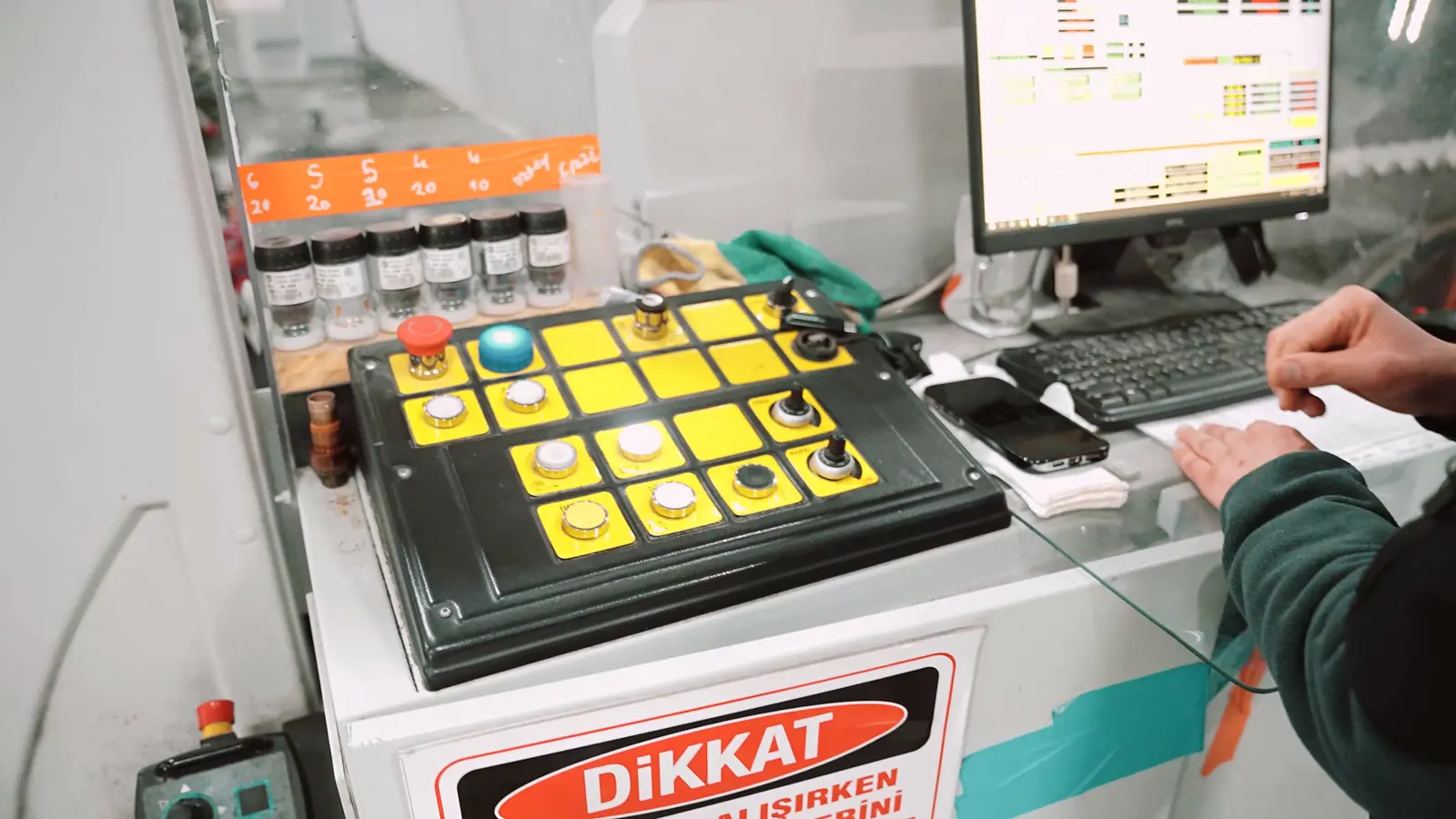
This is an inference: the source does not describe a production sequence, it only states the risk of cutting afterwards. Among the processes carried out at the Ekol Glass plant are CNC and precision cutting, glass processing (edging, water-jet), screen printing and tempering. The quality flow starts with a review of the technical data, and in-process checks are made at the cutting, processing, screen-printing and tempering steps. Tolerances and thickness options are confirmed per project.
05 / 05
How does the glass behave after tempering, and what is checked?
When tempered glass breaks, it separates into small pieces instead of large sharp shards. According to the Sandia report, the fragments of broken tempered glass are roughly 3–10 mm in size, depending on the original thickness. The report also says that these small, regular pieces are much less hazardous than the sharp fragments of annealed glass. Glass for Europe likewise states that, if it breaks, the glass shatters into small pieces.
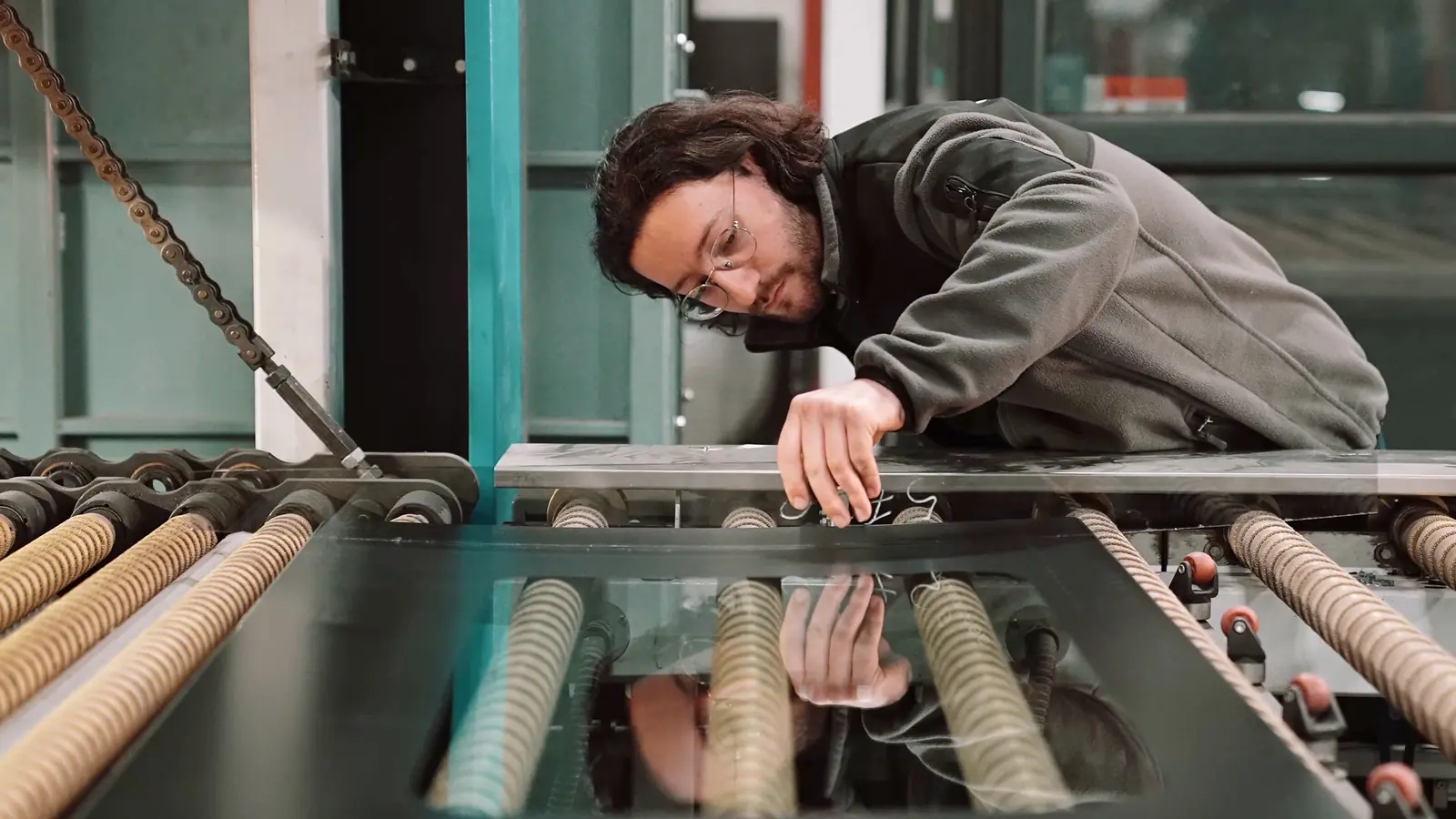
This behaviour is used as a check in production. In the Ekol Glass quality flow, tempered batches are followed by a fragmentation test and process verification.
The MIT notes also record that nickel sulfide inclusions can, rarely, lead to premature fracture of tempered glass.
Frequently asked questions
To roughly what temperature is glass heated for tempering?
The MIT lecture notes describe glass being heated to about 600–650 °C and force-cooled. Glass for Europe says the glass is heated above its transition temperature. The exact setting depends on the glass type, thickness and process settings, so one figure does not apply to every glass.
Can tempered glass be cut or drilled afterwards?
Not in practice. Glass for Europe states that re-cutting thermally toughened glass can lead to breakage. For this reason size, edge and hole decisions are made before tempering. If a change is needed later, a new piece of glass has to be made.
Which figures are given for the surface stress of tempered glass?
The Sandia report gives surface compression in thermal tempering as usually 60–200 MPa. The MIT notes, citing ASTM C1048, give above 69 MPa for fully tempered glass and about 24–52 MPa for heat-strengthened glass. These are general source values, not the properties of a specific product.
Why does tempered glass break into small pieces?
Inside the glass, surface compression and interior tension are held in balance. When the glass breaks, the energy stored in this stress is released and the glass separates into small pieces. According to the Sandia report the fragments are usually 3–10 mm and depend on the original thickness.
Next reads
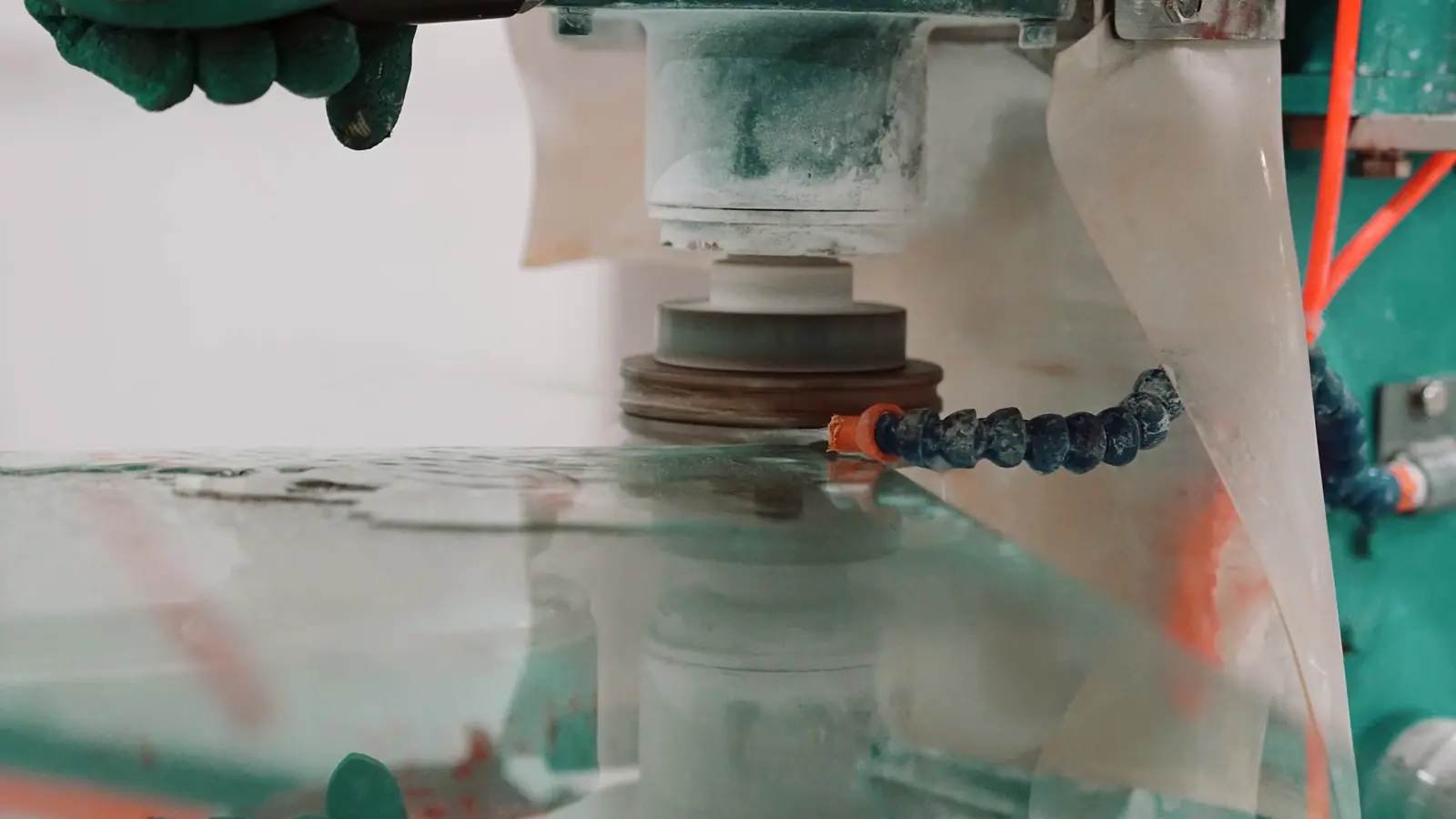
Why is edge damage risky for tempered glass? Edge finishing, handling and checks
A small chip or burr on the edge of tempered glass can reduce the strength that heat treatment gives. How edges are finished, why they cannot be reworked after tempering, and how to protect them.
Read article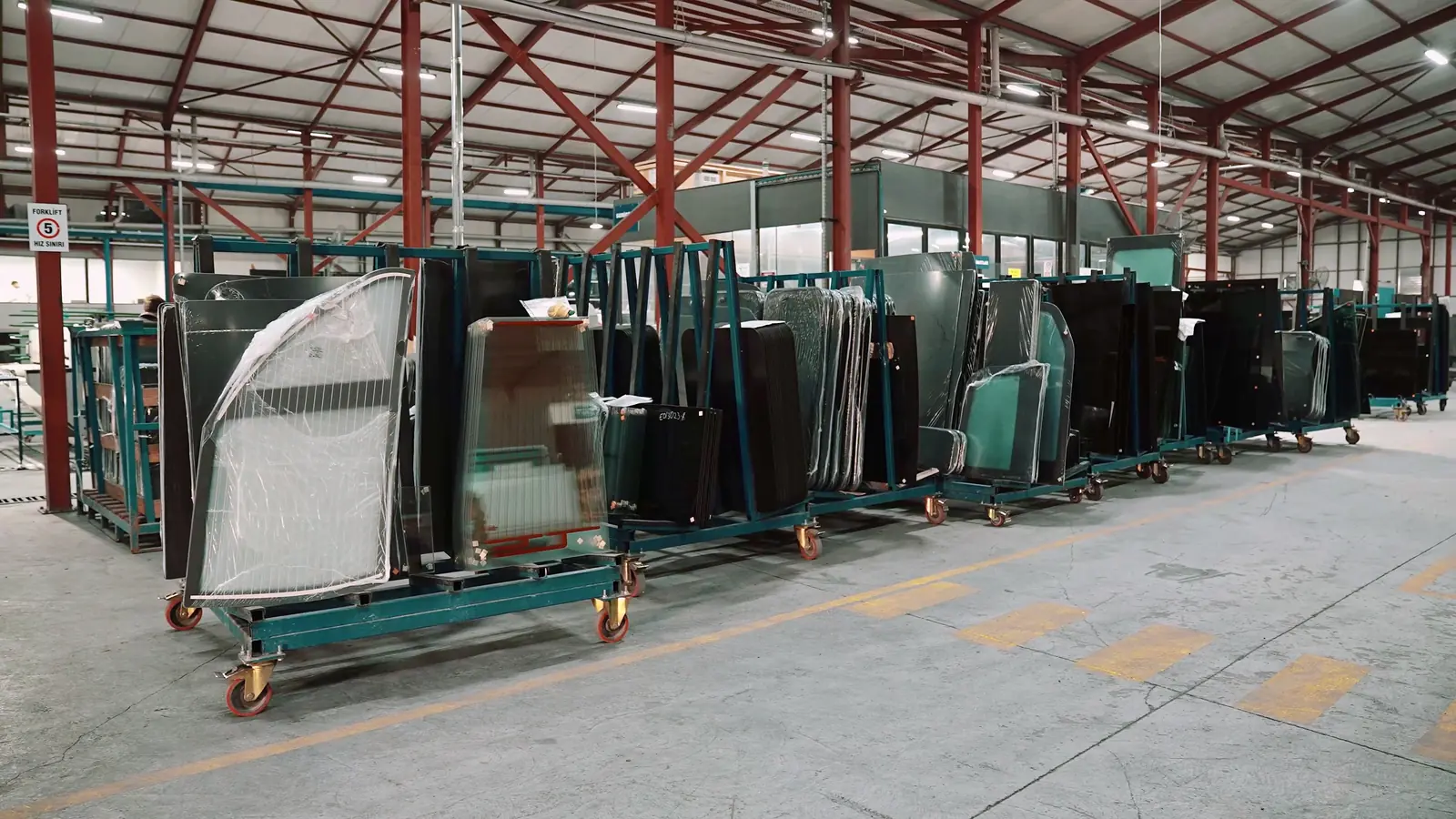
Technical toughened glass for machines and equipment: what to expect
What to know before choosing toughened glass for machines, equipment and vehicles: strength, order of processing, bow and roller waves, iridescence, marking and records, explained from open sources.
Read article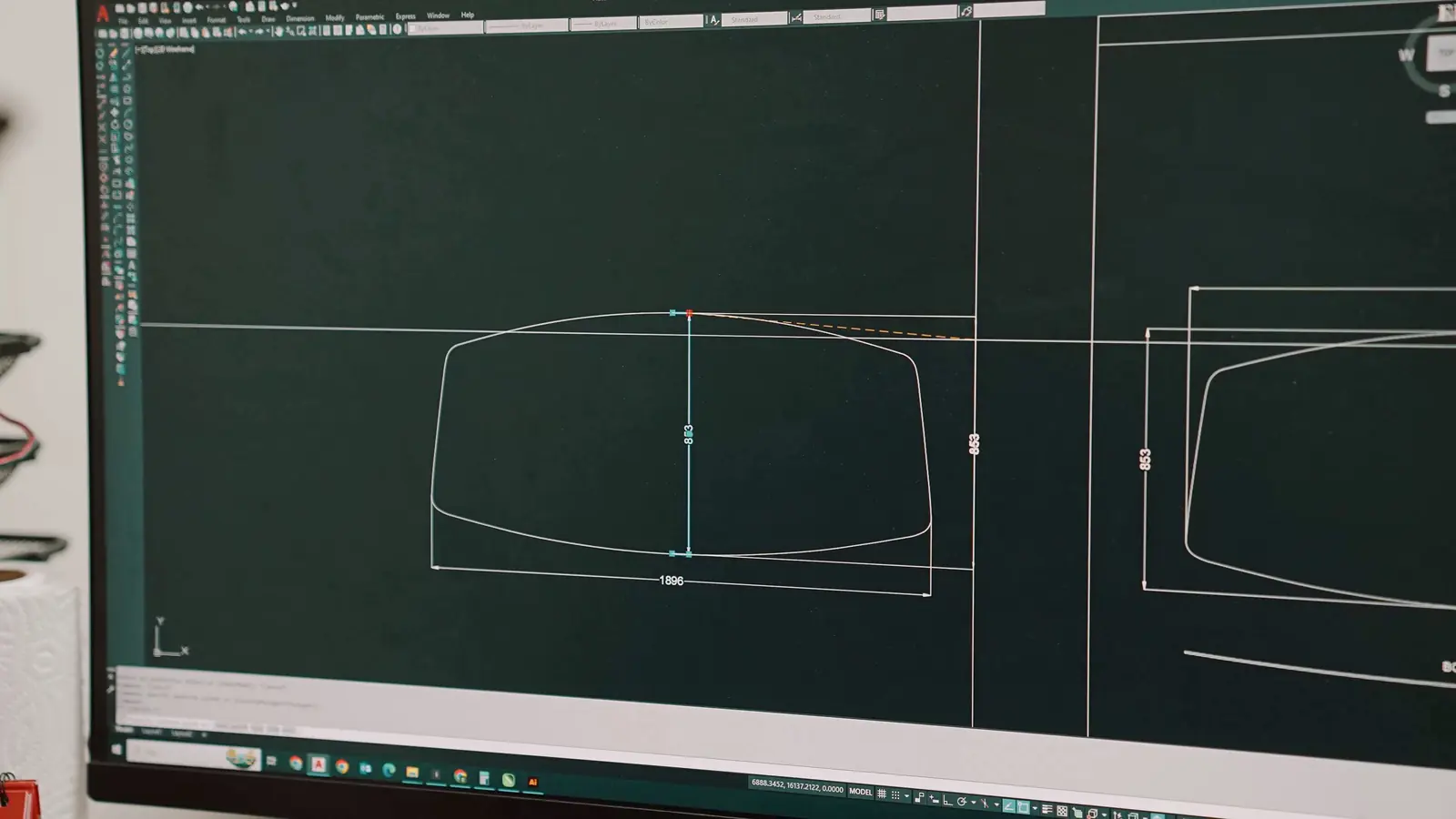
Which file format for a glass drawing? DXF, DWG and PDF compared
When you send a drawing for a glass quote, DXF, DWG and PDF do not do the same job. This article explains what each format carries, where misunderstandings arise and what the drawing must show, based on open sources.
Read article