Tempered glass has a reputation for strength, but that strength depends on the condition of its edges. This article explains what tempered glass edge damage means, how edges are finished before tempering, why they are not reworked afterwards and what to watch for in handling, based on publications from technical bodies.
01 / 06
What does edge damage mean for tempered glass?
Edge damage covers small chips, burrs, nicks and deep scratches that appear on an edge during cutting, processing or handling. They are often hard to see, yet the edge is one of the most sensitive parts of a glass pane.
In tempering, glass is heated and then cooled rapidly, which leaves compressive stress at the surface and makes the glass stronger. The US Glass Association (formerly NGA) summarises the process in the same way in its technical paper on heat-treated glass.
The same paper adds a warning: glass strength is significantly reduced by edge damage or poor edge quality. For heat-treated glass, this can offset the entire benefit of the treatment. Care is therefore needed in every step of fabrication and installation to keep the glass free of damage.
02 / 06
How are edges finished before tempering?
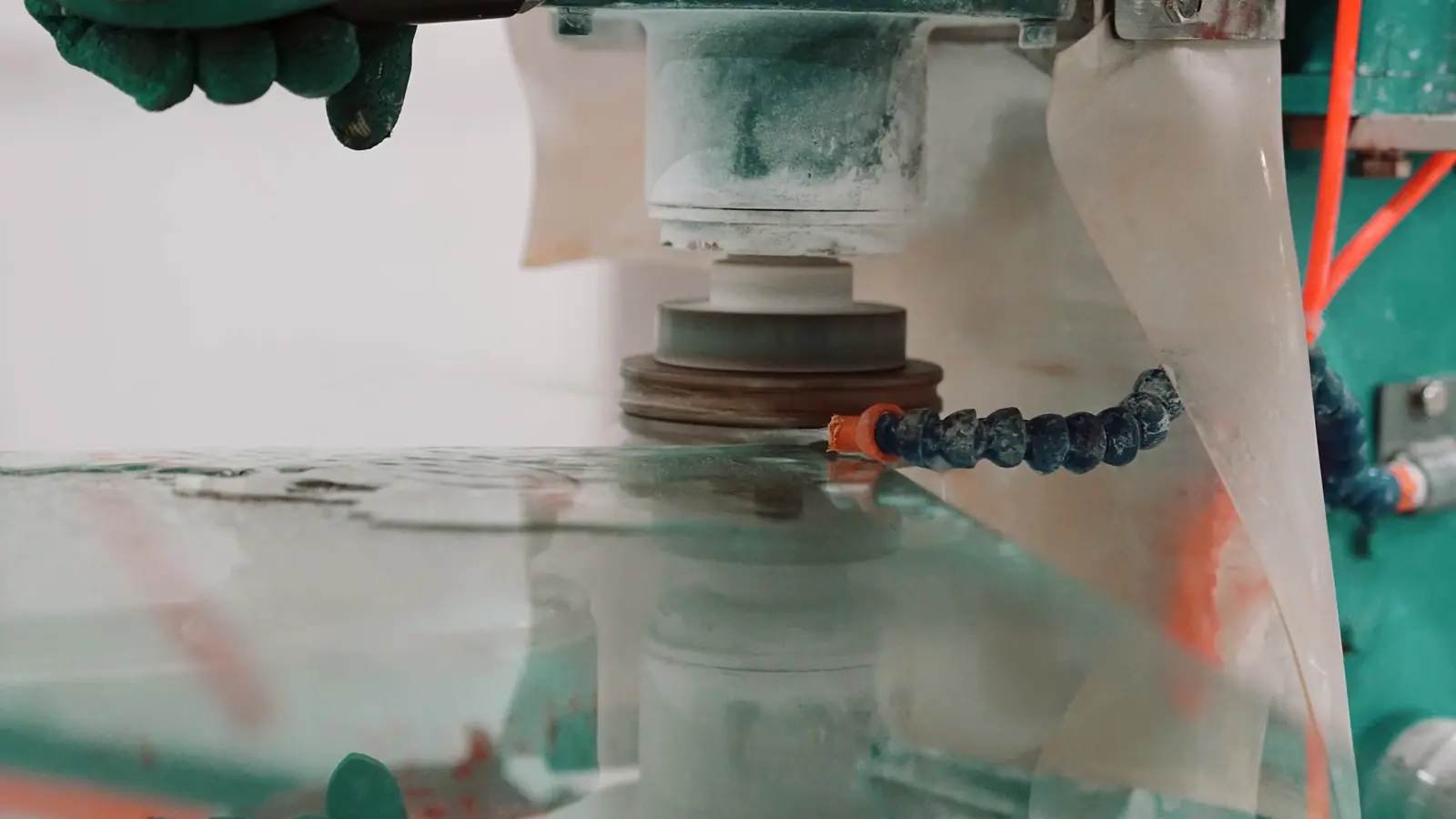
According to the Glass Association’s guidelines for producing heat-treated glass, the edge must be treated before heat treatment to prevent excessive breakage in the furnace. The guidelines name three common methods:
- Seamed edge: sharp edges are removed with diamond wheels or an abrasive belt. The edge may look slightly rough, but the sharpness is gone.
- Ground edge: made with a series of diamond wheels, from coarse to fine grit.
- Polished edge: produced with polishing wheels after grinding.
For applications where the edge stays exposed, the guidelines describe ground and polished edges as the most desired. They also recommend inspecting the edgework for quality and uniformity.
03 / 06
Why are edges not reworked after tempering?
Heat-treated glass carries high internal stresses. For this reason, the Glass Association states that all fabrication, including cutting, hole drilling, notching and edge treatment, must be completed before the glass is heat treated.
The association’s paper on exposed edges of heat-treated laminated glass cites ASTM C1048: fabrication that alters the surface, thickness or edge should be done before heat treatment. The paper says it does not endorse finishing the edges of heat-treated glass afterwards. One reason is that edge compression, and the depth of the compressive layer at the edge, can be reduced.
In practice, edge appearance, hole positions and corner details should be settled when the order is placed. Grinding the edge a little more after tempering is not seen as a route consistent with the standards the association cites.
04 / 06
How do edge finishing and checks appear at Ekol Glass?
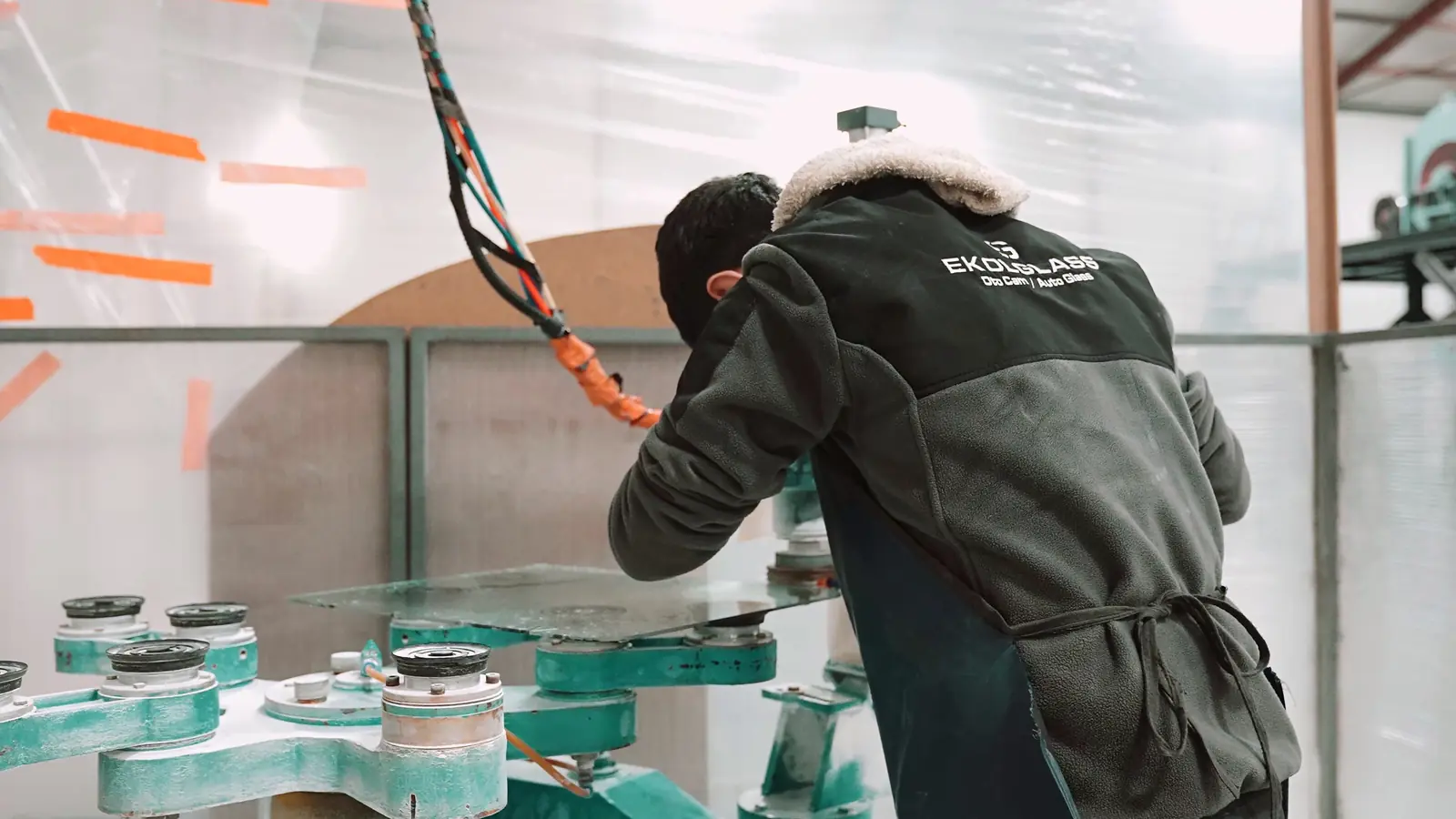
At the Ekol Glass plant in Yıldırım, Bursa, the work includes CNC and precision cutting, glass processing (edging, water-jet), screen printing, tempering, framing and double glazing. Quality control starts with a review of the technical data and continues with in-process checks at cutting, processing, screen printing and tempering.
Tempered batches are followed by a fragmentation test and process verification. Details such as edge and shape therefore need to be settled during the technical review, before production starts.
The website does not publish unverified tolerances, so tolerances and thickness options are confirmed per project. If you have an edge expectation, state it in writing in your quote request.
05 / 06
How do you protect edges during handling, storage and installation?
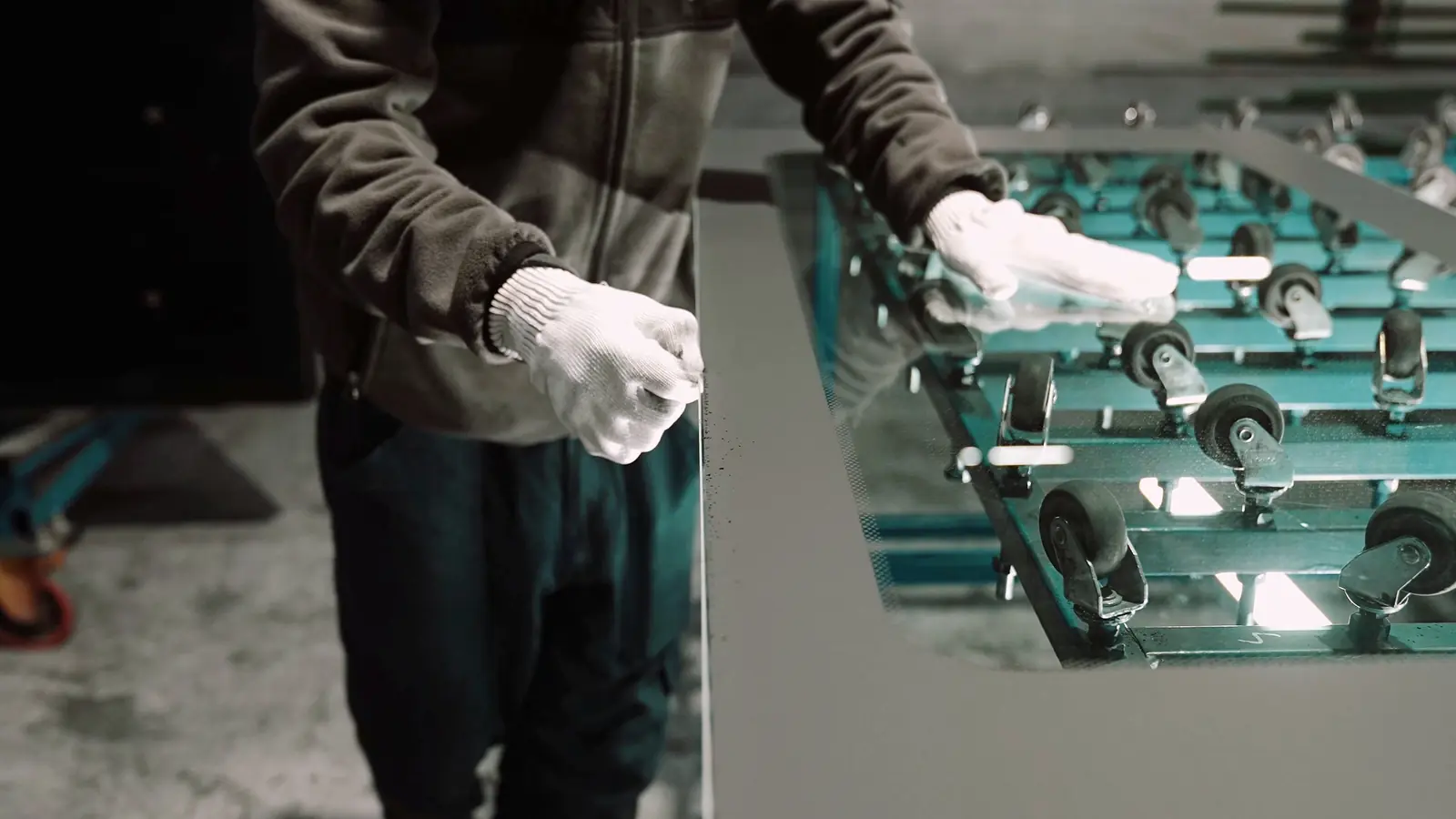
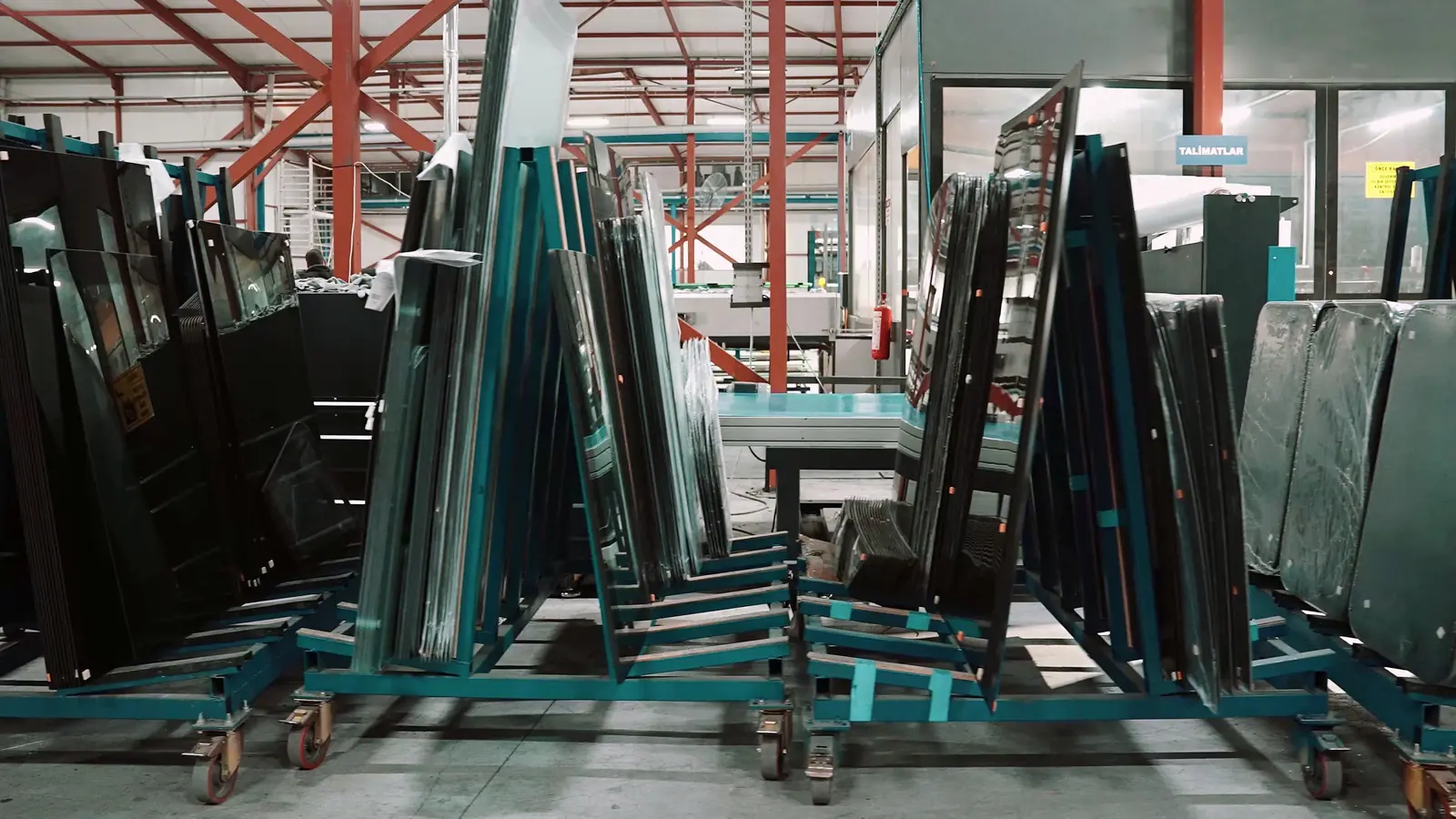
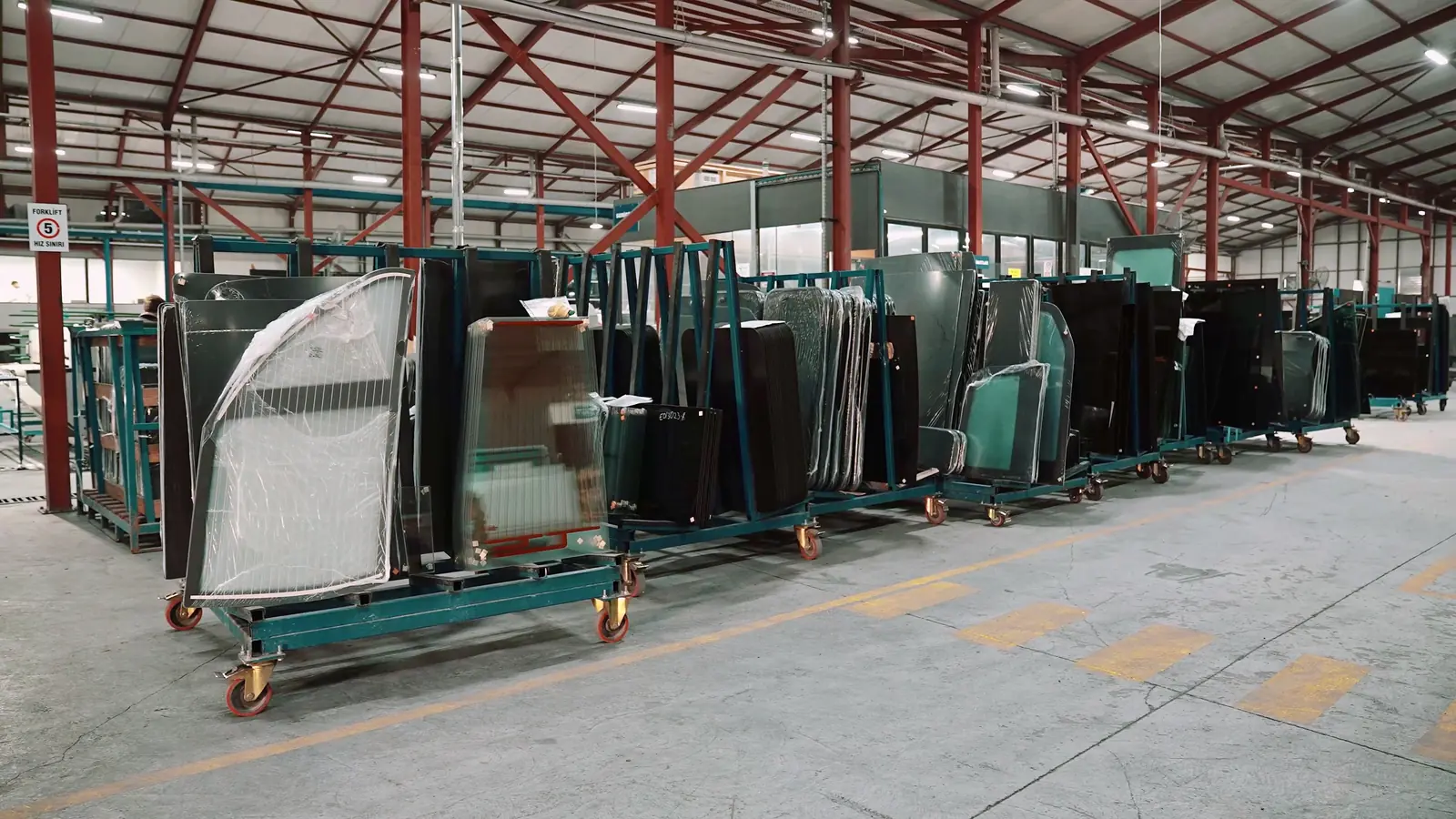
Edge damage often happens after production, during handling and storage. The Glass Association’s production guidelines give concrete advice:
- Racks and A-frames should be cleared of debris and glass chips before glass is placed on them.
- Lites should be separated with materials such as cork, paper or cardboard.
- Glass edges that extend beyond the rack perimeter should be flagged or covered.
The information leaflet of the German statutory accident insurers (DGUV) on glass doors and glass walls asks that the edges of toughened glass (ESG) have no burr and no sharp, pointed corners. It also asks planners to check whether edge protection is needed near the floor. According to the leaflet, glass elements with edge injuries, shell-shaped breakouts or scratches should be taken out of use and replaced.
06 / 06
What edge information belongs in a quote request?
The edge requirement is set by the processing done before tempering. The following details in a quote request make the job clear:
- Whether the edge stays exposed or sits inside a frame or seal
- The expected edge appearance: seamed, ground or polished
- Holes, notches and corner cuts
- Handling and packing expectations
- A DXF, DWG or PDF drawing and the quantity
Ekol Glass asks for the application or project identifier, dimensions or a drawing, quantity, colour, thickness, secondary processing and target schedule; specifications are confirmed during technical review. Adding the edge details to this list reduces the need for corrections later.
- 01Exposed edge or edge in a frame?
- 02Seamed, ground or polished edge
- 03Holes, notches and corner cuts
- 04DXF, DWG or PDF drawing and quantity
Frequently asked questions
What should be done if the edge of tempered glass is chipped?
The DGUV leaflet on glass doors asks that glass elements with edge injuries, shell-shaped breakouts or scratches be taken out of use and replaced. Because edge work after tempering is not supported by the standards, replacing the damaged pane is the approach described rather than trying to repair it.
Why is the edge of tempered glass finished before tempering?
Heat-treated glass carries high internal stresses. The Glass Association asks that all fabrication, including cutting, drilling, notching and edge work, is finished before heat treatment. Treating the edge beforehand also helps prevent excessive breakage in the furnace.
Does tempered glass need a polished edge?
Not always. The Glass Association’s guidelines describe ground and polished edges as the most desired where the edge stays exposed. If the edge sits in a frame or seal, the choice depends on the project and is confirmed in technical review during the quote.
Can holes or notches be added after tempering?
No. The Glass Association requires all fabrication, including hole drilling, notching and edge treatment, to be completed before heat treatment. Hole and notch details therefore need to be given together with the order.
Next reads
Technical toughened glass for machines and equipment: what to expect
What to know before choosing toughened glass for machines, equipment and vehicles: strength, order of processing, bow and roller waves, iridescence, marking and records, explained from open sources.
Read article
How is glass tempered? From heating to rapid cooling, step by step
Tempered glass is made by heating flat glass and cooling it rapidly with air. This article explains, from open sources, what the process changes inside the glass and why cutting, edging and drilling must be finished before tempering.
Read article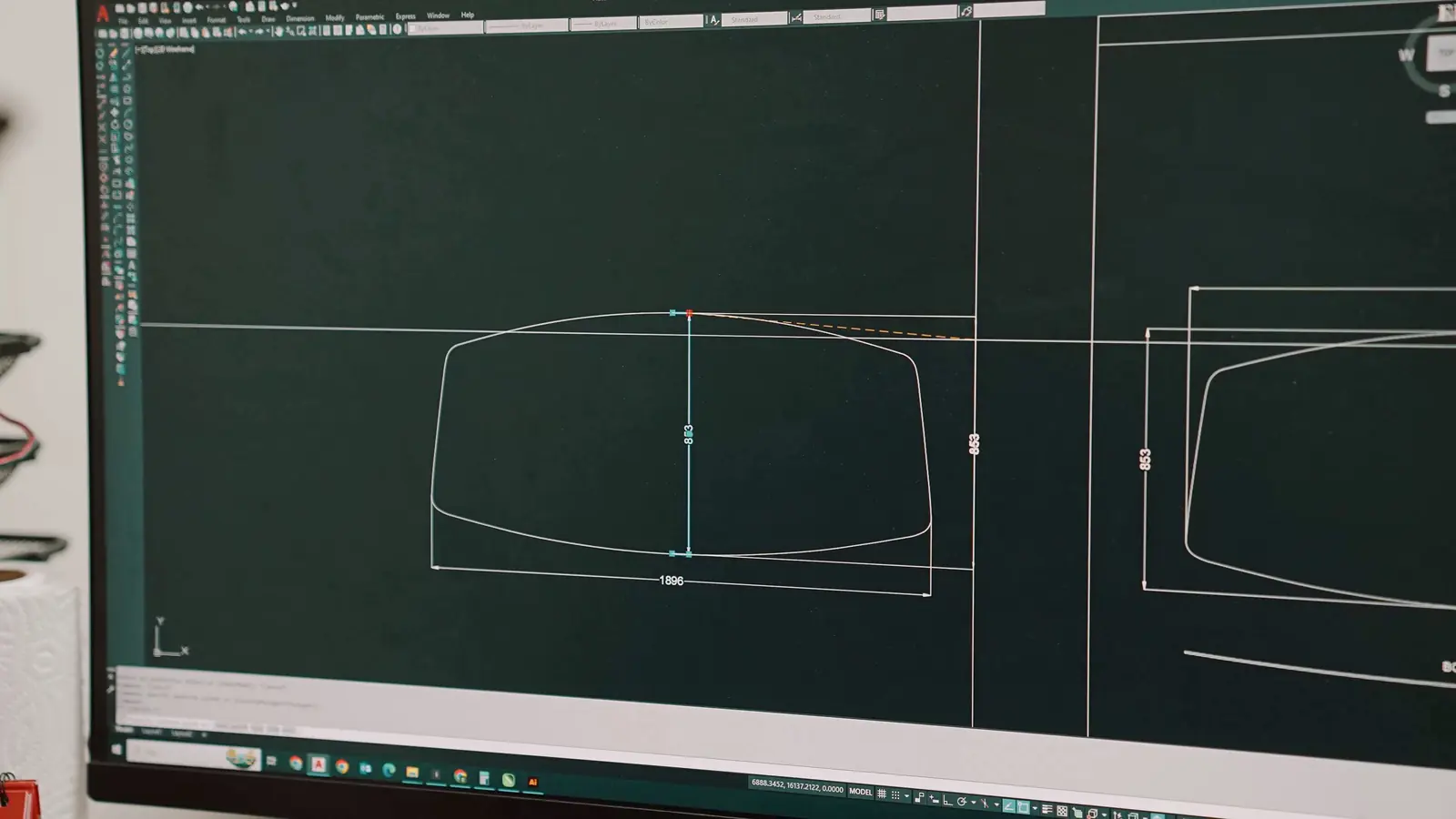
Which file format for a glass drawing? DXF, DWG and PDF compared
When you send a drawing for a glass quote, DXF, DWG and PDF do not do the same job. This article explains what each format carries, where misunderstandings arise and what the drawing must show, based on open sources.
Read article