In machine, equipment and vehicle projects, glass is often a technical part: cut to a drawing, drilled and then toughened. Toughened glass is strong and breaks into small pieces, but some of its characteristics come with the process and cannot be changed afterwards. This article explains, from open sources, what can be expected: strength, order of processing, bow and waves, iridescence, marking and records.
01 / 05
What is technical glass and why is toughened glass often chosen?
Technical glass is not a standard sheet. It is made to a drawing for a specific machine, piece of equipment or vehicle, so size, outline, holes, edges and printing belong to that one part.
Toughened glass is often considered for such work because heat treatment places the surfaces under compression. According to the GANA Glazing Manual published by the National Glass Association (NGA), fully tempered glass is generally considered four times stronger than annealed glass of the same thickness, size and type, and twice as strong as heat-strengthened glass.
The same source says fully tempered glass breaks immediately into relatively small pieces, which greatly reduces the likelihood of serious cutting or piercing injuries compared with broken annealed glass.
One detail is often missed: stiffness does not change. The manual states that annealed, heat-strengthened and fully tempered glass have the same stiffness, so deflection under the same load is identical. Toughening makes glass stronger, not stiffer.
02 / 05
How is toughened glass made, and why is all processing done first?
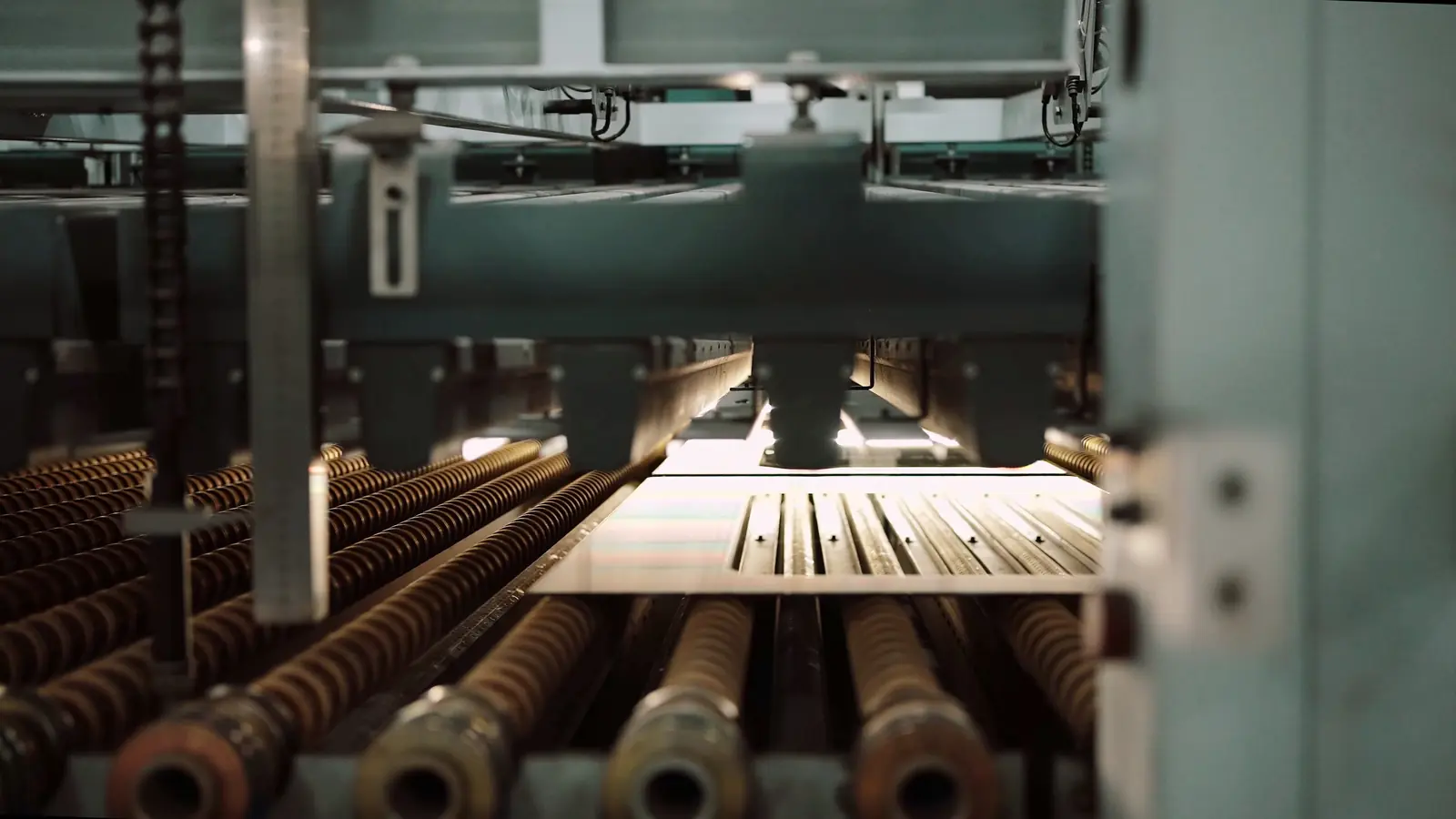
NGA technical paper FB13-07 describes the common process for architectural glass. The glass is cut to size and shape, the edges are prepared to the specified condition, the glass is washed and then passed through a tempering furnace. There it is heated evenly to about 621 °C (1150 °F). At the exit, air is blown onto all surfaces at once to cool it rapidly.
This cooling puts the surfaces into high compression and the core into tension. According to the paper, each surface compression zone is about 20% of the glass thickness and the middle 60% is the tension zone.
That explains the order of work. Cutting, drilling or some surface treatments after toughening can reach the compression layer. The paper says this can happen at as little as 0.64 mm for 3 mm glass and 1.02 mm for 6 mm glass.
Section 7 of ASTM C1048 requires cutting, edgework, drilled holes, notching, grinding, sandblasting and etching to be done before heat-strengthening or tempering.
03 / 05
Are bow, roller waves and iridescence defects in toughened glass?
Not necessarily. According to the GANA manual, some bow and warp is an inherent characteristic of all heat-treated glass. Glass heat-treated horizontally has characteristic waves or corrugations caused by the transport rollers. Glass held by tongs in a vertical furnace may show a long arc or "S" curve, plus minor distortion at the tong points.
Another effect is iridescence, also called strain pattern or anisotropy. NGA notes that it may be visible in heat-treated glass under certain polarized lighting conditions. ASTM C1048 says the strain pattern does not affect the physical properties or performance of the glass and is not a defect or a cause for rejection.
The European DIN SPEC 18198 classifies the optical quality of monolithic glass as A, B or C using two measurement methods. As NGA reports, visibility depends on glass thickness, coatings and viewing conditions.
If appearance matters, for example for an inspection window or a panel in front of a display, say so when you request the quote.
04 / 05
Why do marking and records matter for toughened glass?
You cannot tell from the outside how a piece of toughened glass was made. Marking and records make quality traceable.
A 2026 report by the UK Office for Product Safety and Standards (OPSS) describes the rules for building glass. Under EN 12150, toughened glass must be permanently marked with the manufacturer's name or trademark and the standard number, and detailed production records must be kept. Factory production control includes a bow test and a fragmentation test.
The report also stresses that no reliable test after production can show whether glass has been heat soaked, so record keeping is essential.
These examples concern building glass. For machine, equipment or vehicle glass, the marking and records needed depend on the application and the rules that apply to it. The GANA manual adds that fully tempered glass meeting ASTM C1048 does not automatically qualify as safety glazing in hazardous locations. Clarify the requirement with the supplier at the start.
05 / 05
What does Ekol Glass ask for in a custom technical glass request?
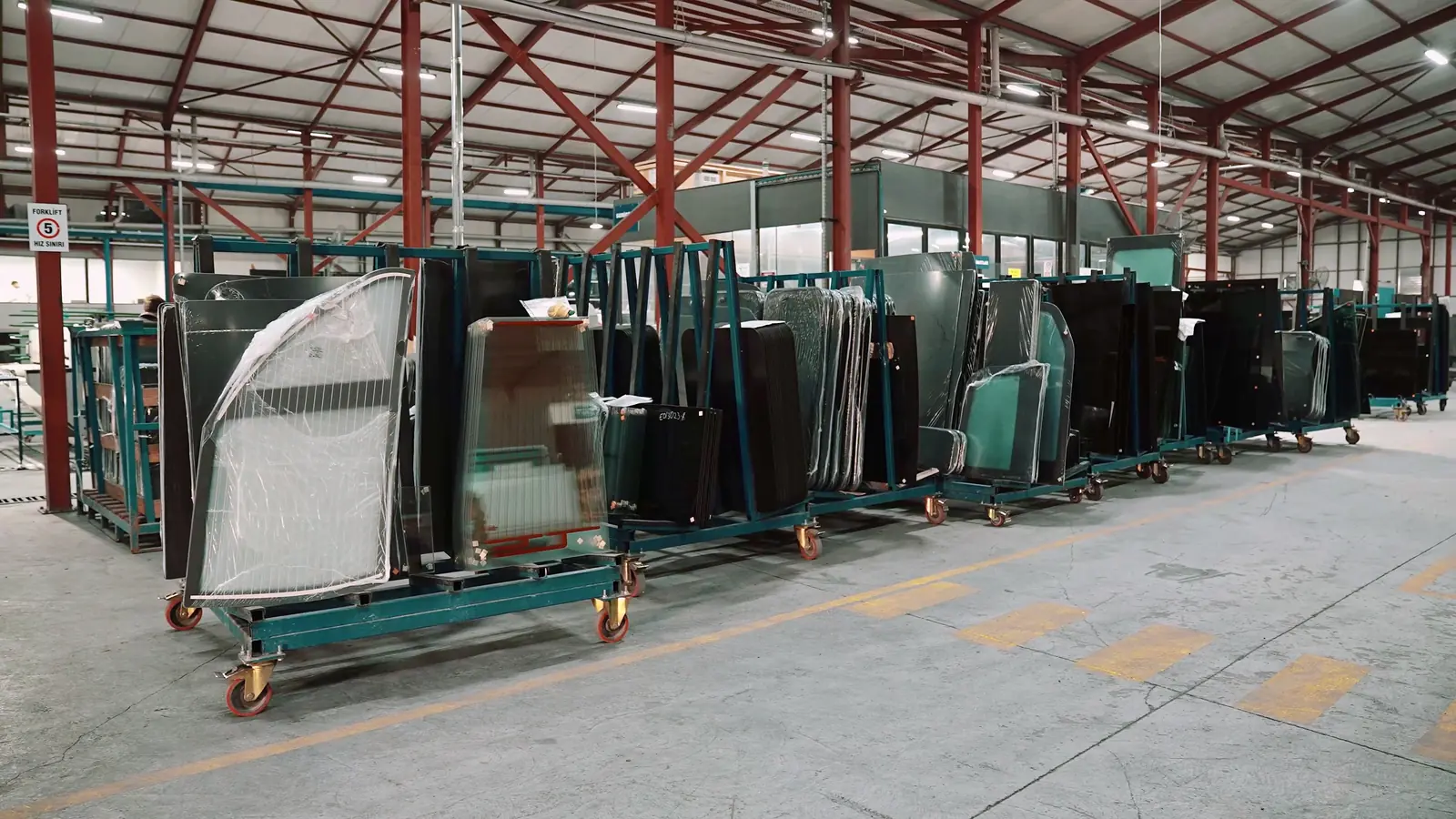
At its plant in Yıldırım, Bursa, Ekol Glass performs CNC and precision cutting, glass processing (edging, water-jet), screen printing, tempering, framing and double glazing. It manufactures toughened (single-ply tempered) safety glass for vehicles and custom projects.
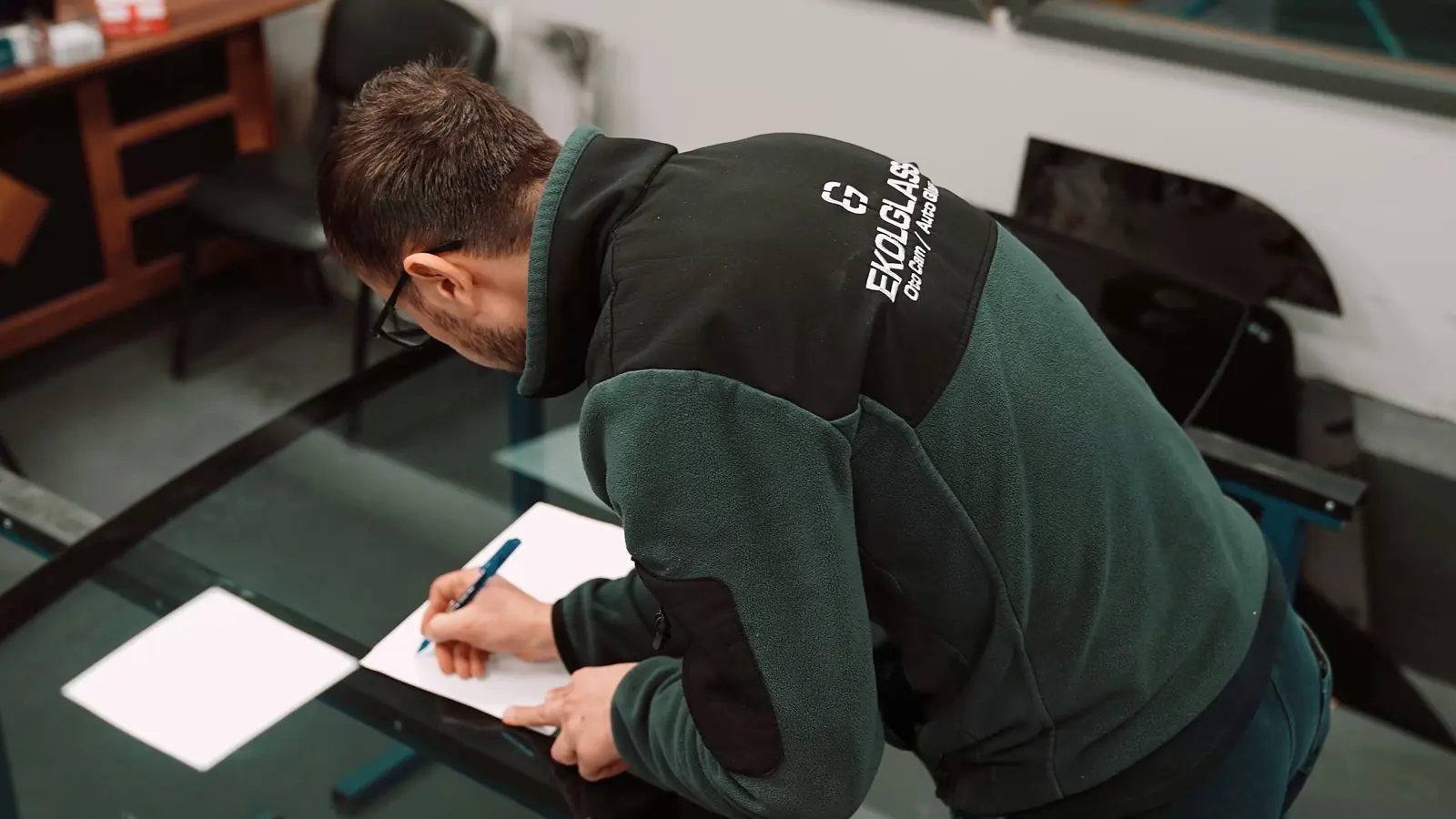
A quotation needs the application, vehicle or project identifier, dimensions or a DXF, DWG or PDF drawing, quantity, colour, thickness, secondary processing and target schedule. Specifications are confirmed during technical review.
Quality control starts with a review of the technical data and continues with in-process checks at cutting, processing, screen printing and tempering. Tempered batches are followed by a fragmentation test and process verification.
The website does not publish unverified tolerances. Tolerances and thickness options are confirmed per project, so nothing in this article is a promise about tolerance or thickness.
These points speed up the technical review:
- 01The machine, equipment or vehicle the glass is for
- 02Dimensions or a DXF, DWG or PDF drawing
- 03Quantity, colour and thickness
- 04Holes, edges, screen printing and other processing
- 05Appearance expectations and target schedule
Frequently asked questions
Can toughened glass be cut or drilled afterwards?
No. According to NGA, cutting and drilling heat-treated glass after toughening will result in breakage, and grinding, sandblasting or etching can weaken it. Holes, notches, edges and the outline are therefore fixed in the drawing, and the glass is toughened after all processing is done.
How much stronger is toughened glass than ordinary glass?
The GANA manual says fully tempered glass is generally considered four times stronger than annealed glass of the same thickness, size and type. Stiffness is the same, so deflection under a given load does not change. This is a general statement from the source, not a promise for a specific part.
Are roller waves and iridescence normal in toughened glass?
To a degree, yes. Bow and warp are inherent to heat-treated glass, and horizontal furnaces can leave roller waves. Iridescence shows under polarized light and, according to ASTM C1048, is not a glass defect. If appearance matters, state it in the quote request.
What information is needed for a technical glass quote?
The application or vehicle, project identifier, dimensions or a DXF, DWG or PDF drawing, quantity, colour, thickness, secondary processing and target schedule are requested. Specifications are confirmed in technical review, and tolerances and thickness options are confirmed per project.
Next reads
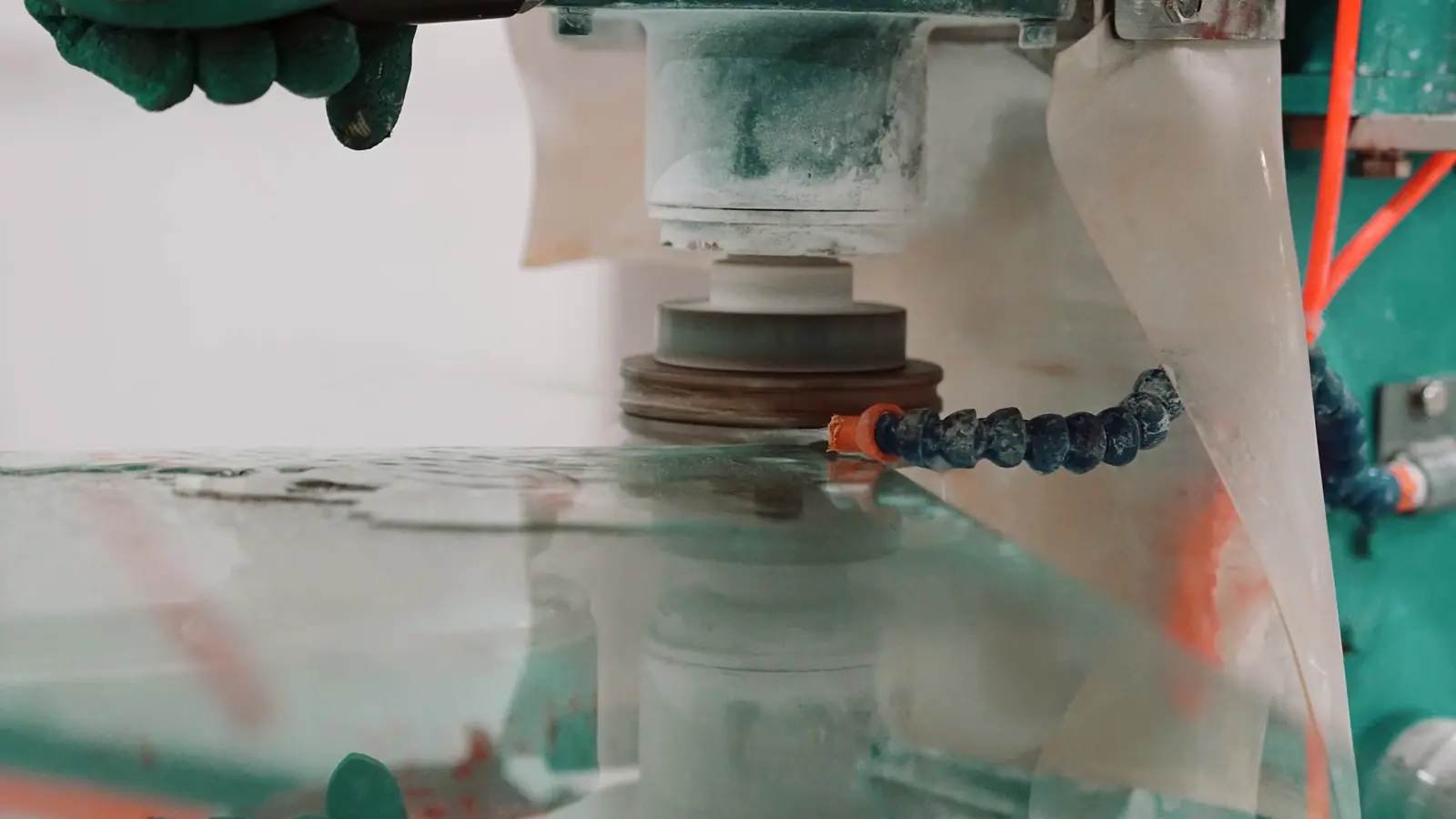
Why is edge damage risky for tempered glass? Edge finishing, handling and checks
A small chip or burr on the edge of tempered glass can reduce the strength that heat treatment gives. How edges are finished, why they cannot be reworked after tempering, and how to protect them.
Read article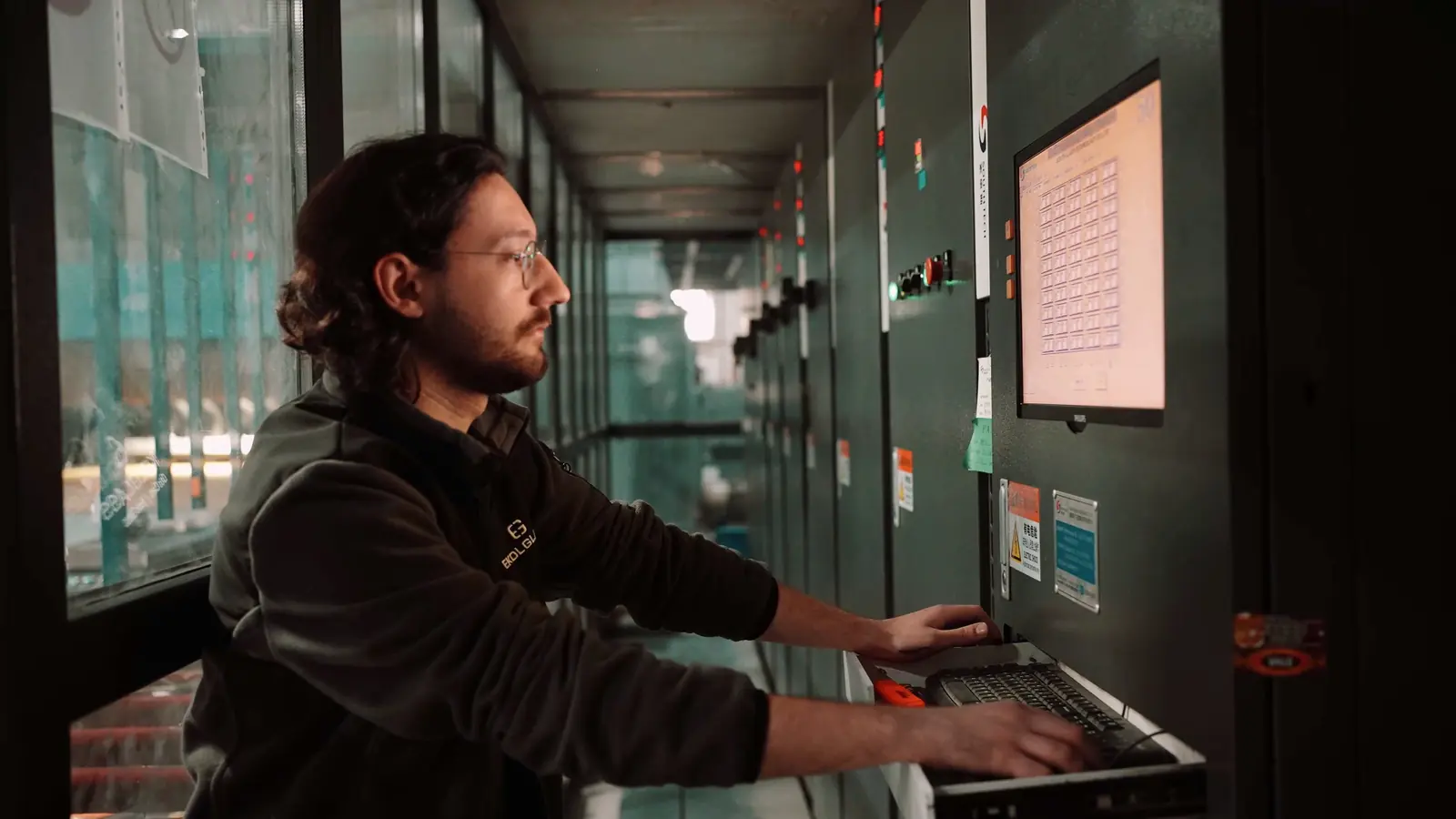
How is glass tempered? From heating to rapid cooling, step by step
Tempered glass is made by heating flat glass and cooling it rapidly with air. This article explains, from open sources, what the process changes inside the glass and why cutting, edging and drilling must be finished before tempering.
Read article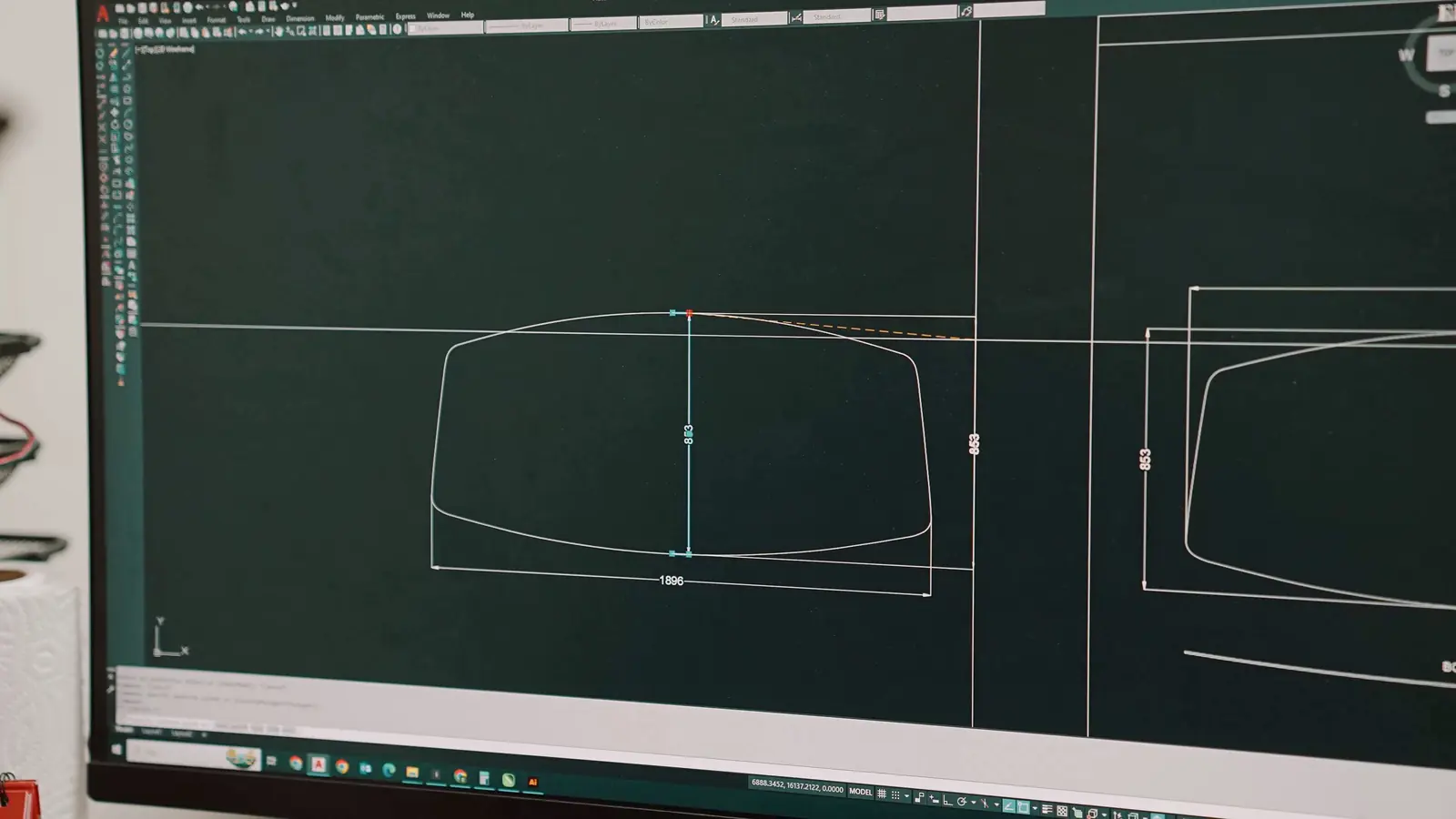
Which file format for a glass drawing? DXF, DWG and PDF compared
When you send a drawing for a glass quote, DXF, DWG and PDF do not do the same job. This article explains what each format carries, where misunderstandings arise and what the drawing must show, based on open sources.
Read article