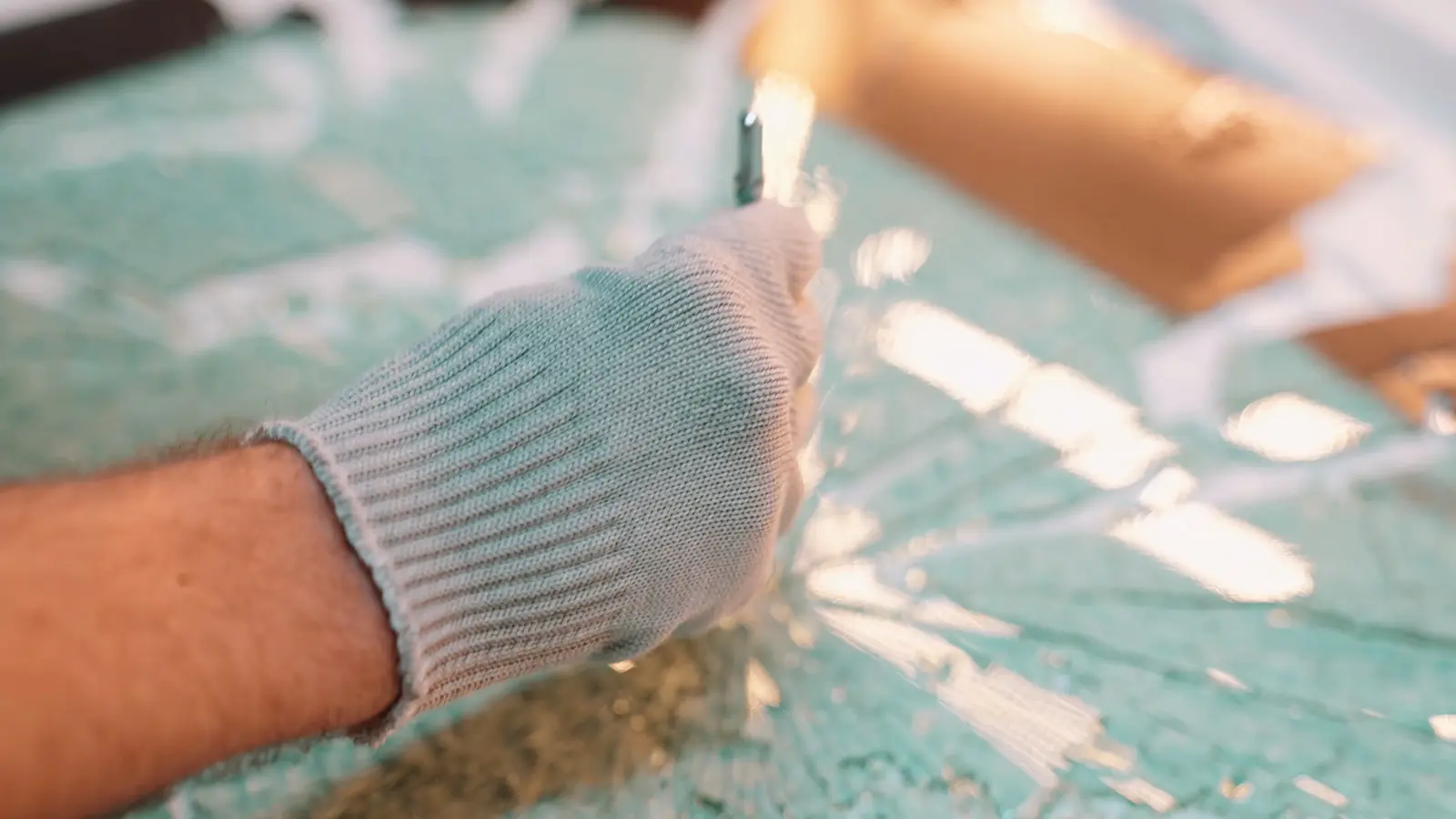
Can tempered glass break by itself? Can a glass pane that nobody touched suddenly fall into pieces? With tempered glass this question comes up often, and the honest answer is yes, but the cause has to be told apart. Based on open sources, this article explains what a nickel sulphide inclusion is, why it causes delayed breakage, what heat soak testing reduces, and how edge damage and thermal stress can lead to similar results.
01 / 06
Can tempered glass really break by itself?
Yes, but it is very rare. Tempered glass carries compression at its surfaces and tension in its core. This stress pattern makes the pane more resistant to impact and temperature differences than ordinary glass. The same stress also loads the area around any flaw hidden in the core.
"Spontaneous" breakage means breakage without a visible impact. The most widely known cause is a tiny nickel sulphide inclusion left in the glass. The pane can fail months or even years after installation.
Not every unexpected breakage comes from this cause, though. Damage on the edge or a temperature difference across the pane can create a similar picture. To choose the right precaution, you first need to tell the causes apart. The sections below take them one by one.
02 / 06
What is a nickel sulphide inclusion and why does it cause delayed breakage?
A nickel sulphide inclusion is a microscopic nickel-sulphur crystal that forms unintentionally during float glass production. An article published by IIBEC gives its size as roughly 0.05 to 0.5 mm, and it is usually invisible in intact glass. Nickel comes mainly from raw-material impurities and stainless steel equipment, sulphur mainly from fining agents.
During tempering the glass is heated to about 620 °C. At that temperature the inclusion is in its smaller-volume, high-temperature phase. Rapid cooling traps it in that phase. At room temperature it then slowly converts to the stable phase.
This conversion enlarges the inclusion by roughly 2.5 to 4 percent. If it happens in the tensile core, which the article places at about the inner 60 percent of the thickness, high stress builds up around it and a crack can start. Because the conversion is slow, the breakage is delayed.
03 / 06
What does heat soak testing do?
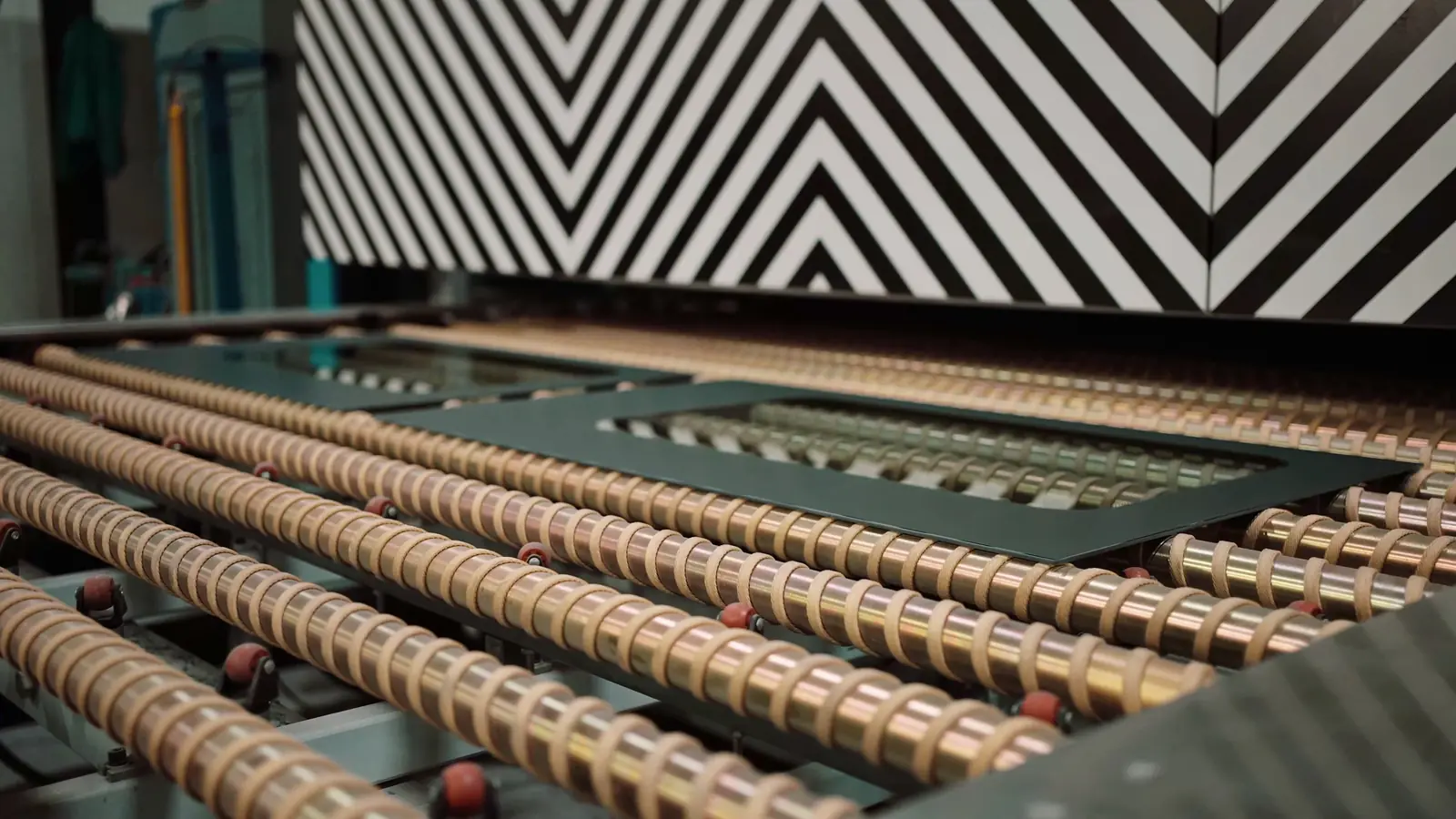
Heat soak testing means heating tempered glass in a controlled oven and holding it for a set time. The aim is to speed up the nickel sulphide conversion in the factory. A pane with a critical inclusion then breaks in the oven instead of in the building. The IIBEC article gives about 280 °C and about two hours as a typical example; exact values depend on the standard and the practice.
BSI describes BS EN 14179-1:2016 as covering the heat soak process system, tolerances, flatness, edgework and fragmentation of flat, monolithic, heat-soaked toughened glass. The same page states that a known level of residual risk of spontaneous breakage remains.
The test therefore reduces the risk; it does not remove it. The standard itself takes a statistical view, and it cannot be guaranteed that a given pane will never break.
- 01Tempered glass is placed in a controlled oven
- 02Heating, a hold at constant temperature and cooling follow
- 03Glass with a critical inclusion breaks in the oven
- 04Surviving glass ships together with its records
04 / 06
Why do heat soak records matter?
In the United Kingdom the product safety regulator OPSS inspected manufacturers that heat soak glass for buildings and published a sector report. According to the report there is no reliable way to show after production whether glass has been heat soaked. Manufacturers therefore have to rely on production records such as the heat soak curve.
The curve shows three phases: heating, a hold at a consistent temperature and cooling. The report also stresses oven calibration, thickness measurement and traceability of records to the order.
The findings are striking. Of the 28 manufacturers inspected, 25 percent could not produce adequate oven calibration records. Nine prohibition notices were served on six manufacturers.
The lesson for buyers is clear: a heat soak claim should be backed by a documented process. These findings concern the building glass sector, but the logic of records and traceability applies everywhere.
05 / 06
What else can cause breakage, and how can it be told apart?
Not every spontaneous breakage is nickel sulphide. The UK research body BRE Group explains that thermal fracture usually starts at the edge of the pane, first running perpendicular to the edge and the face and then meandering. The first crack may be hidden inside the rebate or bead.
According to BRE, imperfections on the edge concentrate stress, and the condition of the edge strongly influences cracking. Toughened and heat-strengthened glass resist thermal stress better than annealed glass, but a damaged edge still adds risk under demanding conditions.
The typical sign of nickel sulphide breakage is the fracture origin. The IIBEC article describes a crack spreading symmetrically from one point, with two similar-sized polygons holding the inclusion between them, often called a butterfly pattern. There is no crushing at the origin, which helps to separate it from impact damage.
Keeping the fragments and the fracture origin makes a later investigation easier.
06 / 06
How does Ekol Glass handle this, and what should a buyer ask?
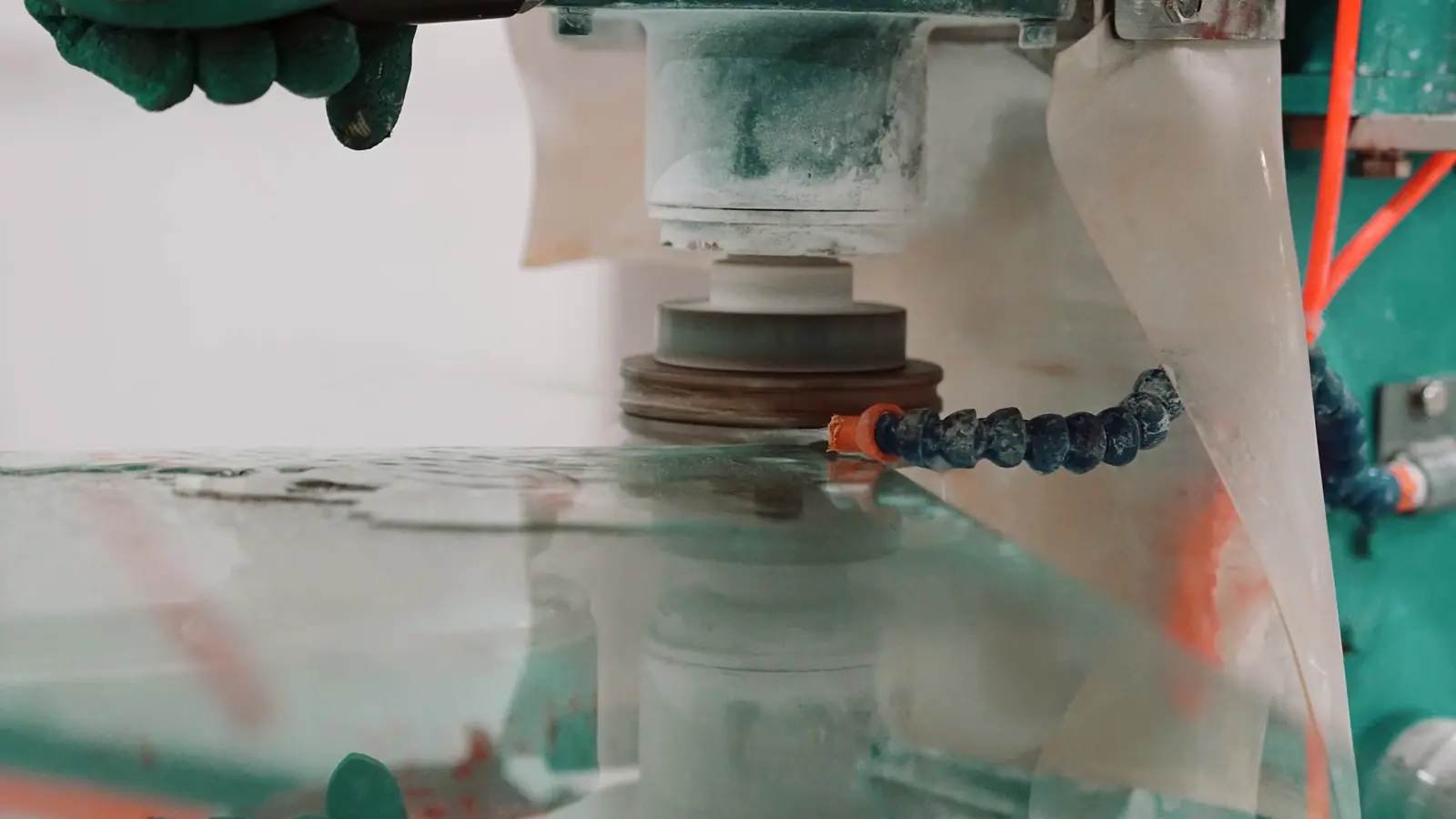
At its plant in Yıldırım, Bursa, Ekol Glass manufactures toughened, single-ply safety glass for vehicles and custom projects. Quality control starts with a review of the technical data, continues with in-process checks at cutting, processing, screen printing and tempering, and tempered batches are followed by a fragmentation test and process verification.
The heat soak test described in this article is not stated as a service offered by Ekol Glass. If your project needs it, ask about it explicitly during the technical review. Tolerances and thickness options are confirmed per project.
Useful questions for any supplier:
- What is the application, and what happens if the glass breaks?
- Is heat soaking required, under which standard, and with which records?
- How are the edges processed and checked?
- How are fragments kept for analysis if breakage occurs?
- 01Application and consequence of breakage
- 02Heat soak requirement and standard
- 03Documented process records
- 04Edge processing and checks
- 05Keeping fragments for analysis
Frequently asked questions
Does spontaneous breakage mean the tempered glass was defective?
Not necessarily. A microscopic flaw such as a nickel sulphide inclusion can form during glass production and cannot be seen. Edge damage or thermal stress are other possible causes. The cause can only be told apart by examining the fracture origin together with the conditions of use.
Does heat soak testing remove nickel sulphide risk completely?
No. The test makes glass with a critical inclusion break in the factory, which reduces the risk. According to BSI's description of BS EN 14179-1, a known level of residual risk remains, and no guarantee can be given that a pane will never break.
Can I tell afterwards that glass has been heat soaked?
According to the OPSS report there is no reliable test for this after production. Ask for production records such as the heat soak curve and traceability to your order. A claim without records cannot be verified.
What should I do with broken glass before clearing it?
Safety comes first: wear gloves and avoid broken edges. If an investigation is planned, keep the pieces around the fracture origin and photograph them. The structure of the origin helps to separate nickel sulphide breakage from impact breakage.
Next reads
Why is edge damage risky for tempered glass? Edge finishing, handling and checks
A small chip or burr on the edge of tempered glass can reduce the strength that heat treatment gives. How edges are finished, why they cannot be reworked after tempering, and how to protect them.
Read article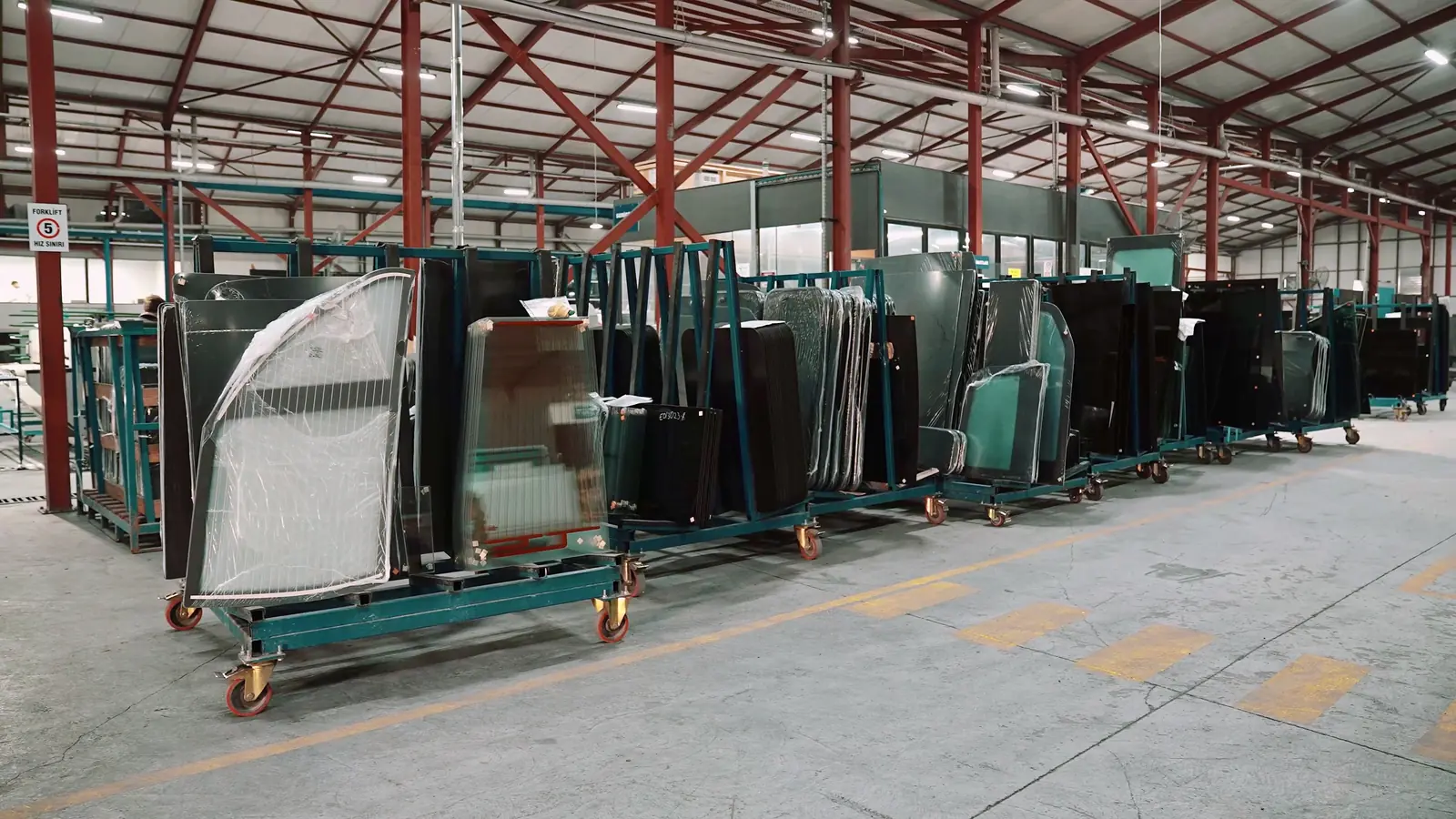
Technical toughened glass for machines and equipment: what to expect
What to know before choosing toughened glass for machines, equipment and vehicles: strength, order of processing, bow and roller waves, iridescence, marking and records, explained from open sources.
Read article
How is glass tempered? From heating to rapid cooling, step by step
Tempered glass is made by heating flat glass and cooling it rapidly with air. This article explains, from open sources, what the process changes inside the glass and why cutting, edging and drilling must be finished before tempering.
Read article