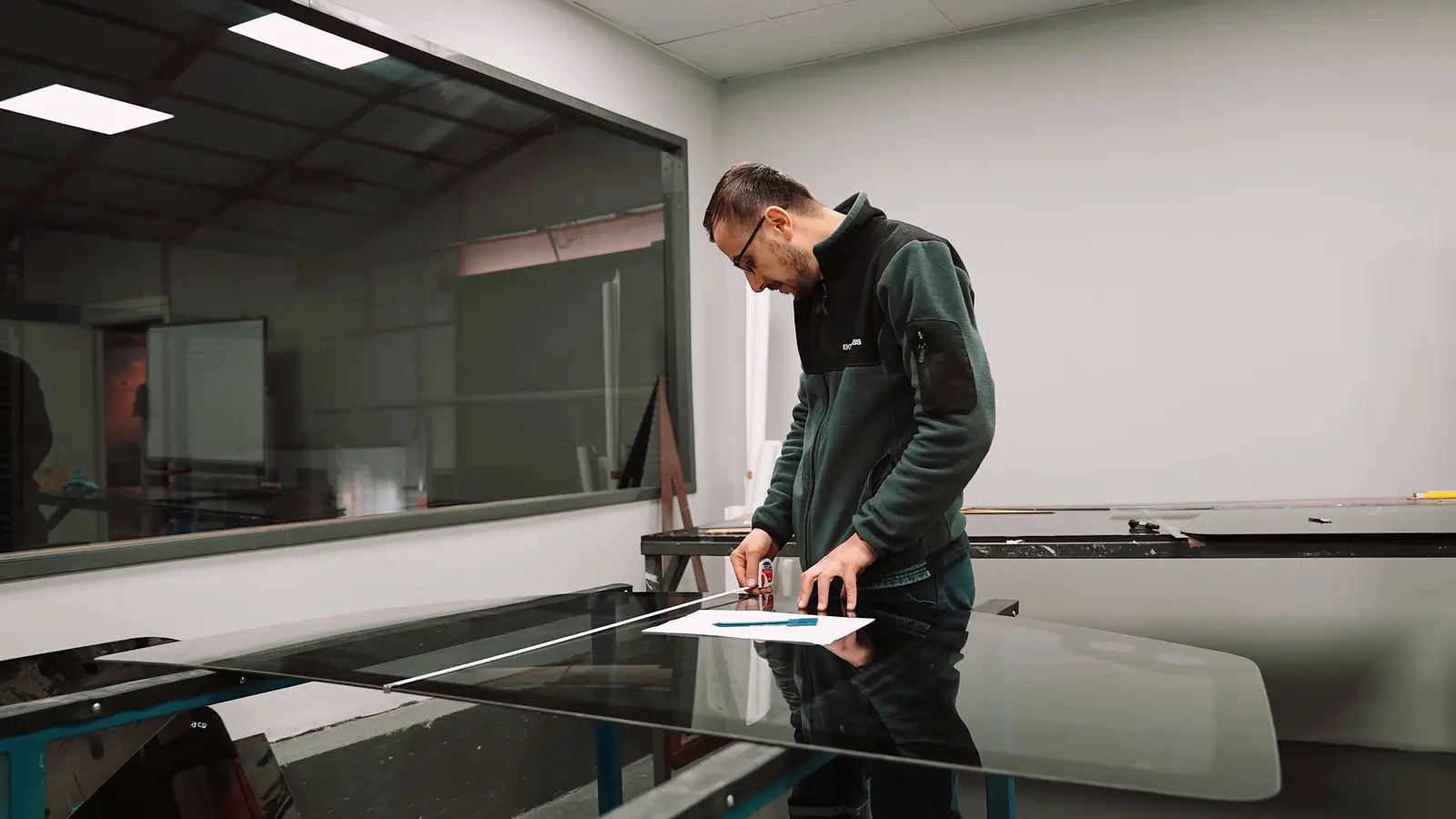
Custom-size tempered glass is not a product you can easily correct once the order is placed. After the glass has passed through the furnace, its shape and processing are final, so many decisions have to be made earlier, at drawing stage. This article summarises which topics to check before a quotation request, whether the glass is meant for a machine guard, an equipment panel or a vehicle application. It relies on documents from standards bodies such as ASTM and CEN. Some of them were written for building glass, and they are used here only to explain general principles.
01 / 06
Which processes must be finished before tempering?
For heat-treated flat glass, ASTM C1048 sets a clear principle: all fabrication, such as cutting to overall dimensions, edgework, drilled holes, notching and grinding, is done before heat treatment. The same document states that heat-treated glass cannot be cut afterwards. In short, no size correction is possible on tempered glass.
A pre-order checklist should therefore cover these items:
- final outer dimensions and contour
- type of edge finish
- position and diameter of holes, notches and corner cuts
- surface processes such as screen printing or colour
- place of use and the way the glass is mounted
If one of these items is missing, correcting it after sampling or series production means new glass.
02 / 06
What belongs on the drawing and in the order?
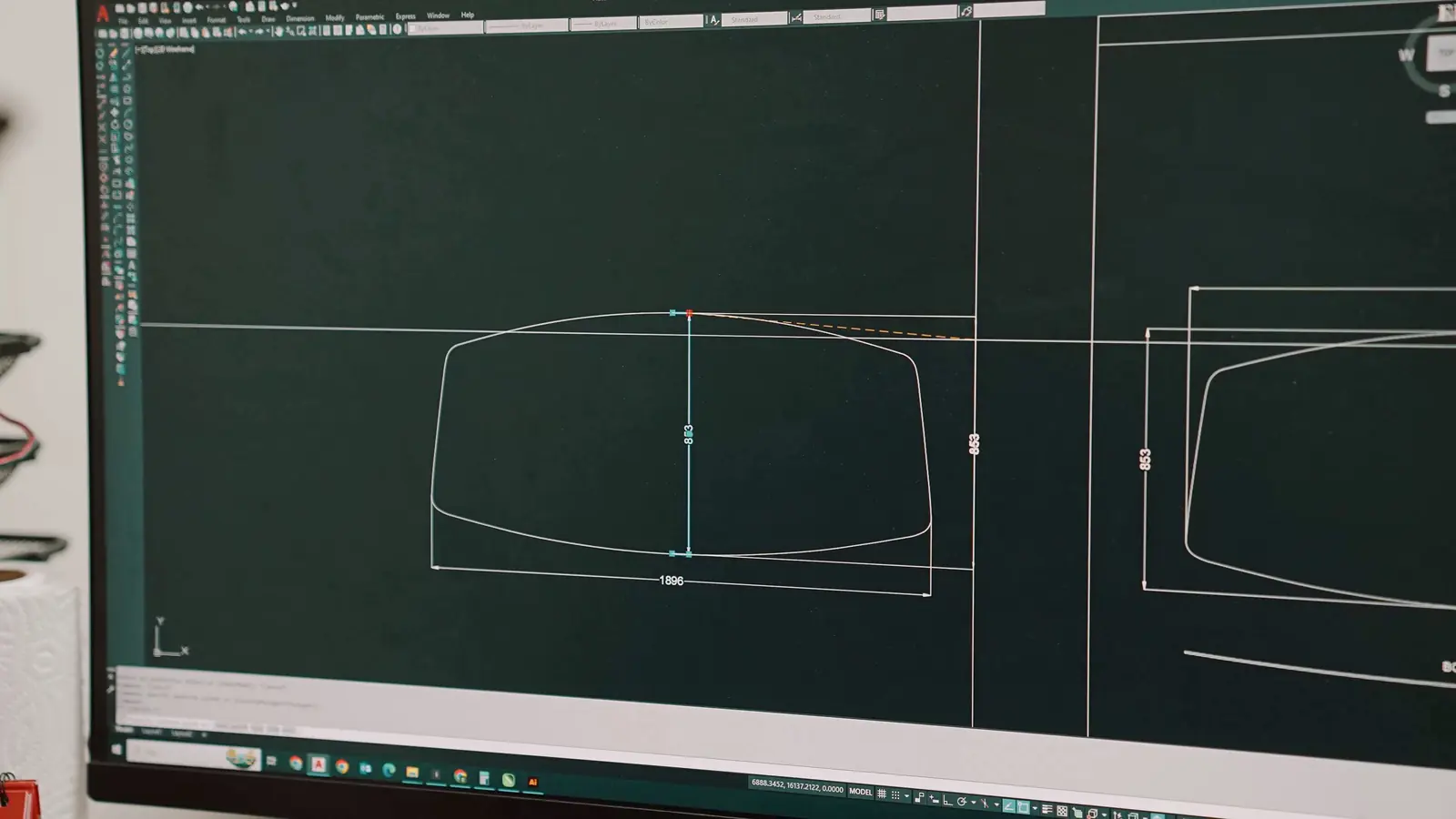
A drawing should describe both the shape and the processing of the glass at a glance. A DXF, DWG or PDF drawing leaves far less room for interpretation than hand-taken measurements. It should show the outer contour, corner radii, hole centres and diameters, and the distances to the edges separately.
EN 12150-1 is a product standard that covers tolerances, flatness, edgework and fragmentation. One of its clauses deals separately with edge and surface work, holes, notches and cut-outs. Marking these features clearly helps the manufacturer plan which operation happens in which order.
Quantity, colour and the intended use should travel with the drawing.
03 / 06
Why is tempered glass not as flat as annealed glass?
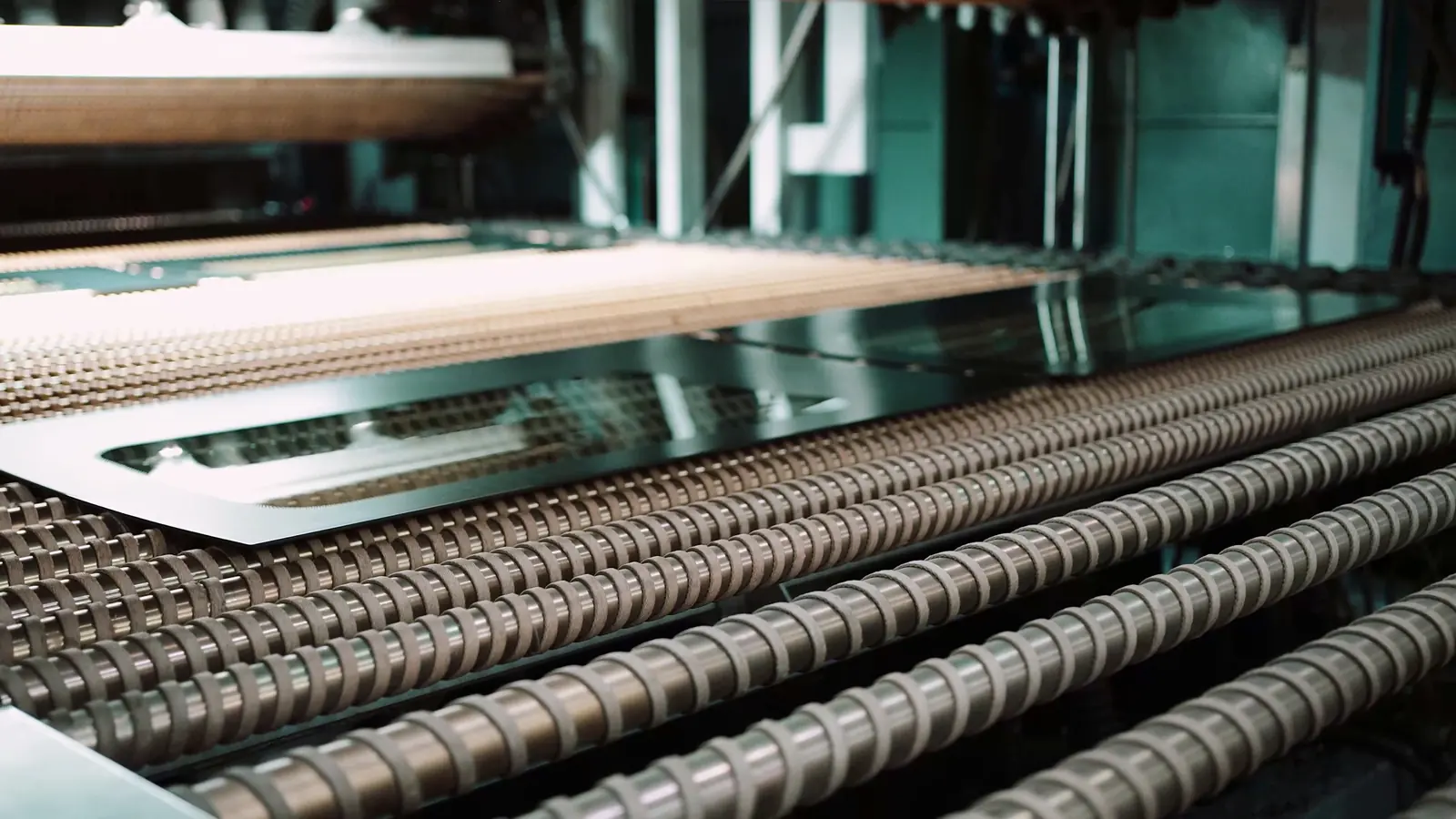
EN 12150-1 states plainly that, by the very nature of the toughening process, it is not possible to obtain a product as flat as annealed glass. The size of the deviation depends on the glass type, the thickness, the dimensions, the ratio between them and the toughening process used.
The standard lists several kinds of distortion, including overall bow, roller wave, edge lift and perimeter deformation. A note says that most of these can in general be accommodated by the framing system. Flatness is therefore a design question for the frame and the gasket as well as for the glass.
An order should say whether the pane will be seen in an exposed position or sit in a hidden frame, because visual and mechanical expectations are judged separately. Ekol Glass does not publish numerical limits on its website; tolerances and thickness options are confirmed per project.
04 / 06
What determines the thickness?
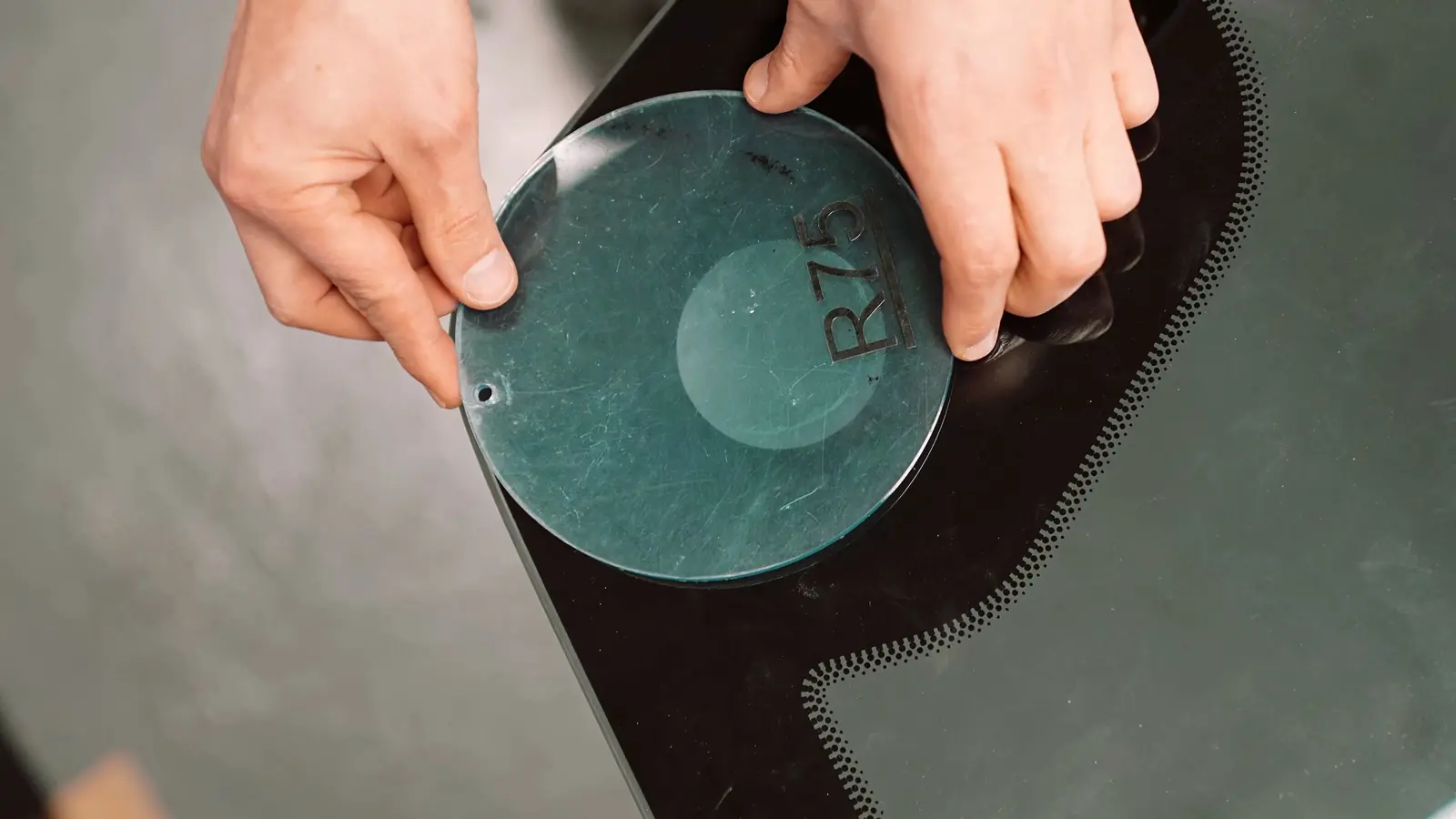
Glass thickness is not just a catalogue option; it depends on load, size and support. ASTM E1300 describes how the resistance of specified glass types to uniform lateral load is determined from glass thickness and size. The same document adds that the final choice also depends on other factors such as thermal stress, spontaneous breakage and behaviour after breakage.
The method does not apply to drilled, notched or grooved glass. It also notes that ceramic enamel is known to affect load resistance and advises consulting the manufacturer. A drilled and printed pane therefore cannot be read off a chart like a plain one.
These details help a thickness review:
- the load on the glass and its direction
- how many edges support it and how
- whether a heat source is nearby
- whether holes or screen printing are present
05 / 06
What is a heat soak test and when should you ask for it?
A rare risk of tempered glass is spontaneous breakage caused by nickel sulphide inclusions. EN 14179-1 describes heat soaked thermally toughened glass. The BSI summary of the standard says that this glass still carries a known level of residual risk of spontaneous breakage from critical nickel sulphide inclusions. Heat soaking reduces the risk; it does not remove it.
The standard was written for glass in buildings. For a vehicle or machine application, the project owner, the place of use and the applicable rules decide whether heat soaking is needed.
For the order, the task is simple: if heat soaking is required, state it in writing at quotation stage. It is not a step that can be added later, and it affects production planning.
06 / 06
How does Ekol Glass review custom-size requests?
Ekol Glass manufactures toughened (single-ply tempered) safety glass for vehicles and custom projects. The plant performs CNC and precision cutting, glass processing, screen printing, tempering, framing and double glazing.
A quotation needs the application, vehicle or project identifier, dimensions or a DXF, DWG or PDF drawing, quantity, colour, thickness, secondary processing and target schedule. Specifications are confirmed during technical review. Quality control starts with a review of the technical data and continues with in-process checks at cutting, processing, screen printing and tempering; tempered batches are followed by a fragmentation test and process verification.
Adding the checklist from this article to a quotation request helps the technical review stay complete.
Frequently asked questions
Can holes or cuts be made in tempered glass later?
No. According to ASTM C1048, all fabrication such as cutting, edgework, holes and notches is done before heat treatment, and tempered glass cannot be cut afterwards. Size and processing decisions must therefore be final before the order.
Will tempered glass be as flat as annealed glass?
No. EN 12150-1 states that by the nature of the toughening process the product cannot be as flat as annealed glass. Deviations such as roller wave and overall bow can in general be accommodated by the framing system.
Does heat soaking remove the risk of spontaneous breakage completely?
No. The BSI summary of EN 14179-1 says heat soaked tempered glass still carries a known residual risk. The process reduces the risk, and whether it is needed depends on the application.
What information should I send for a quotation?
The application, dimensions or a DXF, DWG or PDF drawing, quantity, colour, thickness, secondary processing and target schedule are requested. Specifications are confirmed during technical review.
Next reads
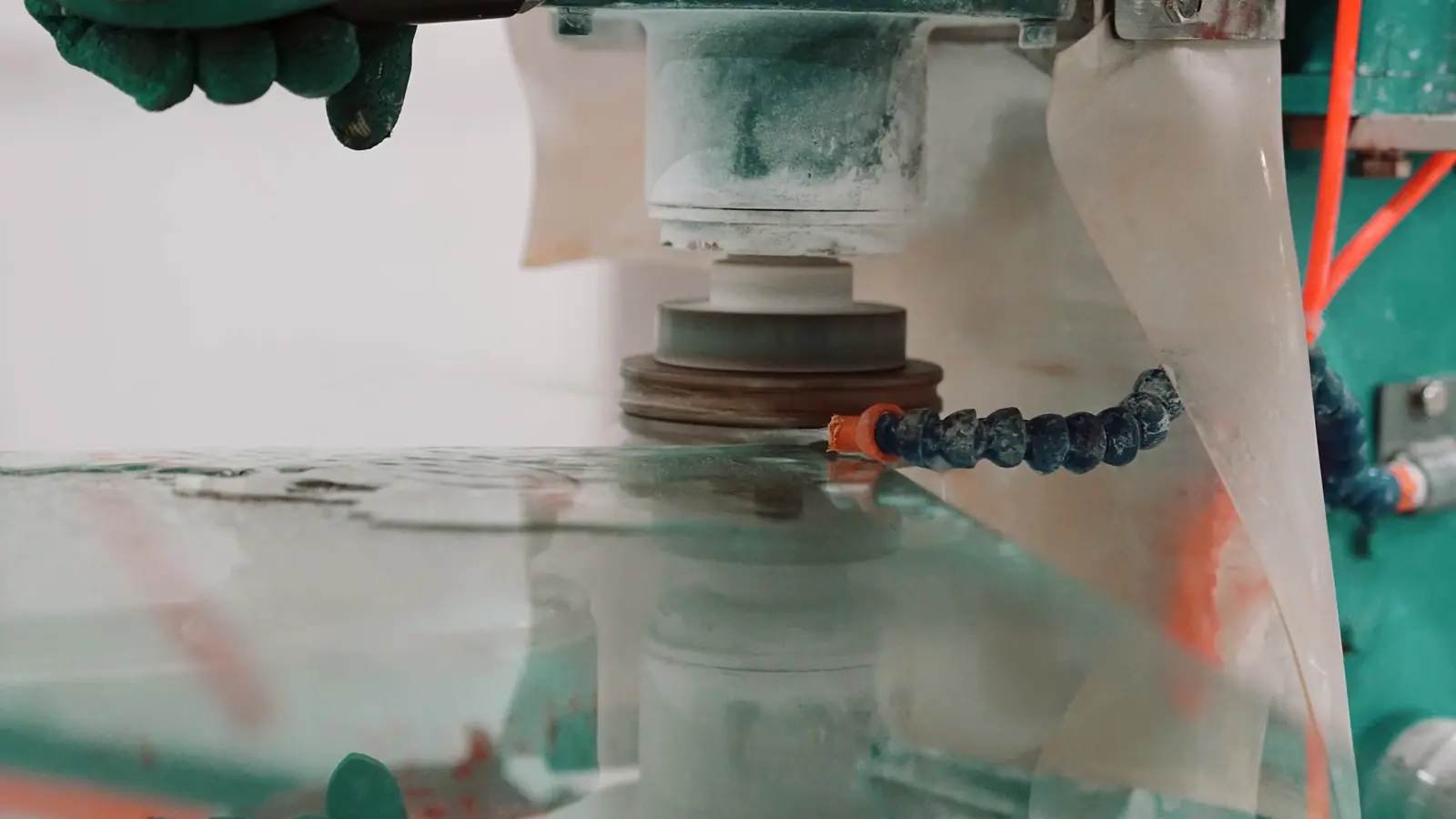
Why is edge damage risky for tempered glass? Edge finishing, handling and checks
A small chip or burr on the edge of tempered glass can reduce the strength that heat treatment gives. How edges are finished, why they cannot be reworked after tempering, and how to protect them.
Read article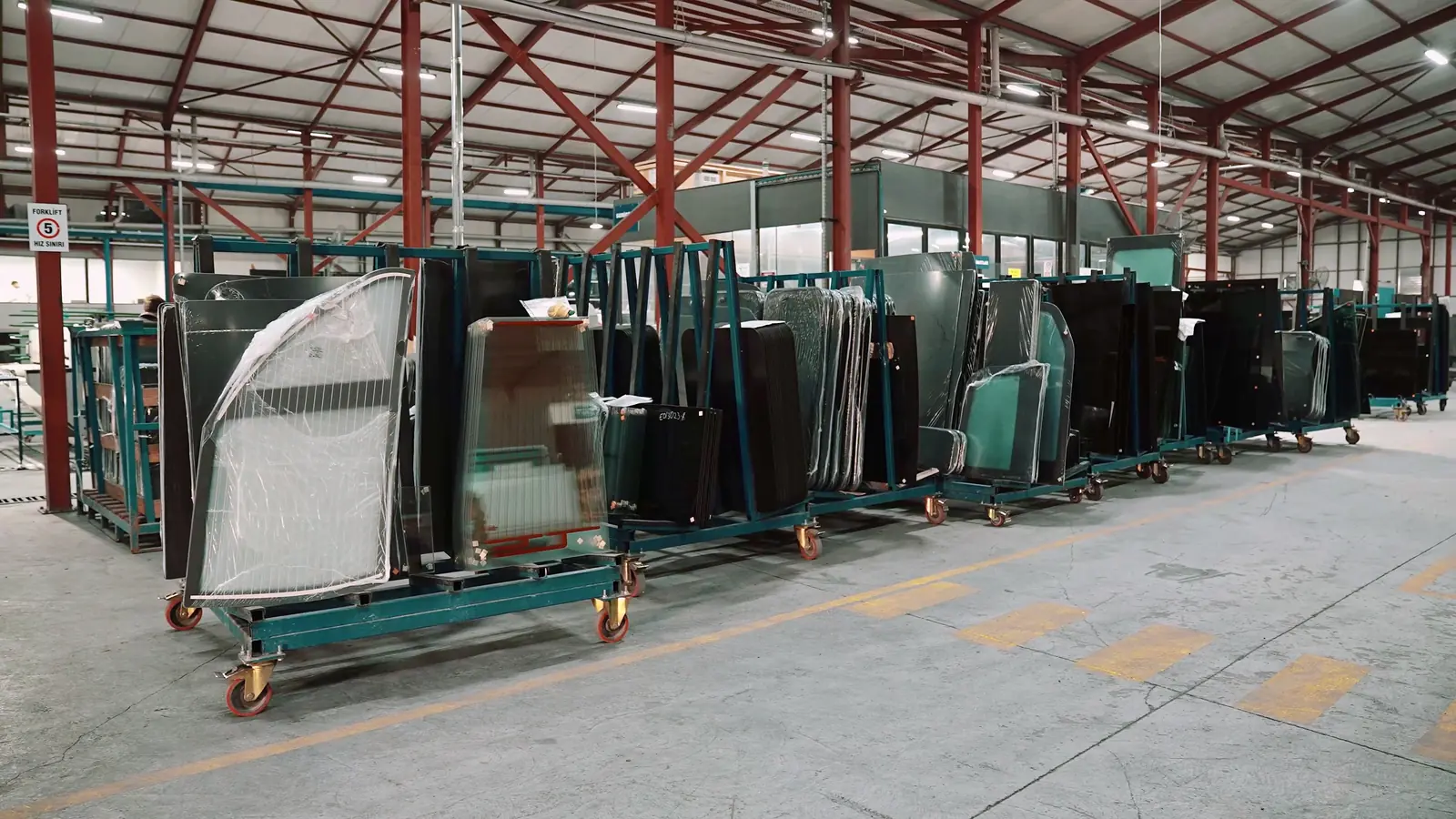
Technical toughened glass for machines and equipment: what to expect
What to know before choosing toughened glass for machines, equipment and vehicles: strength, order of processing, bow and roller waves, iridescence, marking and records, explained from open sources.
Read article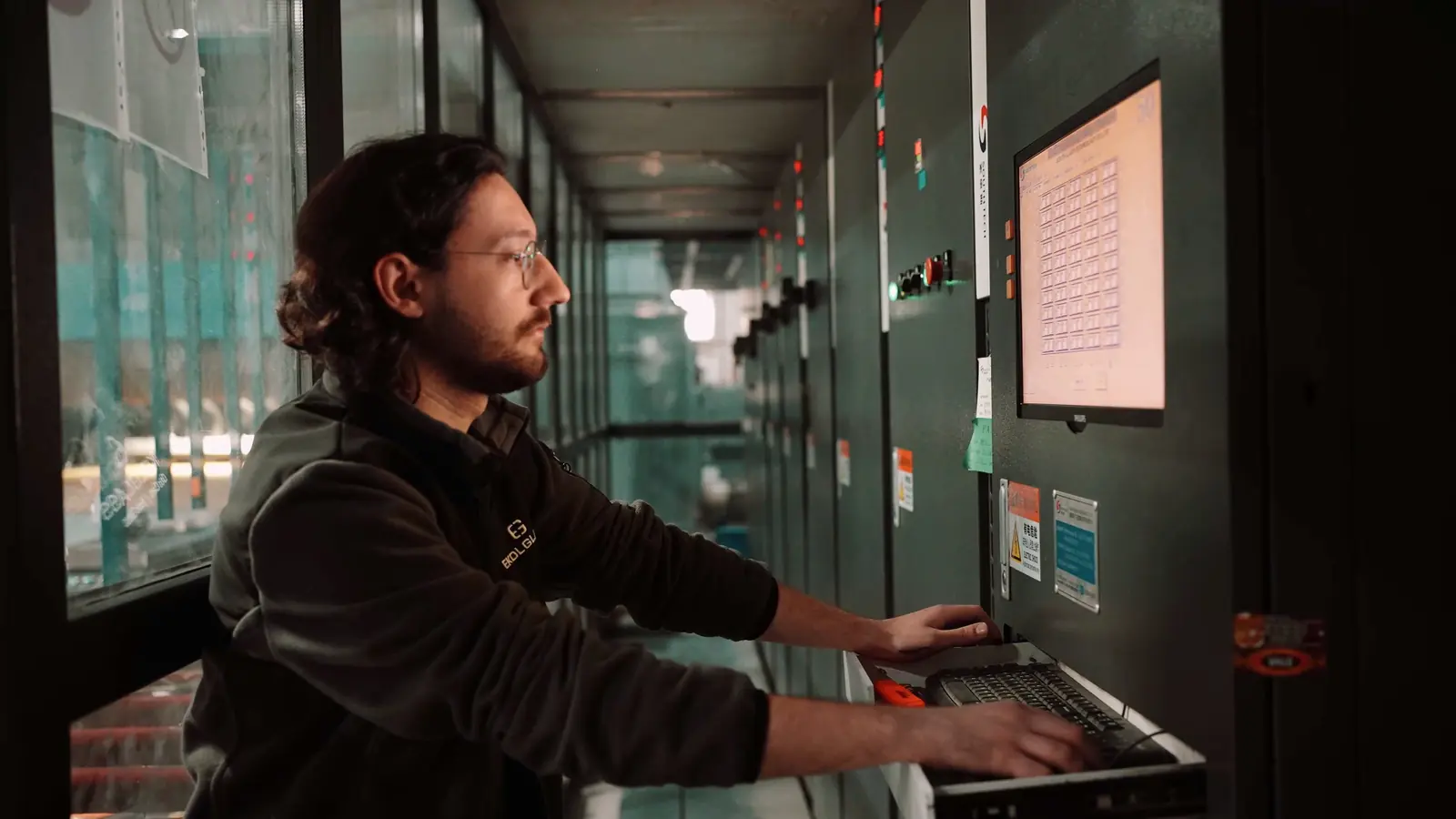
How is glass tempered? From heating to rapid cooling, step by step
Tempered glass is made by heating flat glass and cooling it rapidly with air. This article explains, from open sources, what the process changes inside the glass and why cutting, edging and drilling must be finished before tempering.
Read article