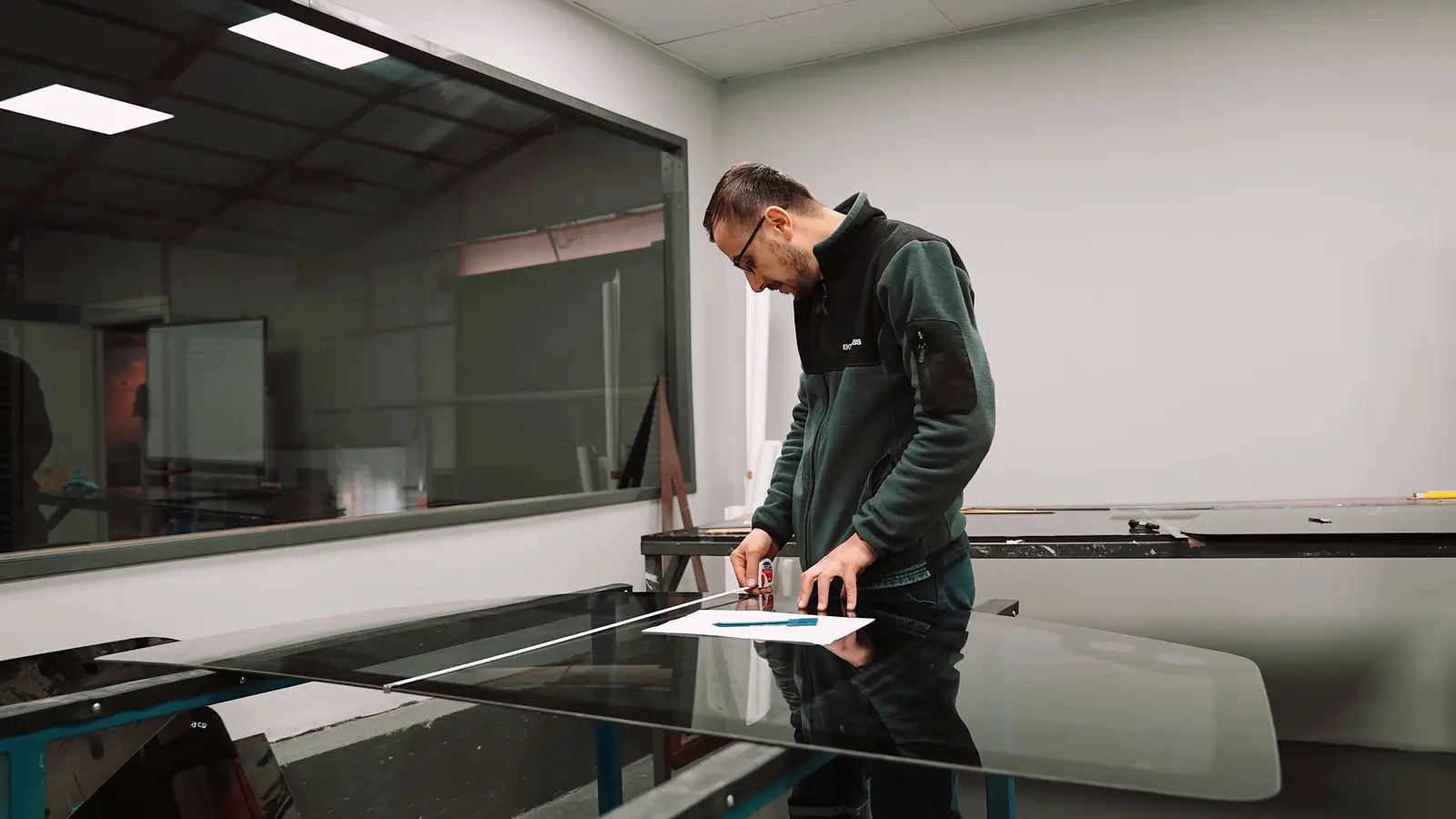
The most common mistake when ordering construction machinery cab glass is to give only the make and model of the machine. Even within one model, the windscreen, side, rear and door glasses differ in size and shape, and some parts change between production periods. This article explains which details define a cab glass, how flat and curved glass differ, why the operator's field of view matters and how to collect information from the old part.
01 / 06
What glass parts does a construction machinery cab have?
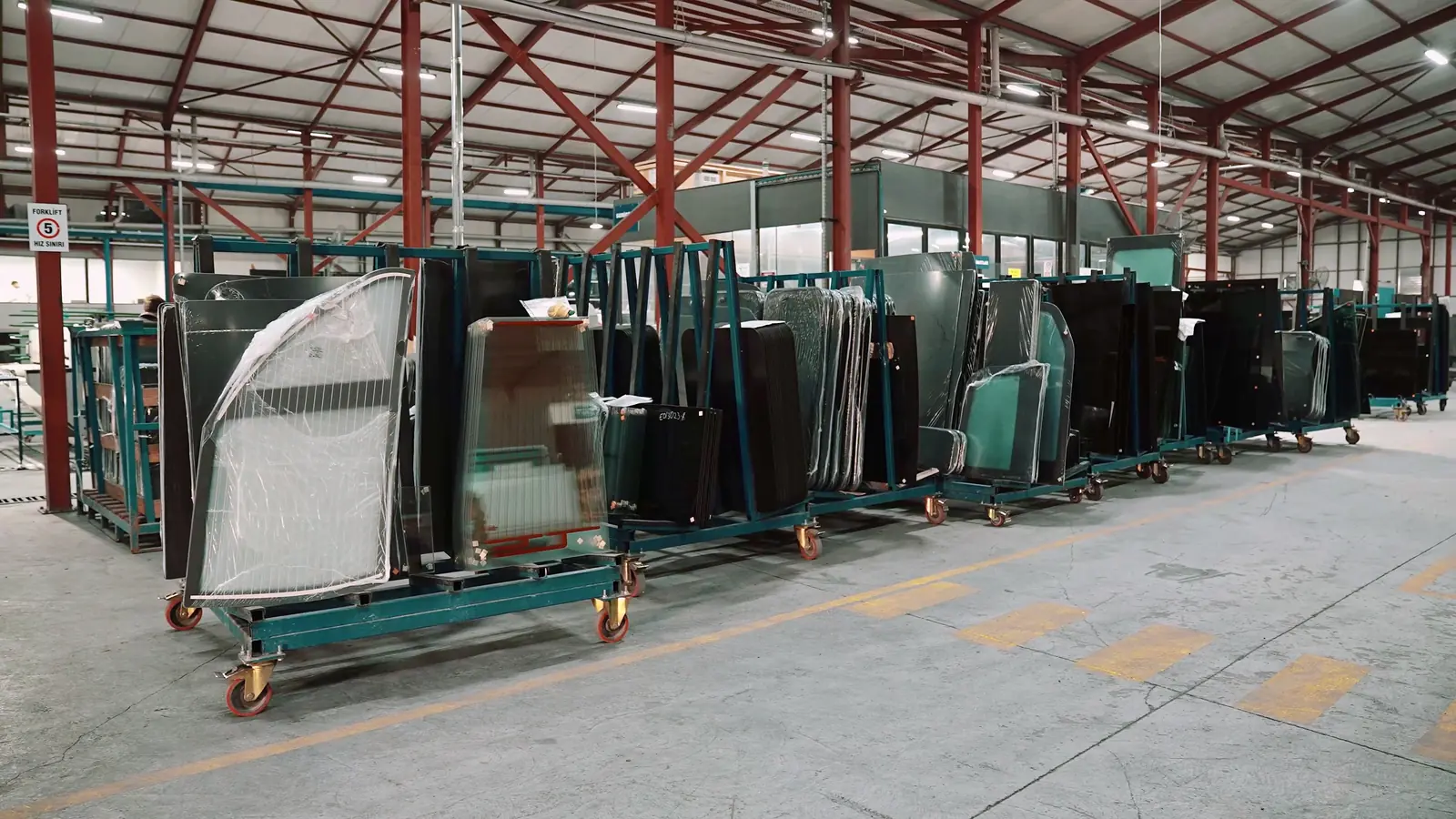
A construction machinery cab protects the operator from weather, noise and dust while keeping the work area in view. The glass sits between these two jobs. It has to give a wide enough field of view, fit the cab frame correctly and withstand the demanding conditions of a work site.
Cab glass is divided by position:
- windscreen
- side glass and door glass
- rear glass
- roof or upper glass
- sliding or hinged opening sections
Each position has its own size, shape and surrounding seal or frame arrangement. Saying "windscreen" or "door glass" is therefore not a complete description. It also matters which side of the machine is meant, where the glass sits in the cab and how it is held.
The group includes excavators, loaders, rollers, graders and similar machines. Cab designs vary by manufacturer, model and even production period, and glass dimensions can differ between cabs of the same machine built at different times. Instead of relying on the model name alone, it is more reliable to collect information from the part that will be replaced.
02 / 06
What information does a cab glass quotation need?
The details given at the enquiry stage decide how the glass will be made. The list below shows the core items of a complete request:
- Application and machine: machine type, position in the cab, and if possible the model and production period
- Size or drawing: a dimensioned sketch or a DXF, DWG or PDF drawing
- Shape: flat or curved; for curved glass, a drawing or template that shows the direction of the curve
- Thickness: the thickness of the existing part or the value in the machine manufacturer's documents
- Colour: clear, grey or bronze, for example, matched to the existing part
- Screen printing: the layout of an edge band, dot pattern or logo area, if there is one
- Holes, cut-outs and corner details: positions and diameters
- Edge finish: flat grinding, arris or another edge type
- Quantity and target schedule
Most of these are decisions that must be made before tempering. Tempered glass cannot be drilled, cut or edge-ground afterwards. A missing detail can therefore turn into an error that is noticed at the end of production and cannot be corrected.
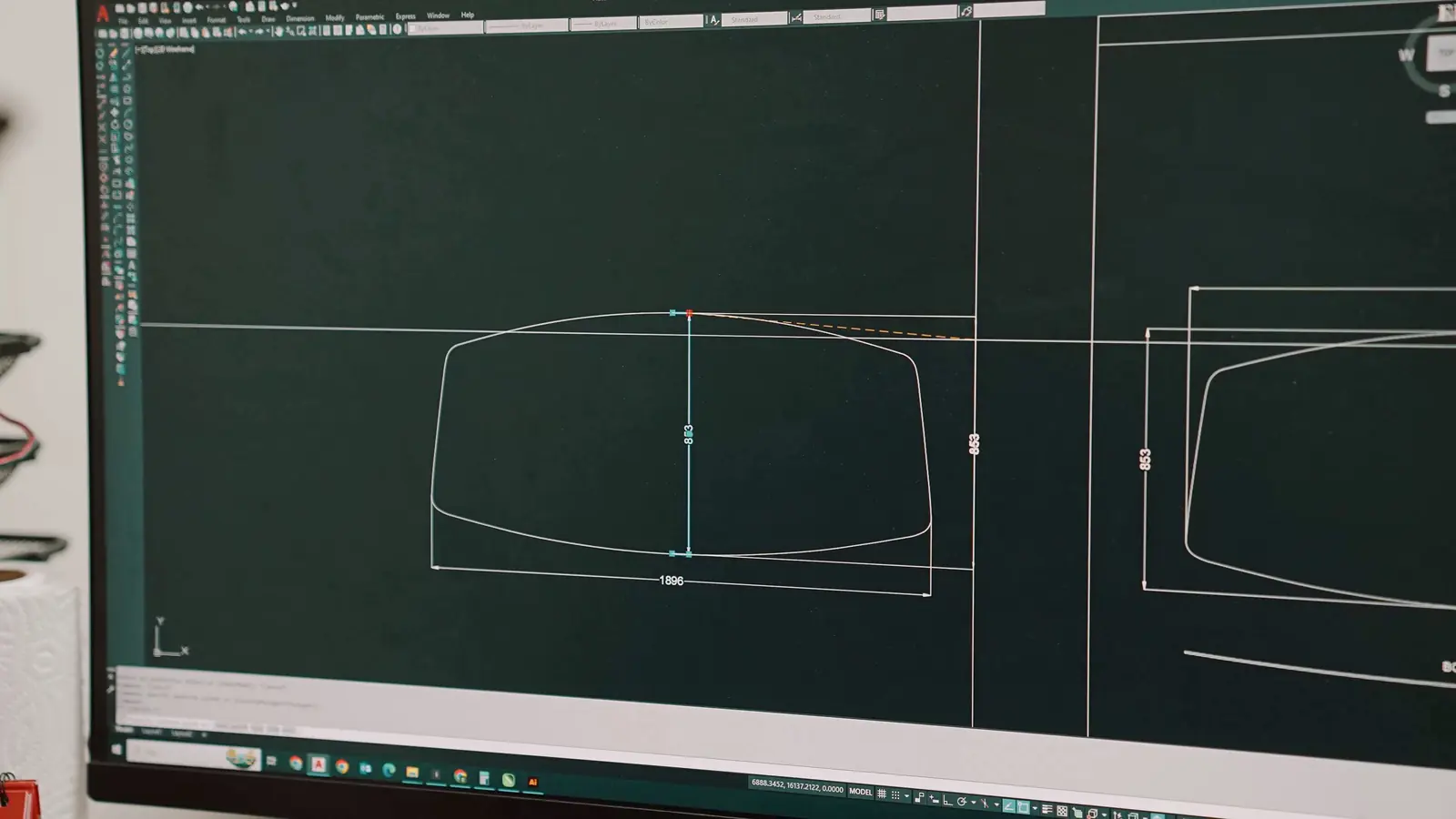
Sending a drawing is not compulsory; a dimensioned photo and the old part are a good start. A drawing file does reduce room for interpretation. DXF and DWG files carry the cutting contour directly, while PDF drawings show dimensions and notes.
03 / 06
What is the difference between flat and curved glass?
Construction machinery cabs use both flat and curved (bent) glass. Flat glass lies in one plane and its size is described by a contour drawing. Curved glass is bent in one or two directions, so not only width and height but also the direction and depth of the curve must be stated.
The distinction also shows in standards. EN 12150-1, which describes thermally toughened soda lime silicate safety glass for buildings, limits its scope to flat glass. Information on curved toughened glass is given only in an informative annex, and the product is outside the scope of the standard. That does not mean curved glass cannot be made; it only shows that this particular standard was written for flat glass.
In practice, taking dimensions for a curved cab glass is not a job for a tape measure alone. The old part that sits in the cab frame, a template or a clear drawing showing the curve is far more reliable. Even if the old glass is broken, keeping the larger pieces helps to understand the curve.
Flat and curved glass are prepared with different processes, so the request is assessed separately. Whether a given curve and size can be produced is confirmed during technical review.
04 / 06
How does the field of view affect cab glass?
How much of the surroundings the operator can see is a basic safety question on construction machinery. For earth-moving machinery the field of view is assessed with ISO 5006. In its safety bulletin, the UK Health and Safety Executive (HSE) explains that visibility maps show the areas that cannot be seen between a 1 m rectangular boundary and a 12 m circle around the machine.
The same bulletin states that the operator's eye height is taken as 680 mm above the seat index point and recommends a test object of 1.2 m by 0.3 m that represents a crouching person.
HSE also says that visibility maps in the operator's manual are an appropriate way to tell users about the blind spots that remain.
For a glass order this means that the cab glass is part of the machine's visibility assessment. The size of the glass, the width of the screen-printed edge band and the glass colour can all affect what the operator sees. When a replacement is prepared, the size, print layout and colour of the existing part should therefore be kept, and if the machine manufacturer's documents set a different requirement, that requirement applies.
Operator protective structures are a separate subject. ISO 3164 defines the deflection-limiting volume (DLV) used in the laboratory evaluation of such structures. How cab glass relates to the protective structure is set out in the machine manufacturer's own documents; this article does not interpret it.
- 01Glass size and position
- 02Width of the printed band
- 03Glass colour
- 04Requirements in the manufacturer's documents
05 / 06
How is a replacement defined from the old glass?
If the existing glass is still in place, the glass itself is the most reliable source of information. The sequence below makes it easier to collect complete information from the old part:
- Note the position of the glass in the cab and the side of the machine.
- Take a clear photo of any text and markings on the glass.
- Measure width, height and any corner radii.
- Write down the position and size of holes and cut-outs relative to the edge.
- Measure the thickness at the edge and add a photo of any printed area.
- For curved glass, make a template or take a photo from the side that shows the curve.
Markings on the glass help to identify the glass type, so the photo should go into the quotation file. If the glass is broken, take the dimensions and the template before the pieces are thrown away. A cardboard or paper template often shows the contour that fits the frame most clearly.
When several glasses are needed for one machine, label each part separately. That way the windscreen, side and door glasses are not mixed up, and every line in the quotation file corresponds to a single part.
06 / 06
How does Ekol Glass assess cab glass enquiries?
Ekol Glass manufactures toughened (single-ply tempered) safety glass for vehicles and custom projects, and construction machinery glass is among its product families. The production facility is in Yıldırım, Bursa, Türkiye. The plant performs CNC and precision cutting, glass processing (edging, water-jet), screen printing, tempering, framing and double glazing.
A quotation needs the application, vehicle or project identifier, dimensions or a DXF, DWG or PDF drawing, quantity, colour, thickness, secondary processing and target schedule. Specifications are confirmed during technical review. Tolerances and thickness options are confirmed per project, which is why this article gives no general value.
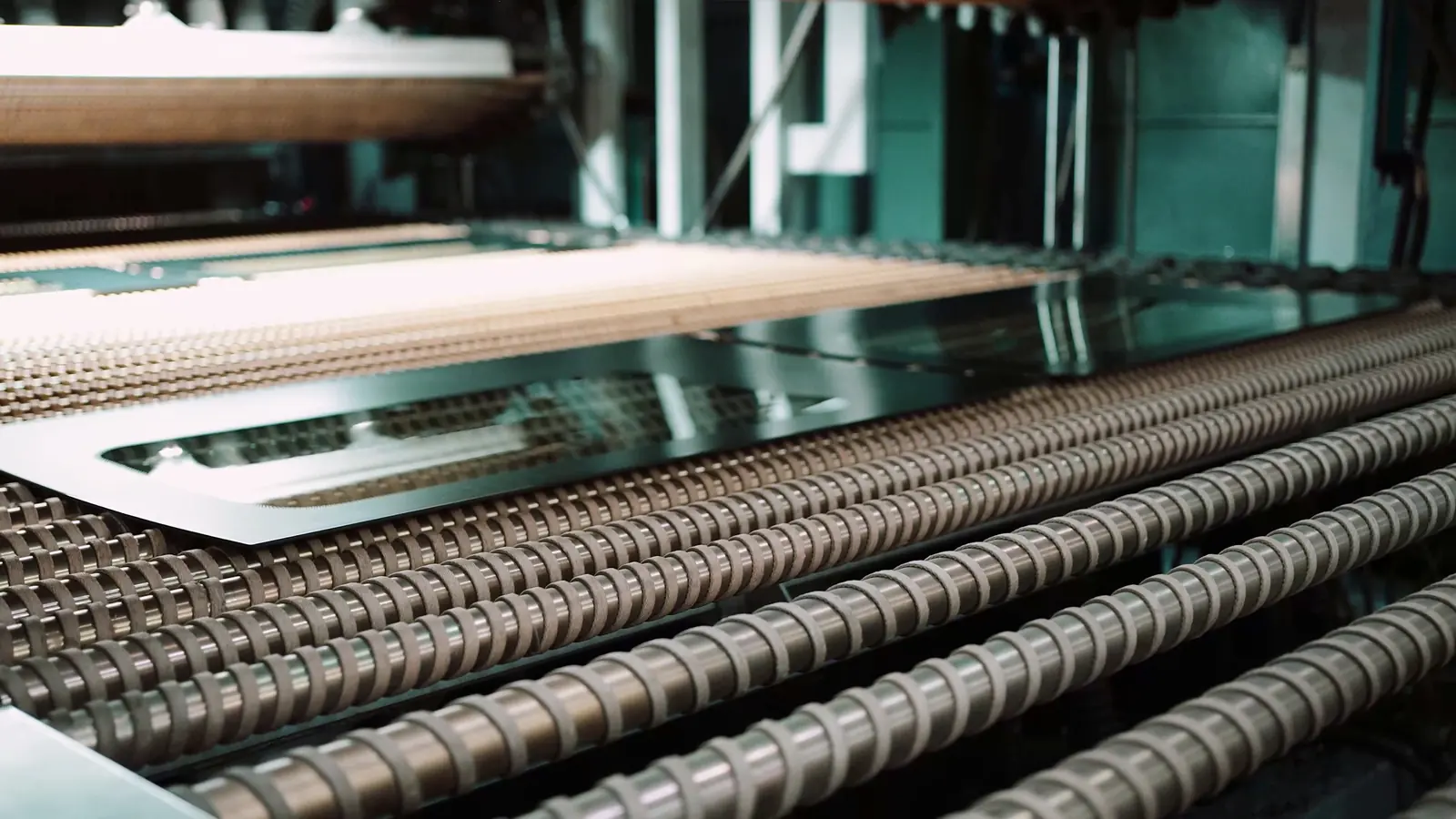
Quality control starts with a review of the technical data and continues with in-process checks at cutting, processing, screen printing and tempering. Tempered batches are followed by a fragmentation test and process verification.
Frequently asked questions
Are make and model enough to order cab glass?
No. Even within one model the windscreen, side, rear and door glasses differ in size and shape, and some parts change between production periods. A quotation becomes clear when position, size or drawing, shape, thickness, colour, printing and hole details are given together. Adding the old part or a photo of it to the file also helps.
Which drawing formats can be used for a cab glass enquiry?
DXF, DWG or PDF drawings can be shared. DXF and DWG files carry the cutting contour directly, while PDF drawings show dimensions and notes. If no drawing exists, a dimensioned sketch, a clear photo or the old part can serve as a starting point.
Can holes be drilled in tempered cab glass afterwards?
No. Tempered glass cannot be drilled, cut or edge-ground afterwards. Holes, cut-outs and edge work must be completed before tempering, so hole positions and diameters need to be stated at the quotation stage.
What is needed for curved cab glass?
A drawing that shows the direction of the curve, a template or the old part is needed in addition to width and height. Dimensions taken with a tape measure alone may not be enough for curved glass. Whether it can be produced is confirmed during technical review.
Next reads
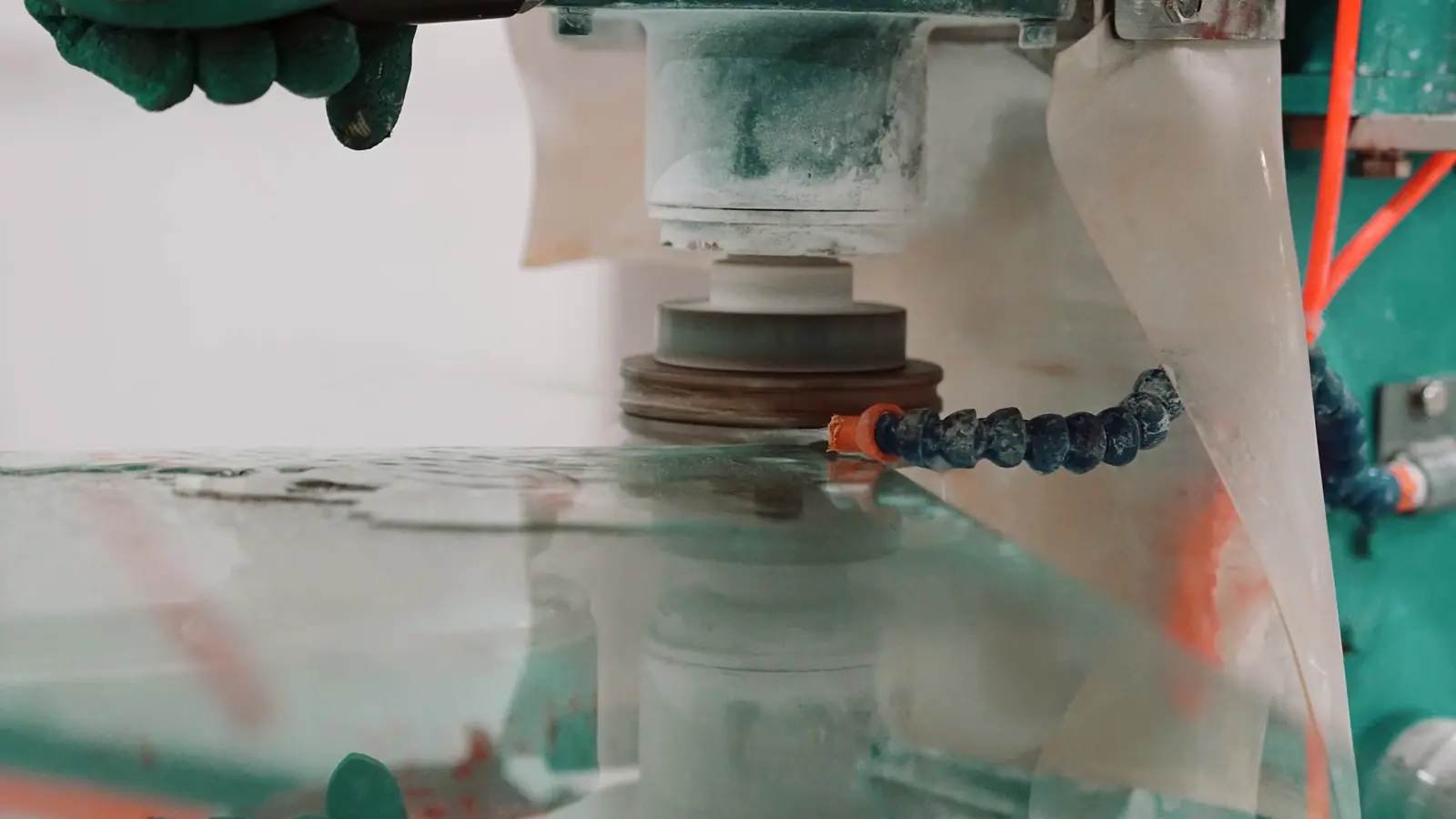
Why is edge damage risky for tempered glass? Edge finishing, handling and checks
A small chip or burr on the edge of tempered glass can reduce the strength that heat treatment gives. How edges are finished, why they cannot be reworked after tempering, and how to protect them.
Read articleTechnical toughened glass for machines and equipment: what to expect
What to know before choosing toughened glass for machines, equipment and vehicles: strength, order of processing, bow and roller waves, iridescence, marking and records, explained from open sources.
Read article
How is glass tempered? From heating to rapid cooling, step by step
Tempered glass is made by heating flat glass and cooling it rapidly with air. This article explains, from open sources, what the process changes inside the glass and why cutting, edging and drilling must be finished before tempering.
Read article