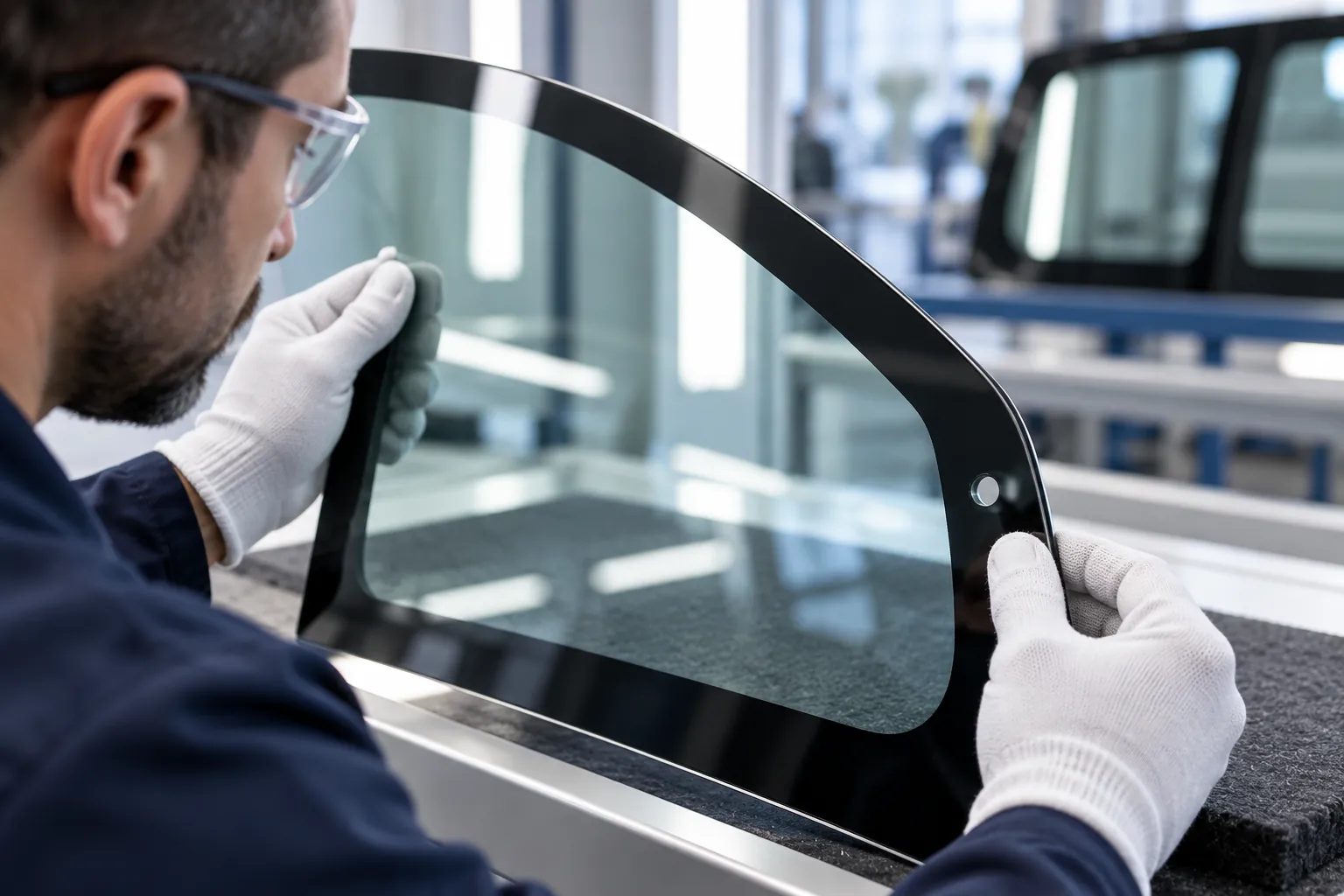
A request that begins with “automotive glass” can look complete until purchasing opens the drawing. The same vehicle family may include several side panes, different body versions and more than one model year. Two teams may use the same everyday name for different parts. Adding “laminated” or “tempered” helps, but it does not tell a supplier which pane, vehicle programme or approved reference the request belongs to.
Understanding the two constructions is useful for one reason: it helps design, homologation, production and purchasing teams ask the same questions about the same part. This is a procurement guide, not a universal safety recommendation or a legal interpretation. The vehicle maker’s approved design and the rules for the destination market remain decisive.
01 / 05
The difference is more than what you see after breakage
Laminated glazing contains two or more layers of glass held together by a plastic interlayer. A toughened pane is a single glass layer that has undergone special treatment. UNECE Regulation No. 43 defines the two constructions separately. The distinction is not just a factory process label: it shapes how a pane is assessed after breakage and how it fits into a vehicle design.
Pilkington’s automotive overview describes the interlayer in laminated glass as holding the glass plies together. Its explanation of toughened glass describes a treatment that conditions the fragmentation pattern. Those points explain the material families; they do not determine which one belongs in a particular vehicle position.
Avoid shortcuts such as “laminated is always safer” or “tempered is the simpler option.” The intended function, vehicle design, maker’s approved reference and destination market need to be considered together. If that context is missing, a supplier is being asked to price assumptions as well as glass. Later disagreements often start because the request never identified the exact pane, rather than because someone misunderstood the name of a material. A clear specification makes those assumptions visible before they become a prototype or delivery issue.
02 / 05
Why “side window” is not a specification
“Side window” and “rear glass” are convenient workshop terms, not enough to identify a part. A vehicle family can have fixed, movable, triangular or door-specific panes. Body styles, trim levels, build years and market variants may also sit under one model name. So define the part before debating its construction.
Make, model and year are a useful start, then add the project or model code, body type and exact position. Where available, include the original part number or the vehicle maker’s drawing. If you send a sample, say which vehicle it came from, whether it is left or right, what markings are visible and whether it has been modified. A sample can show shape, but by itself it may not answer questions about thickness, glass construction, print zones or approval.
If the laminated or toughened requirement comes from an approved vehicle design, technical specification or type-approval file, state that in the RFQ. If the choice is still open, ask the technical team to identify what is missing instead of asking the supplier to fill the gap with a guess. That keeps a vague phrase like “suitable glass” from being mistaken for a design decision. The distinction matters even when the customer is simply sourcing a replacement part: the matching reference still has to belong to the exact vehicle configuration.
03 / 05
What belongs in the RFQ pack?
Purchasing, engineering and the glass supplier can compare offers more easily when they start from the same reference. The request should identify the vehicle or project, pane position, left/right orientation and whether the pane is fixed or movable. A drawing should show its revision and units. If a template or sample is included, explain whether it replaces the drawing or only supports it.
Then describe how the pane connects to the vehicle: outline, curvature, edge finish, holes or notches, screen-printed area, seal or fastening method. Not every project has all these details. When they exist, however, they belong in the same technical package regardless of the glass construction. If a change is needed, use a revision number, date and short change note instead of an email attachment called “final drawing.”
If the sample and drawing disagree, ask which one controls the request. A photograph or a single dimension is not a substitute for reviewing the installed position and mounting condition. Keep quantity, target date and extra processing requests in separate fields: they influence the quote scope but do not describe the pane’s construction. Ekol Glass’s automotive page also asks for a vehicle or project reference, drawing or measured template, quantity, colour, thickness and any additional processing expectation.
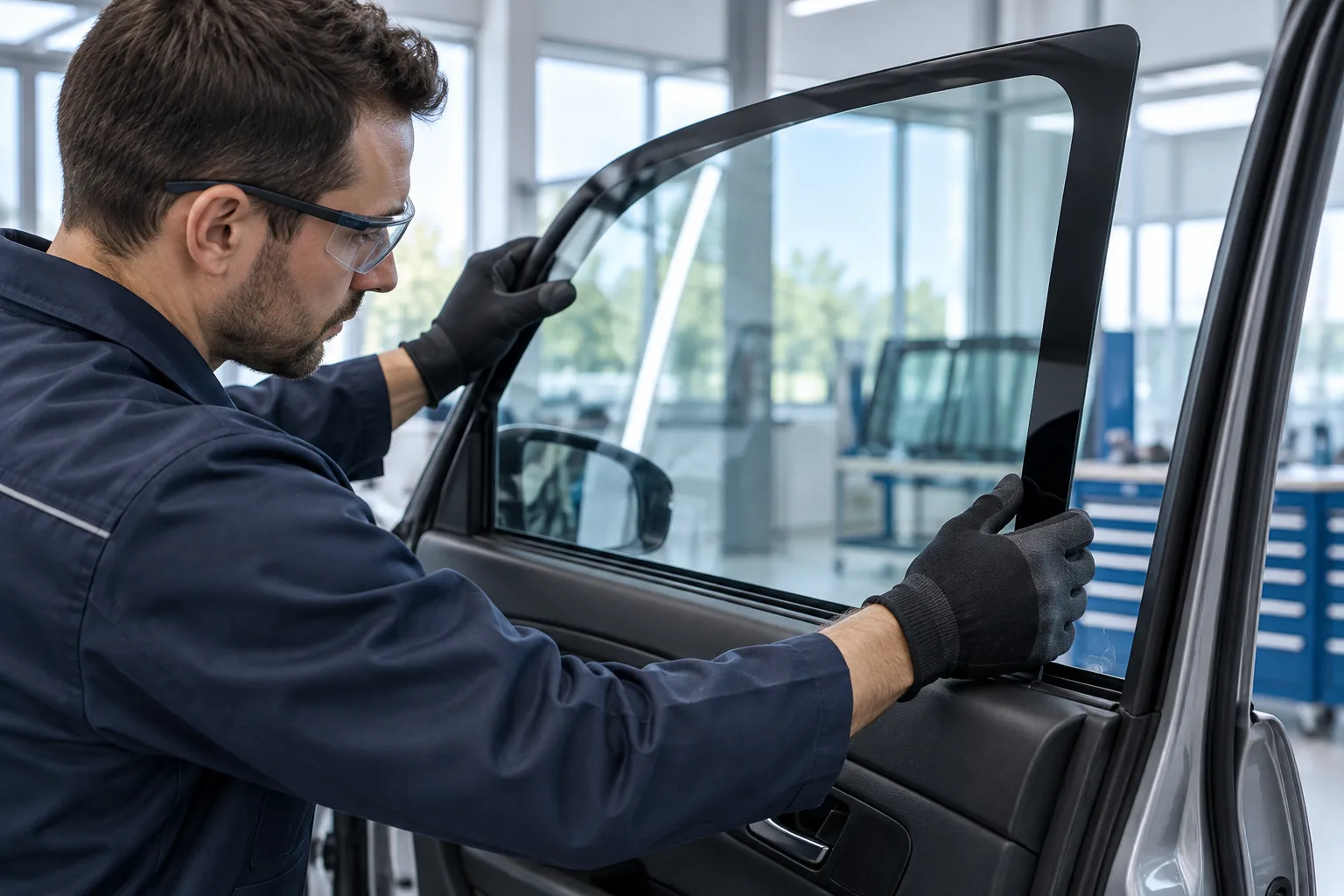
The workshop image below is illustrative. It is not evidence of a specific vehicle programme or production claim; it simply reminds the reader that a pane should be discussed in relation to its opening and mounting context.
04 / 05
Check approval in the destination market
The Rev.4 text of UN Regulation No. 43 covers safety-glazing materials intended for use as windscreens, other panes or partitions on vehicles of category L with bodywork and categories M, N, O and T. Its installation provisions apply to vehicles of categories M, N and O; the text also lists exclusions. This describes the scope of that UN text, not a universal rule for every country or vehicle. Check the version and national implementation that apply in the destination market.
Type approval is not a material sticker in isolation. The glazing class, marking, installation and approval context are considered together. This article does not summarize every legal requirement, identify what is allowed at every vehicle position, or extend a European rule to other markets. Confirm those points against the vehicle maker’s file and the current official rules in the market where the vehicle will be approved or used.
Related reading cards below lead to other Ekol Glass glass-project guides. Use them to explore neighbouring questions, while keeping the source approval and exact part reference in view. A post about another vehicle position does not prove that its glazing construction applies to this pane; the approved documentation for this vehicle remains the controlling source.
05 / 05
A five-question handover before quotation
Before sending an RFQ, ask the team to answer five questions in the same way: Which vehicle and model year? Which pane position? Does a maker document specify laminated or toughened construction? Do the drawing, sample and part number agree? Is the destination market and approval reference known?
An unknown answer does not have to stop the project. Mark it as “to be confirmed” and ask the supplier to identify the missing information instead of silently assuming an answer. That makes the basis of a quotation and prototype review visible. If the design decision changes later, record the revision and the affected parts in writing.
Ekol Glass’s published automotive page lists tempering, screen printing, holes, notches and edge processing as project options; it does not describe laminated construction as a standard offering. For a laminated request, confirm the production scope with the technical team instead of assuming capability. Once the pane type, vehicle position and approval reference sit in the same file, the quote discussion gets simpler: everyone is talking about the same part, and the unknowns remain questions to resolve.
Next reads
Bus and minibus glass: what makes a proper fit?
Vehicle variant, opening position, drawing and mounting interface all matter when identifying the right bus or minibus glass for a project.
Read article
How to balance colour and daylight in yacht glass
A dark or light tint alone does not tell you how yacht glazing will feel. Compare daylight, solar factor and heat transfer for the exact glass build.
Read article