
Most people have seen the small, blunt pieces left behind when a side window breaks. That pattern is not a coincidence; it is a property given to the glass on purpose during production. This article explains what tempered glass is, how tempering changes a pane, what the fragmentation test checks and where tempered glass differs from laminated glass, using UN Regulation 43 on vehicle safety glazing as the reference.
01 / 05
What is tempered glass?
UN Regulation 43 sets the uniform provisions for approving the safety glazing used on vehicles. It defines toughened glass as glazing consisting of a single layer of glass that has been given a special treatment to increase its mechanical strength and to condition its fragmentation after shattering.
Two details in that definition matter. First, tempered glass is a single layer, with no plastic interlayer between sheets of glass. Second, the purpose of the treatment is not only strength: the way the glass breaks is also controlled deliberately.
On vehicles, the second property is as important as the first. On side windows, rear windows and many special panes, the shape of the pieces released at the moment of breakage directly affects the risk of injury to the people inside. That is why tempered glass is judged not only by its thickness or colour but also by how it behaves when it breaks.
02 / 05
How does tempering change the glass?
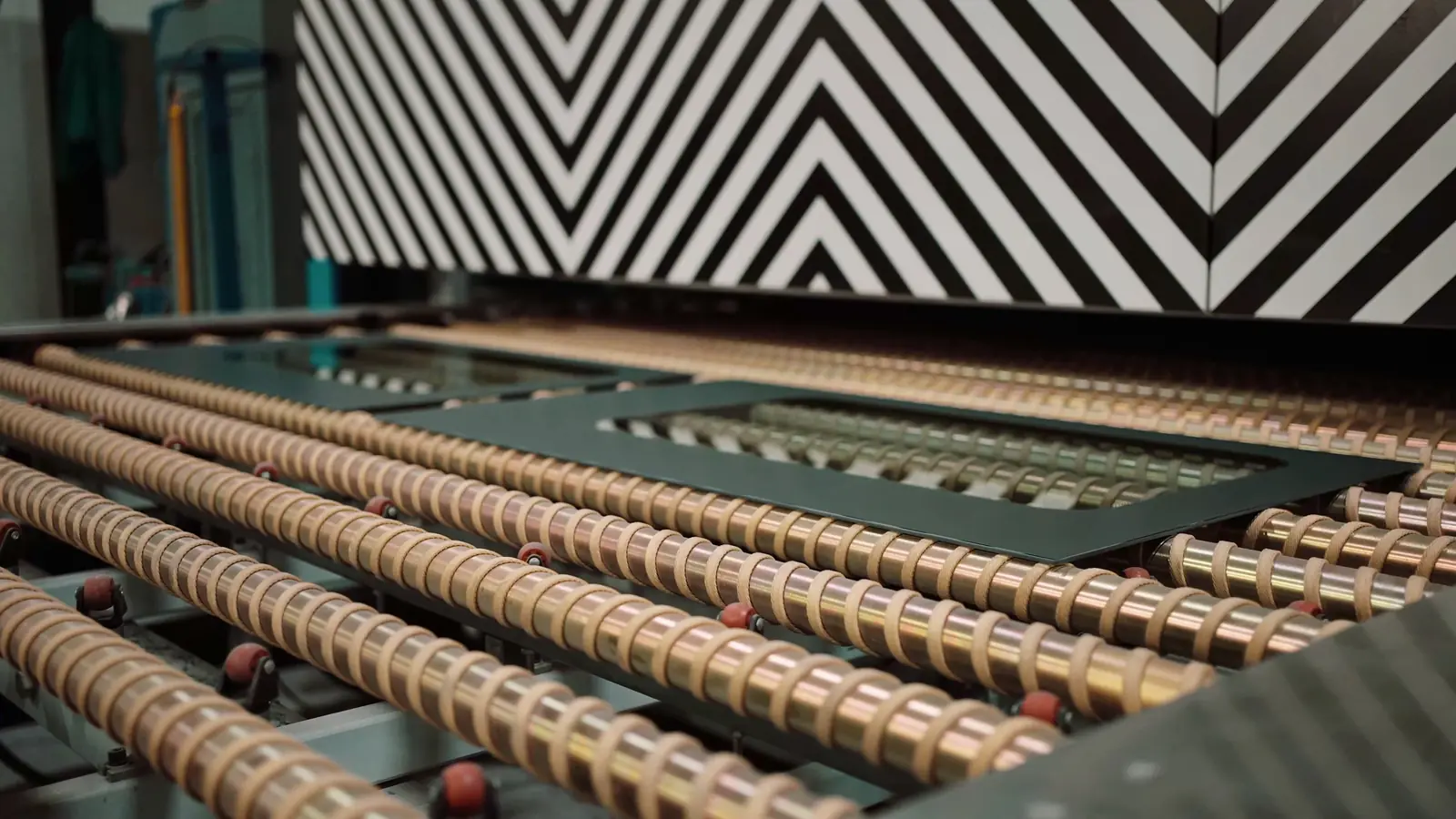
Tempering means heating a pane that has already been cut and edge-worked to a high temperature in a furnace and then cooling its surfaces rapidly with air. Because the surfaces cool and set before the core, the outer layers end up in compression while the centre carries a balancing tensile stress.
This balance has two consequences. The compressive stress at the surface makes the glass more resistant to impact and bending. When the pane does break, the stored energy is released at once, cracks run through the whole sheet and the glass separates into a large number of small pieces.
For the same reason, tempered glass cannot be cut, drilled or edge-ground afterwards. Holes, cut-outs, edge work and screen printing all have to be finished before tempering. Dimensions, hole positions and edge details are therefore fixed with a drawing at the quotation stage.
03 / 05
What does the fragmentation test verify?
According to UN Regulation 43, the purpose of the fragmentation test is to verify that the fragments and splinters produced when the glass breaks are such as to minimise the risk of injury. For windscreens, the residual visibility after shattering is checked as well.
In the test, a sample pane is broken at a defined point and the resulting fragment pattern is examined. The annexes of the regulation describe in detail where fragments are counted, which zones are left out of the assessment and how the result is interpreted. Because the numerical limits can depend on the type and thickness of the glass, any assessment should always refer to the current text of the regulation.
The fragmentation test is not the only check. UN Regulation 43 also prescribes tests of mechanical strength, and the ball-impact test exists in two forms, one with a 227 g ball and one with a 2,260 g ball. In this way the regulation checks separately that the glass does not break easily and that it breaks safely when it does.
- 01A sample pane is prepared
- 02It is broken at a defined point
- 03The fragment pattern is examined
- 04The result is read against the regulation
04 / 05
How is it different from laminated glass?
UN Regulation 43 defines laminated glass as glazing consisting of two or more layers of glass held together by one or more interlayers of plastics material. That construction makes its breakage behaviour clearly different from tempered glass.
When tempered glass breaks, the whole pane separates into small pieces. With laminated glass, even if the glass layers crack, the pieces largely stay bonded to the interlayer and the pane tends to remain in place as one unit. This difference is one of the main reasons the two types are chosen for different positions on a vehicle.
When the glass type is chosen for a project, the position of the pane, the applicable regulation and the vehicle maker’s requirements are considered together. If a new part is to replace an existing one, the markings on the old glass and the type of part should also be included in the quotation file.
05 / 05
How are panes checked after tempering at Ekol Glass?
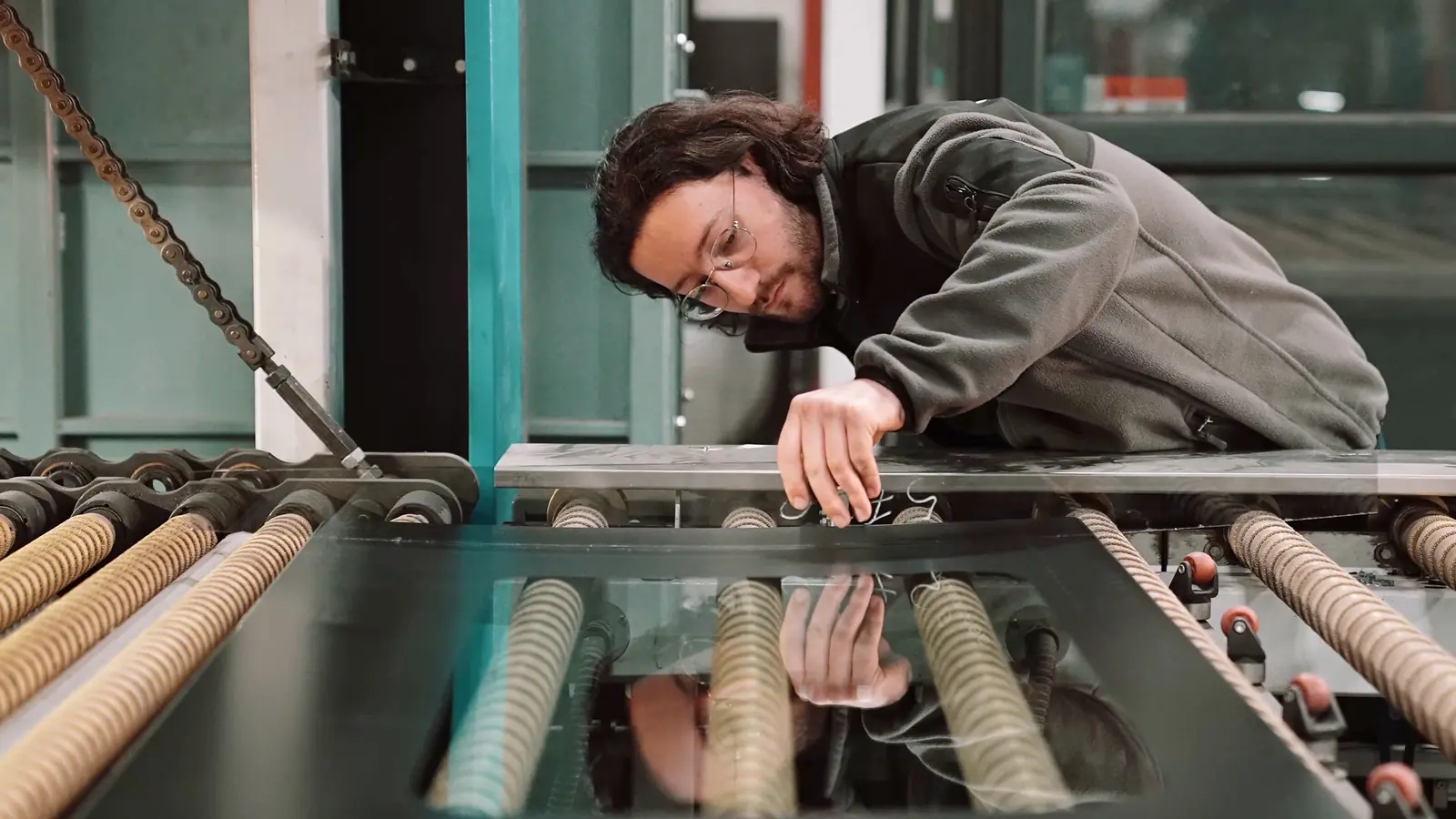
Ekol Glass manufactures toughened safety glass for vehicles and custom projects. Its quality control starts with a review of the technical data and continues with in-process checks at cutting, processing, screen printing and tempering. Tempered batches are followed by a fragmentation test and process verification.
The ECE R-43 conformity document of Ekol Glass is valid until 19 September 2027. The quality management system is run under an ISO 9001:2015 certificate.
Dimensional tolerances and thickness options are confirmed for each project, which is why this article gives no general values. To discuss the right glass for a project, share the application, the dimensions or a DXF, DWG or PDF drawing, the quantity, the colour and any secondary processing.
Frequently asked questions
Why does tempered glass break into small pieces?
Tempering puts the surfaces of the glass in compression and the centre in tension. When the pane breaks, the energy stored in these stresses is released at once and cracks spread through the whole sheet, so it separates into many small pieces instead of large, sharp shards.
Can tempered glass be cut or drilled afterwards?
No. Cutting, drilling or grinding a tempered pane upsets the stress balance and makes the glass break. Holes, cut-outs, edge work and printing are therefore all done before tempering.
Which regulation defines the fragmentation test for vehicle glass?
For safety glazing used on vehicles, the fragmentation test is defined in UN Regulation 43. Its annexes describe the purpose of the test, how it is carried out and how the results are interpreted.
Next reads
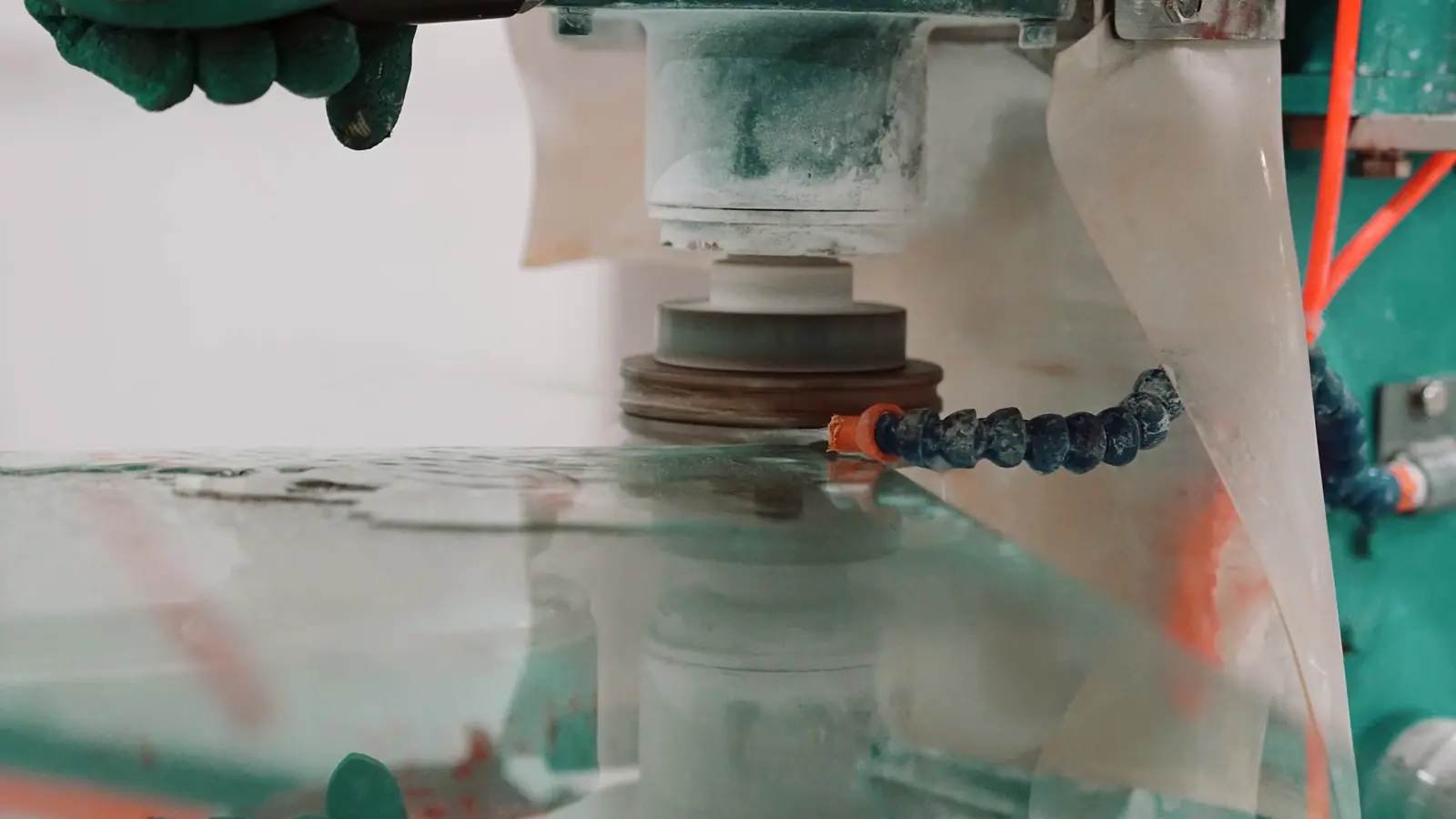
Why is edge damage risky for tempered glass? Edge finishing, handling and checks
A small chip or burr on the edge of tempered glass can reduce the strength that heat treatment gives. How edges are finished, why they cannot be reworked after tempering, and how to protect them.
Read article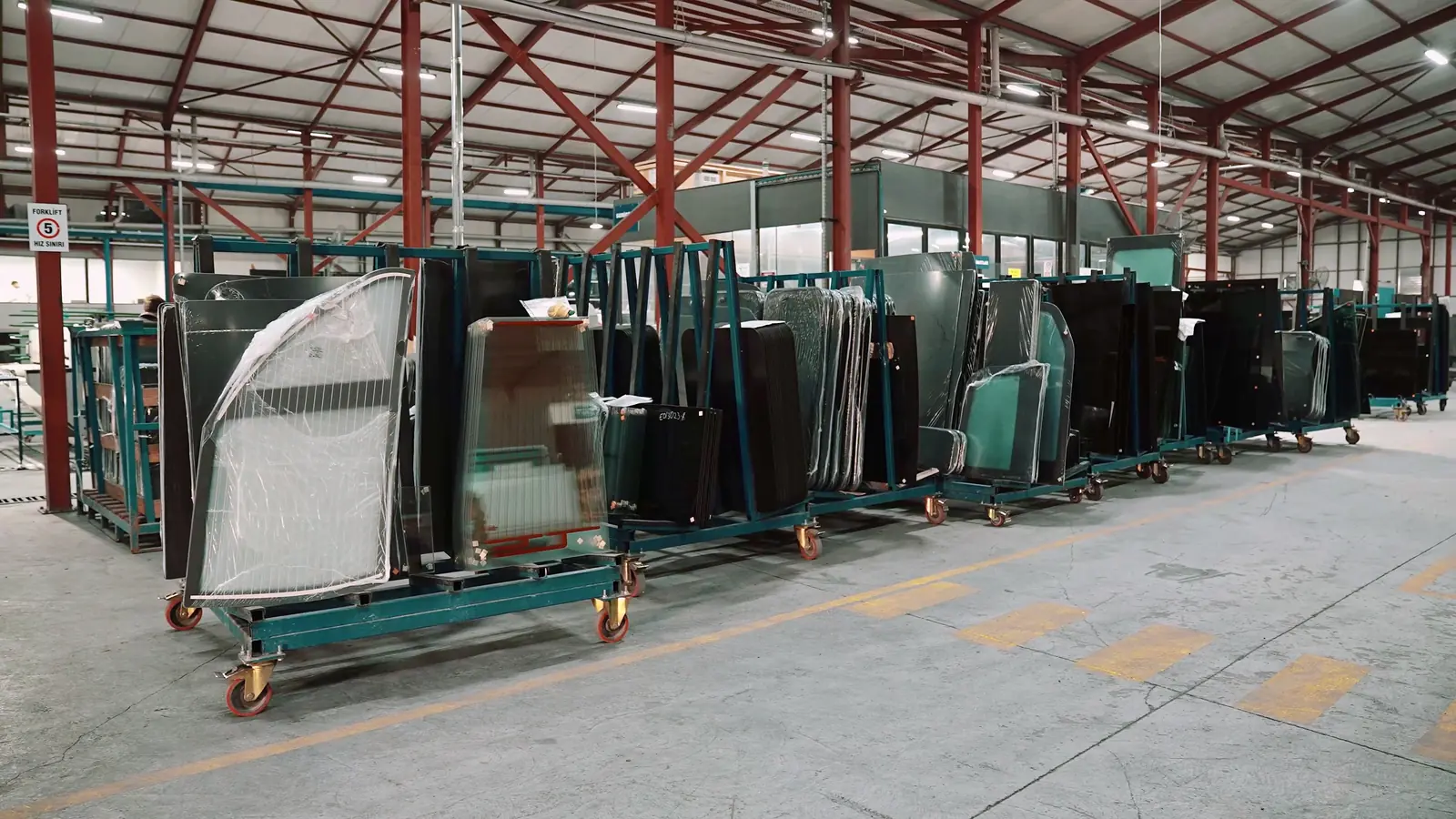
Technical toughened glass for machines and equipment: what to expect
What to know before choosing toughened glass for machines, equipment and vehicles: strength, order of processing, bow and roller waves, iridescence, marking and records, explained from open sources.
Read article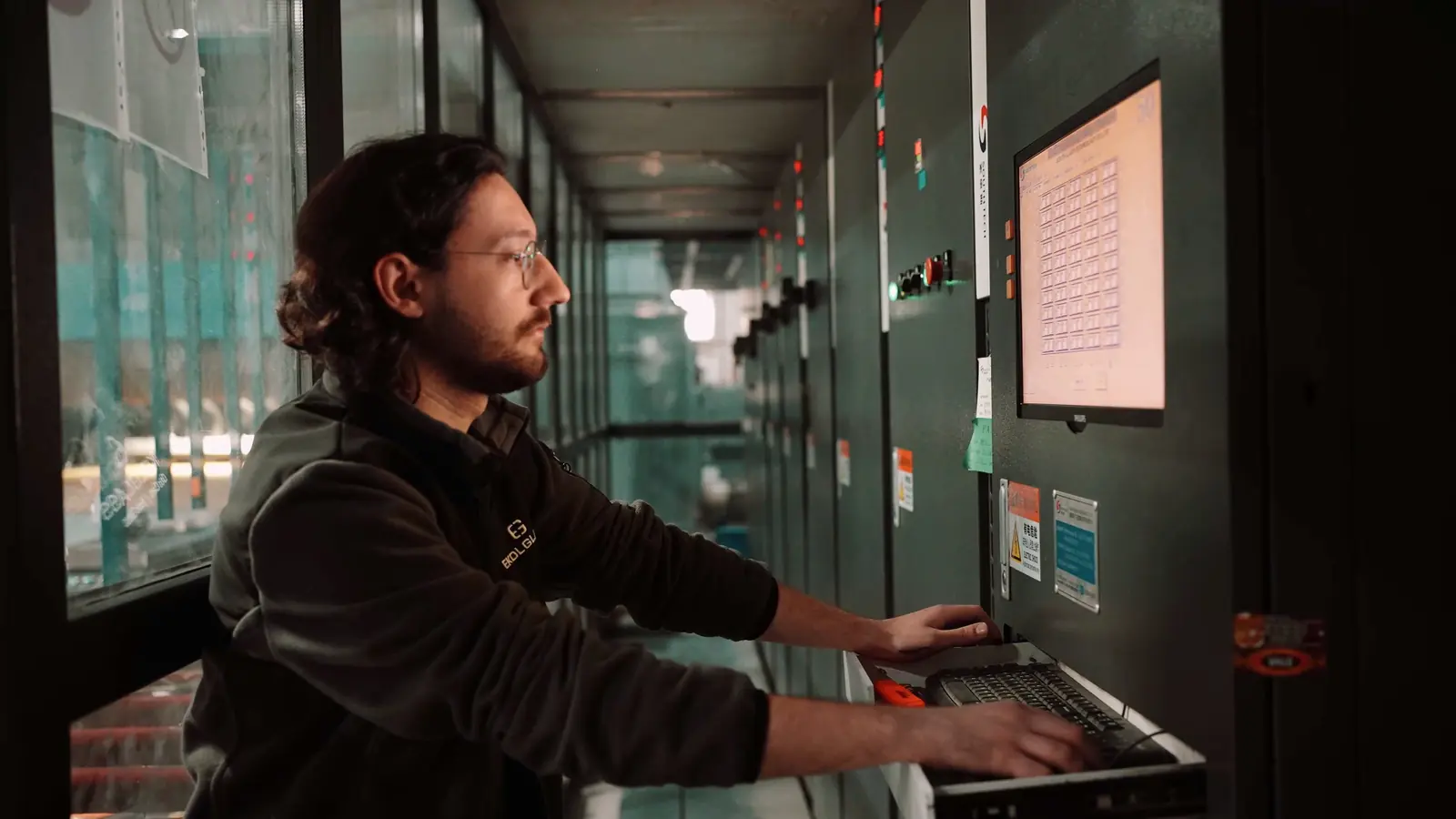
How is glass tempered? From heating to rapid cooling, step by step
Tempered glass is made by heating flat glass and cooling it rapidly with air. This article explains, from open sources, what the process changes inside the glass and why cutting, edging and drilling must be finished before tempering.
Read article