Two panes of the same thickness can look identical. The difference between annealed and tempered glass shows up in how they are made, how much load and heat they take, and how they break. This article explains the two glass types in plain terms, using a glass-industry standard document, the UN regulation on vehicle safety glazing and an ISO standard as references. At the end it lists what to prepare when you request a custom tempered glass quotation.
01 / 06
What is the difference between tempered and annealed glass?
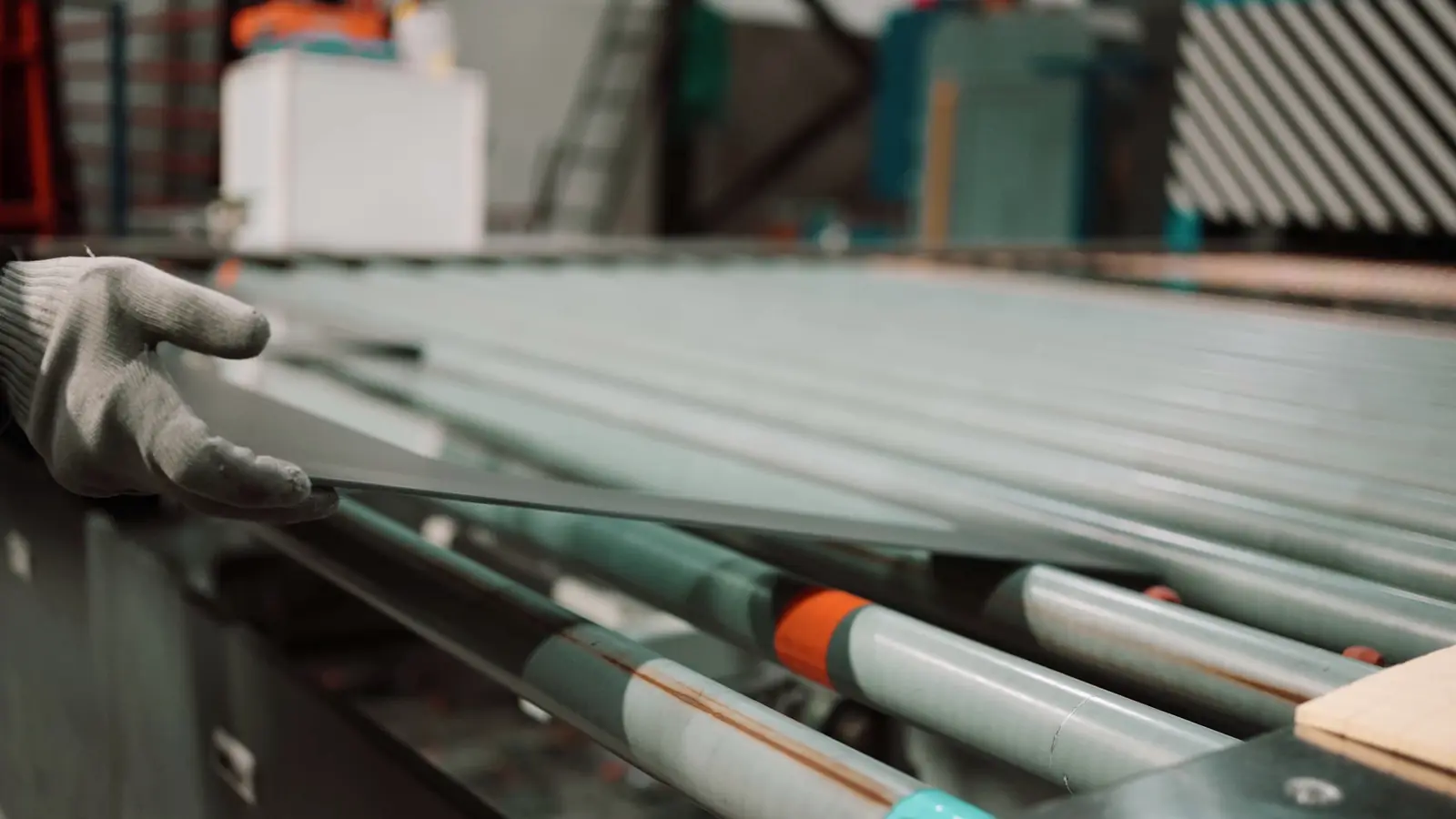
Annealed glass is ordinary float glass that has been cooled slowly and under control on the production line. It carries almost no permanent internal stress. It can be cut, drilled and edge-worked after it has been made.
Tempered glass starts as that annealed glass and then receives a second thermal treatment. The Glass and Glazing Federation (GGF), a UK industry body, describes toughened safety glass in its standard data sheet as a single piece of annealed soda-lime silica glass that has been put through a thermal process which greatly increases its resistance to mechanical and thermal stress.
So the two are chemically the same material. What differs is the stress pattern inside the pane, and the behaviour that follows from it.
02 / 06
How does tempering change the glass?
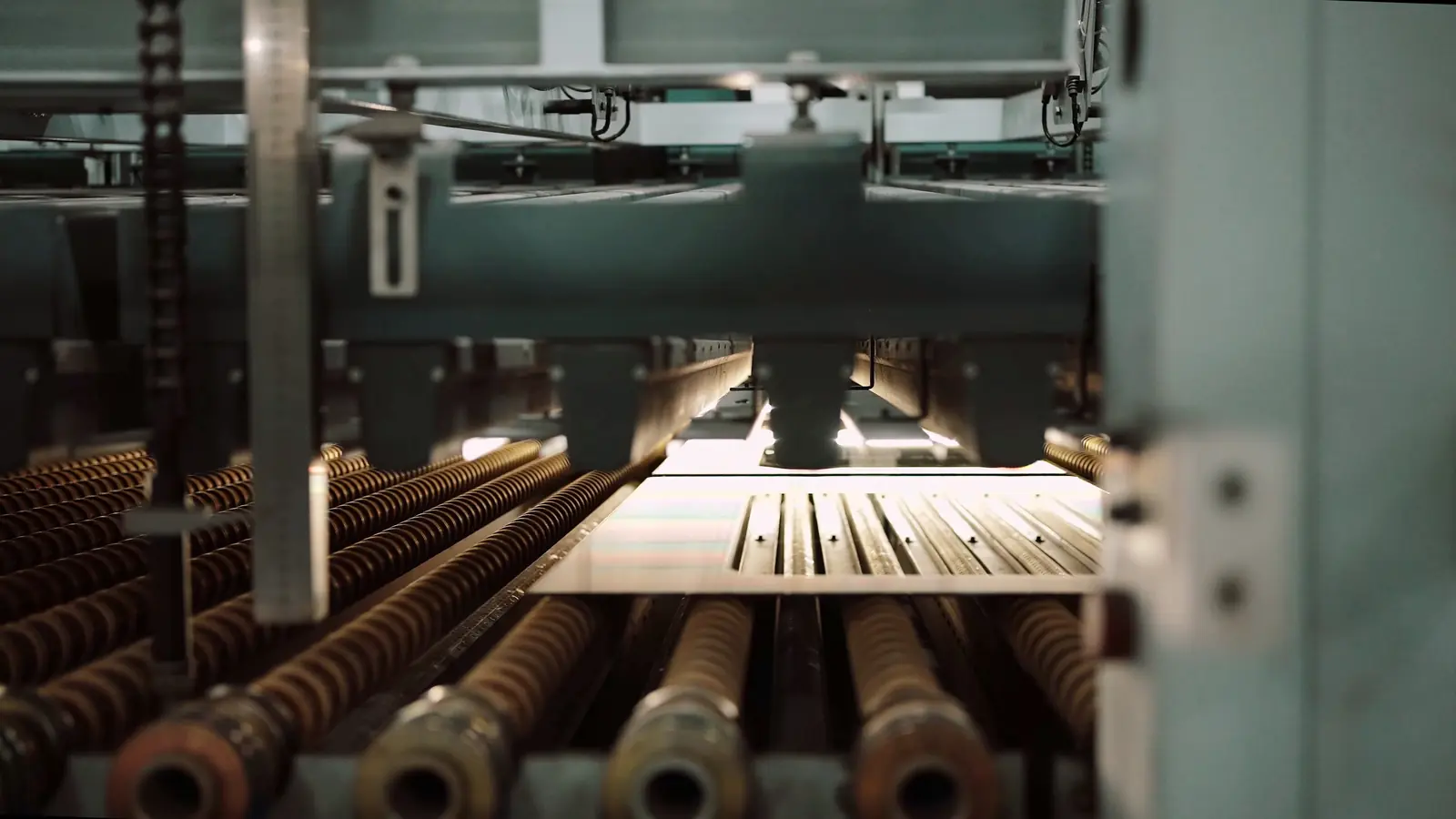
In tempering, a pane that has already been cut and edge-worked is heated in a furnace and then its surfaces are cooled rapidly. The GGF data sheet explains that this heating and rapid cooling puts the surfaces in high compression and the centre in a compensating tension.
The data sheet lists the practical results:
- Strength can rise to as much as four to five times that of annealed glass of equivalent thickness.
- Resistance to sudden temperature changes improves: temperature differences of up to 200 ºC are tolerated, compared with up to 40 ºC for annealed glass.
- Light transmission and solar heat properties stay the same as those of the annealed glass used.
Two limits matter as well. Tempering does not make the surface more resistant to scratching or abrasion. And because both glass types have the same modulus of elasticity, a tempered pane deflects as much as an annealed one of the same thickness, so deflection has to be checked as well as strength.
03 / 06
Why do the two glasses break differently?
When annealed glass breaks, it usually splits into large pieces with sharp edges. That is why broken ordinary glass is a cutting hazard.
Tempered glass stores energy in the balance between surface compression and core tension. When the pane breaks, that energy is released at once and the glass separates into numerous small pieces. The GGF data sheet notes that the edges of these pieces are generally blunt.
For vehicle glazing this behaviour is intended. UN Regulation 43 defines toughened glass as glazing consisting of a single layer of glass that has been given a special treatment to increase its mechanical strength and to condition its fragmentation after shattering. Its fragmentation test exists to verify that the fragments produced when a pane breaks minimise the risk of injury.
04 / 06
Why can tempered glass not be cut or drilled afterwards?
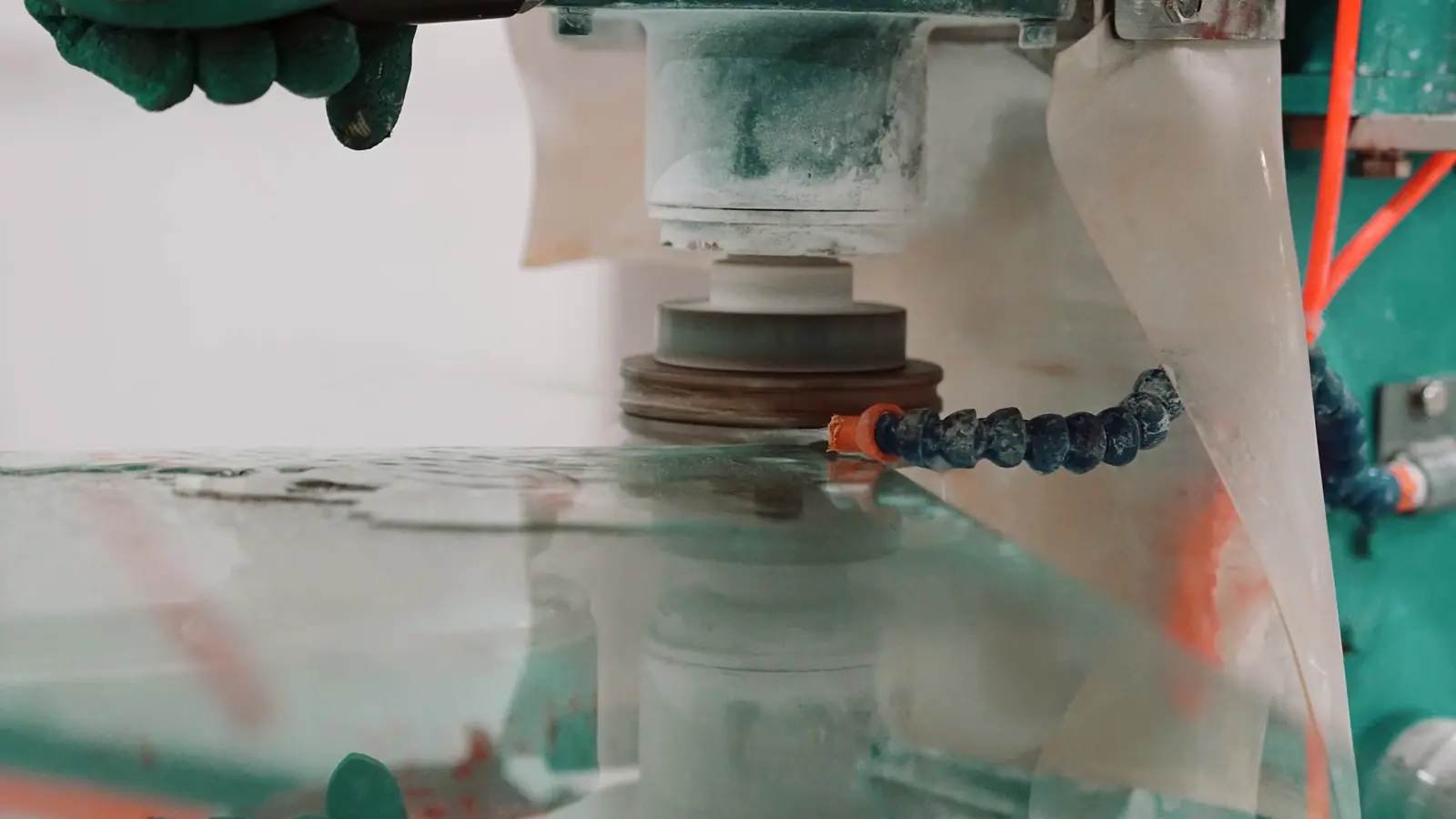
Once the stress balance inside a tempered pane is disturbed, the whole pane breaks. For that reason the GGF data sheet states that toughened safety glass cannot be cut or drilled and should not be surface or edge worked. All edgework, drilling and surface treatment, such as sandblasting, has to be carried out before toughening.
In practice this means:
- Dimensions, outline, hole positions and edge type must be final before the sheet is cut.
- A dimensional mistake found after tempering cannot be corrected; a new pane has to be made.
- Printing, such as screen printing, is also applied before tempering.
Annealed glass is more forgiving here, because it can still be cut and finished later. That flexibility helps where safety and strength are not required.
05 / 06
What visible effects and residual risks does tempering bring?
Tempering slightly lowers the optical quality of the glass. In horizontal tempering the hot glass touches the furnace rollers, which leaves a surface distortion the GGF data sheet calls roller wave. It is usually noticed in reflection, and the data sheet gives limits by thickness.
The second effect is anisotropy. Tempering creates areas of different stress through the thickness, and in polarised light these show up as coloured patches. Daylight contains some polarised light, so the effect is more noticeable at a glancing angle or through polarised spectacles.
There is also a residual risk. According to the introduction of ISO 20657, heat soaked tempered glass still carries a known level of residual risk of spontaneous breakage, which comes from possible critical nickel sulphide inclusions. The heat soak process is meant to remove most of them. Whether a project needs it depends on the standard and inspection level it specifies.
06 / 06
How do you choose, and what should a quote request include?
The choice starts with what the application demands. For vehicle glazing, where the way glass breaks affects injury risk, the relevant regulations decide. For machine guards, furniture or special equipment, the safety requirement, temperature difference and impact risk decide whether tempered glass is needed. If you are unsure, settle it with an engineer who knows the application.
Ekol Glass manufactures toughened (single-ply tempered) safety glass for vehicles and custom projects. The plant performs CNC and precision cutting, glass processing such as edging and water-jet, screen printing, tempering, framing and double glazing. A quotation needs the application, vehicle or project identifier, dimensions or a DXF/DWG/PDF drawing, quantity, colour, thickness, secondary processing and target schedule. Tolerances and thickness options are confirmed per project.

Frequently asked questions
How much stronger is tempered glass than annealed glass?
According to the GGF standard data sheet, strength can rise to as much as four to five times that of annealed glass of the same thickness. This is a general upper figure; actual strength depends on thickness, load and edge condition. Tempering does not improve scratch resistance.
Can tempered glass be cut or drilled?
No. Once the stress balance in a tempered pane is disturbed, the glass breaks. Edge work, holes and surface treatments are completed before tempering. If a dimension turns out wrong, the pane cannot be corrected and a new one is made.
Can you tell tempered and annealed glass apart by eye?
Usually it is hard, because light transmission and solar heat properties do not change. Sometimes roller wave shows in reflection, or coloured patches appear in polarised light. For certainty, rely on markings and documents.
What do you need for a tempered glass quotation?
The application or project, dimensions or a DXF/DWG/PDF drawing, quantity, colour, thickness, secondary processing such as holes and edges, and the target schedule. Details are confirmed during technical review.
Next reads
Why is edge damage risky for tempered glass? Edge finishing, handling and checks
A small chip or burr on the edge of tempered glass can reduce the strength that heat treatment gives. How edges are finished, why they cannot be reworked after tempering, and how to protect them.
Read article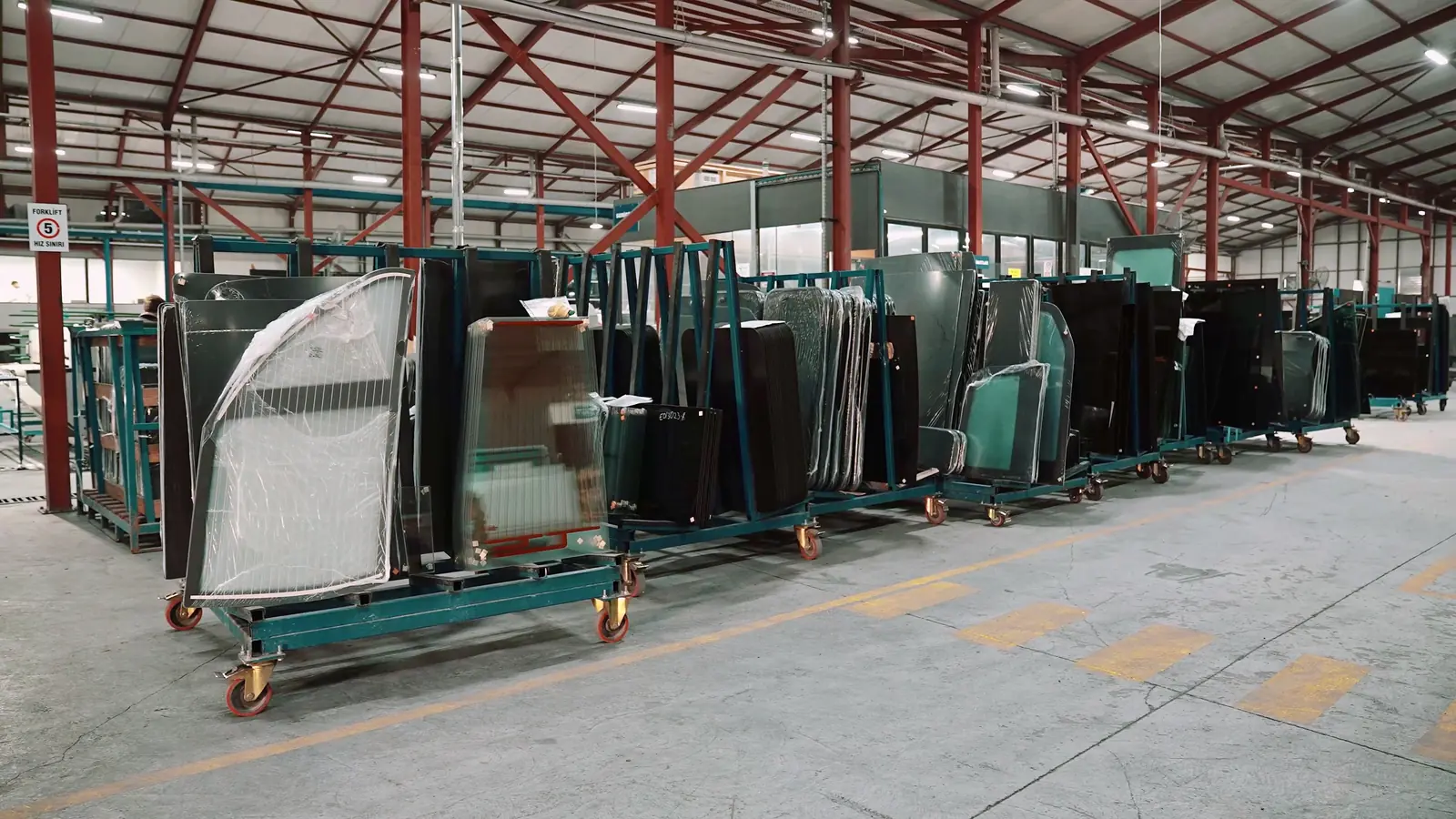
Technical toughened glass for machines and equipment: what to expect
What to know before choosing toughened glass for machines, equipment and vehicles: strength, order of processing, bow and roller waves, iridescence, marking and records, explained from open sources.
Read article
How is glass tempered? From heating to rapid cooling, step by step
Tempered glass is made by heating flat glass and cooling it rapidly with air. This article explains, from open sources, what the process changes inside the glass and why cutting, edging and drilling must be finished before tempering.
Read article