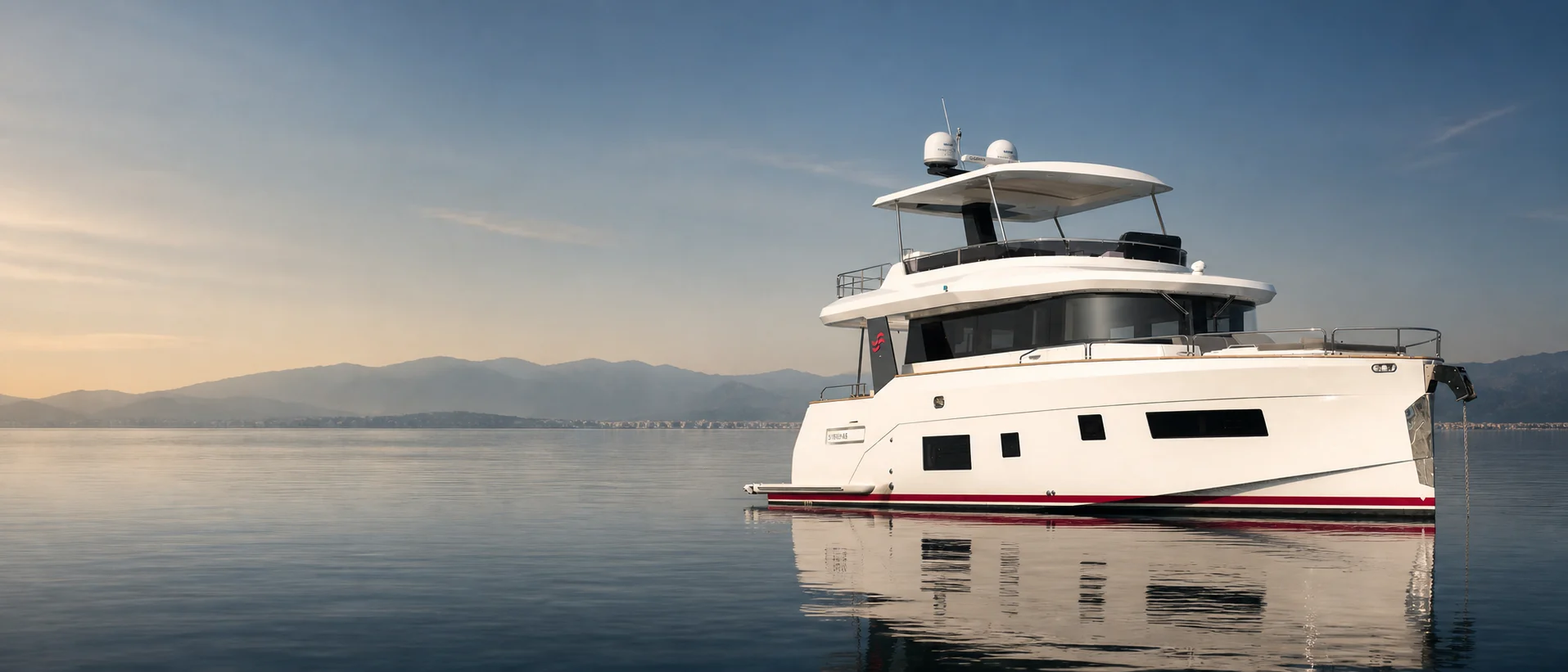
A wide saloon window and a wheelhouse windscreen may sit on the same yacht, yet they answer different needs. In the saloon, owners may want an open view and a bright interior. At the helm, reflections and a clear view outside can matter more. A colour sample is a useful starting point, but it cannot tell the whole story. Visible light transmission, solar factor and U-value describe different parts of glazing performance. Read them against the yacht’s use, the position of each pane and the exact glass build before choosing a colour.
01 / 05
Start with where the pane sits
A long saloon window, a guest-cabin pane and a wheelhouse screen are not interchangeable design decisions. The saloon may prioritise natural light and a connection to the sea. The helm may put more emphasis on an unobstructed view and managing reflections across the glass. Route, season and the way the vessel is used can change what the owner or designer wants from each opening.
Saint-Gobain Marine describes visual comfort through a balance of daylight, glare control and views outside. It also discusses light transmission, solar factor and U-value as separate parts of that balance. That is why a colour name such as grey, bronze or blue cannot define the expected result by itself. Two samples that look similarly dark may not have the same documented performance, while the same glass may feel different in a saloon and a wheelhouse.
Mark each window on the vessel drawing before asking for a colour. Note whether it belongs to a saloon, cabin, door or wheelhouse, and add its orientation and intended use when known. These details do not establish compliance or confirm a particular glass build; they help the project team decide which questions the supplier needs to answer.
02 / 05
Light transmission and solar factor answer different questions
Light transmission describes how much visible light passes through the glazing. Solar factor is broader than direct sunlight passing through the pane. The International Commission on Illumination (CIE) defines it as the total heat entering the interior through the glazing in relation to the solar radiation falling on it. A dark appearance therefore does not, by itself, tell a buyer how much daylight remains or how much solar heat reaches the cabin.
A lower solar-factor value indicates less total solar heat entering the interior under the same definition and comparison basis. It is not the only goal. A wheelhouse and a lounge may place different priorities on outside view, reflections and daylight. Saint-Gobain Marine presents the three performance measures together precisely because a single number cannot describe every part of visual comfort.
When comparing data sheets, check which glass composition the figures refer to. Saint-Gobain Marine’s 2026 brochure publishes ranges for particular product families and marine applications. Those figures are examples for the stated configurations; they are not a ready-made specification for every yacht window.

03 / 05
U-value describes another kind of heat transfer
U-value describes heat transfer through an element under stated conditions. Saint-Gobain Marine explains that a smaller U-value is better at limiting that transfer. This is not the same question as solar factor: one concerns heat moving through the glazing between its two sides, while the other concerns the total solar heat that enters the interior.
A performance figure only makes sense alongside the build to which it belongs. Glass layers and thicknesses, coatings and any insulating cavity can affect the stated configuration. Marine product data sheets pair figures with specific assemblies for this reason. Comparing two U-values without checking that the products and calculation conditions are comparable can lead to a false conclusion.
Ask the supplier: “Which glass build and which test or calculation conditions does this value describe?” If the technical specification does not require a particular performance figure, the vessel designer or project engineer should determine whether one is needed. This article does not prescribe a universal value for yacht glazing.
04 / 05
Use a sample for appearance, and a data sheet for performance
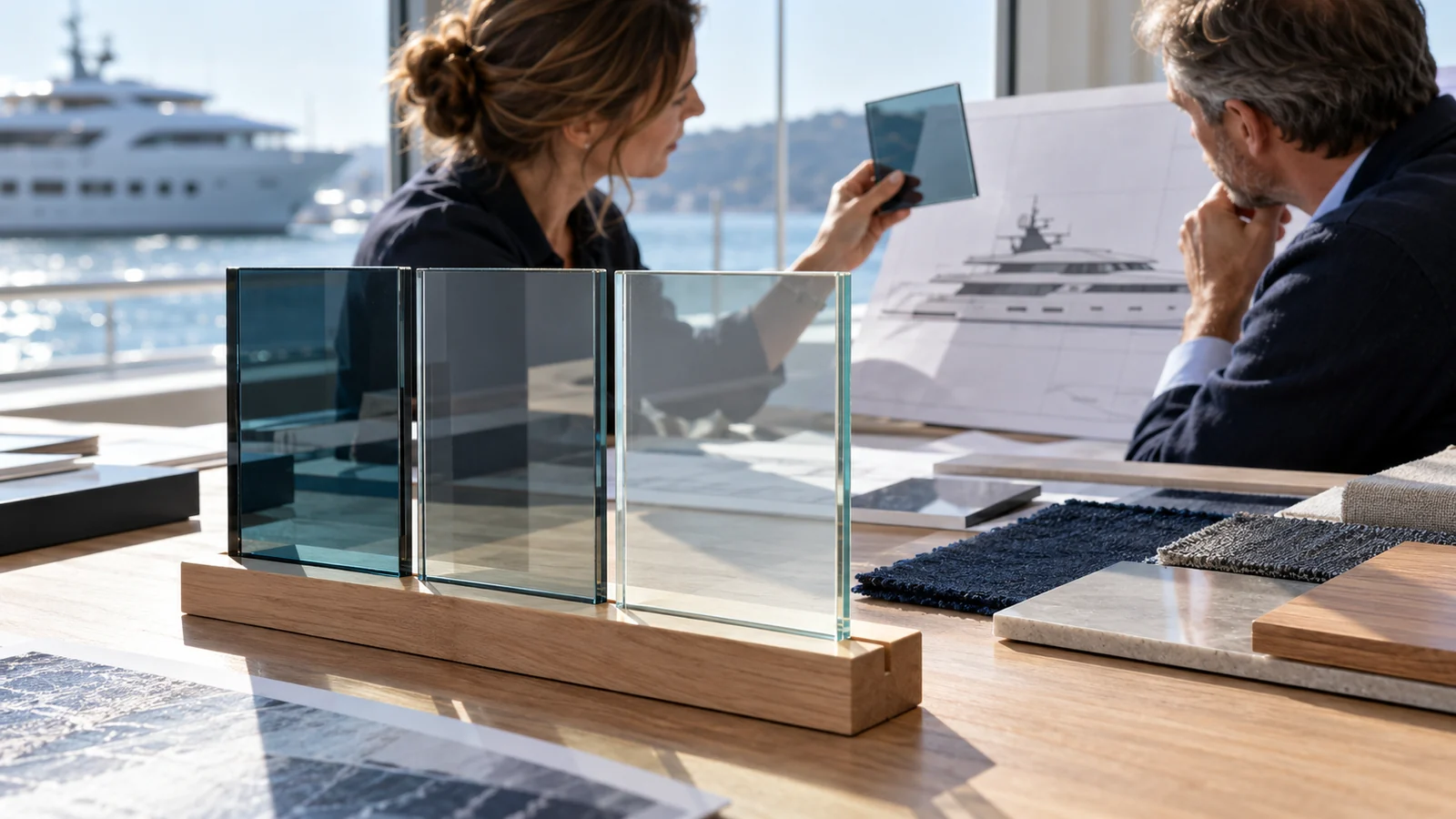
A colour sample viewed at the dock, inside a cabin or under artificial lighting can leave different impressions. Where possible, review the sample in the position and interior environment the pane is intended for, and look at it from both sides. The sample makes a discussion about tone and appearance concrete; it cannot be used to infer light transmission, solar factor or thermal performance by eye.
Ekol Glass’s yacht and marine page says colour options and project expectations can be compared at quotation stage, with final approval recorded before production. It also asks for details such as vessel type, project code, a dimensioned drawing or template, glass orientation and mounting method. A visual sample and a technical description do different jobs, so keep both in the project file.
If three samples are being compared, first check whether they represent the same glass build. If their constructions differ, colour alone is not a like-for-like comparison. If the build is the same, the design team can review the appearance under the intended conditions and record its selection before the specification is finalised.
05 / 05
Put the use case and required data in the brief
Include the vessel type and project code, each window’s location and orientation, quantity, and a dimensioned drawing or verified template where available. Then describe the goal behind the colour choice: more daylight, less glare, a particular outside appearance, or a solar-control target. If the specification calls for light transmission, solar factor or U-value, ask for the figure for the exact proposed glass build and its stated basis.
Wheelhouse use, commercial operation, flag-state rules or a classification requirement may add conditions. Marine glazing solutions and approvals depend on the vessel and application; a colour sample does not establish that a product meets them. The yacht designer, classification society or responsible technical authority should confirm which rules apply. This article does not declare any glass combination compliant with a specific regulation.
Ekol Glass’s public marine page lists colour options and sample comparison, but does not publish a general light-transmission, solar-factor or U-value figure. If your project requires those values, ask Ekol Glass to confirm the available configuration and its documented scope. Keep the approved colour, the selected glass build and any required performance figures in the same project revision so that the production review starts from one agreed specification.
Next reads

Bus and minibus glass: what makes a proper fit?
Vehicle variant, opening position, drawing and mounting interface all matter when identifying the right bus or minibus glass for a project.
Read article